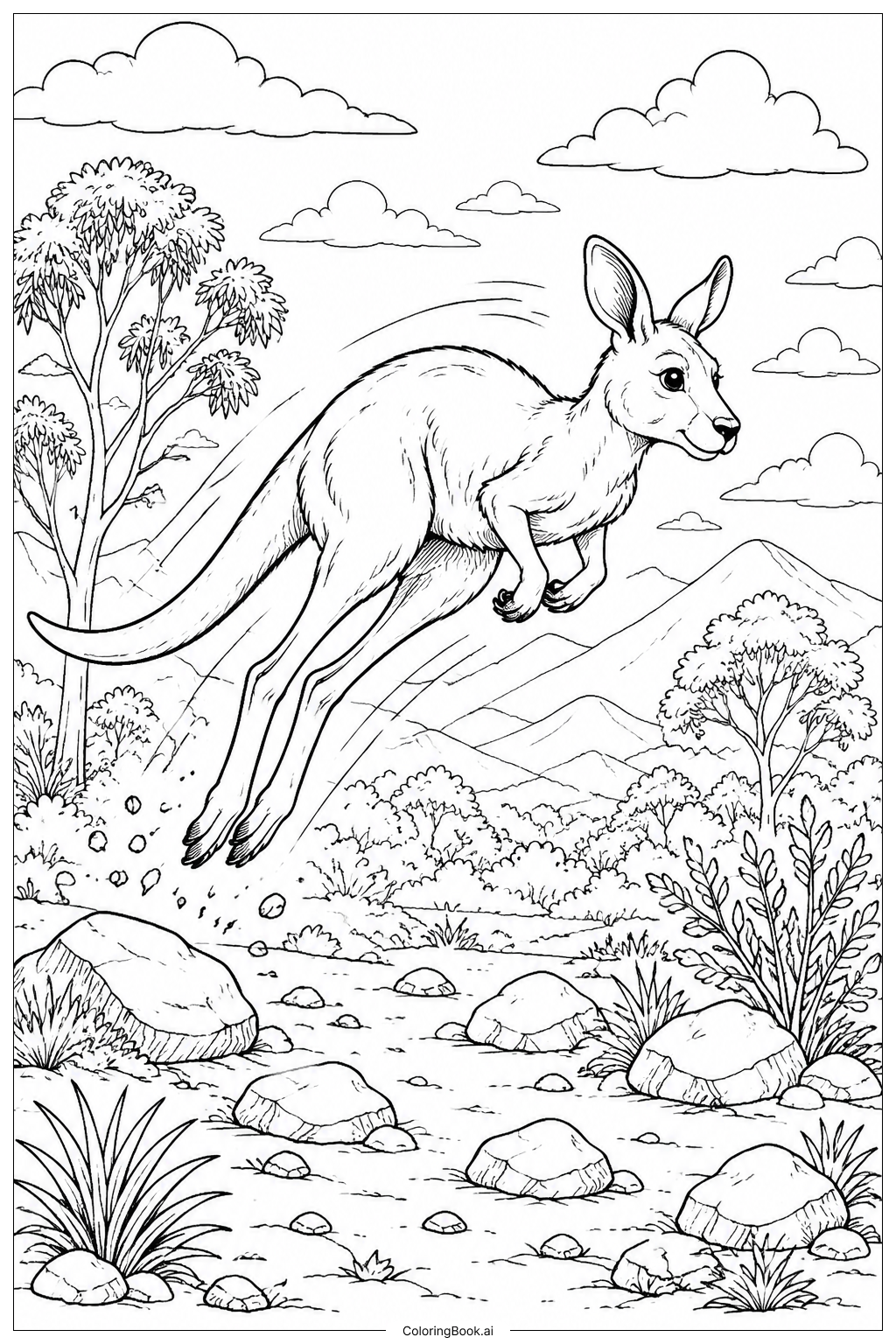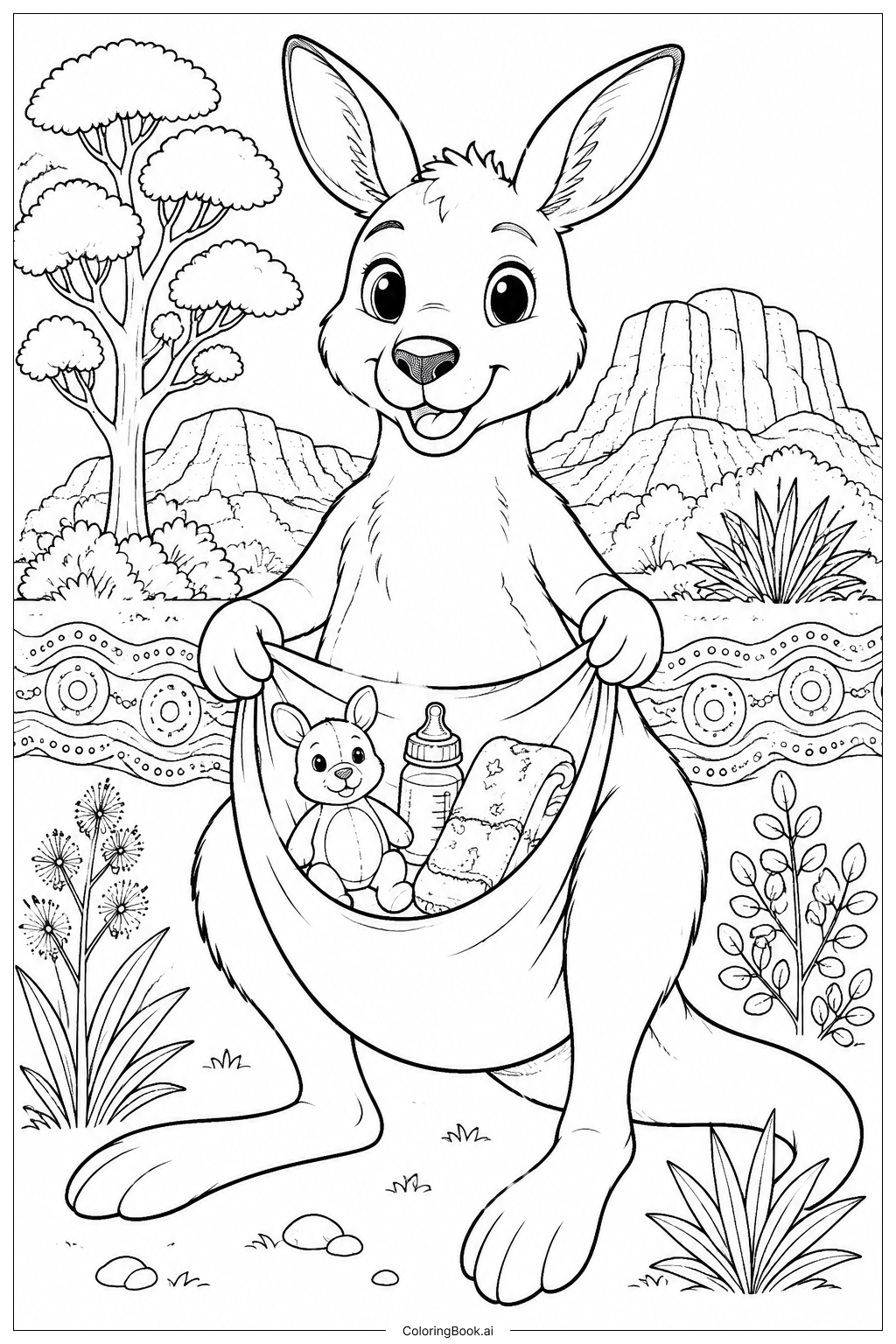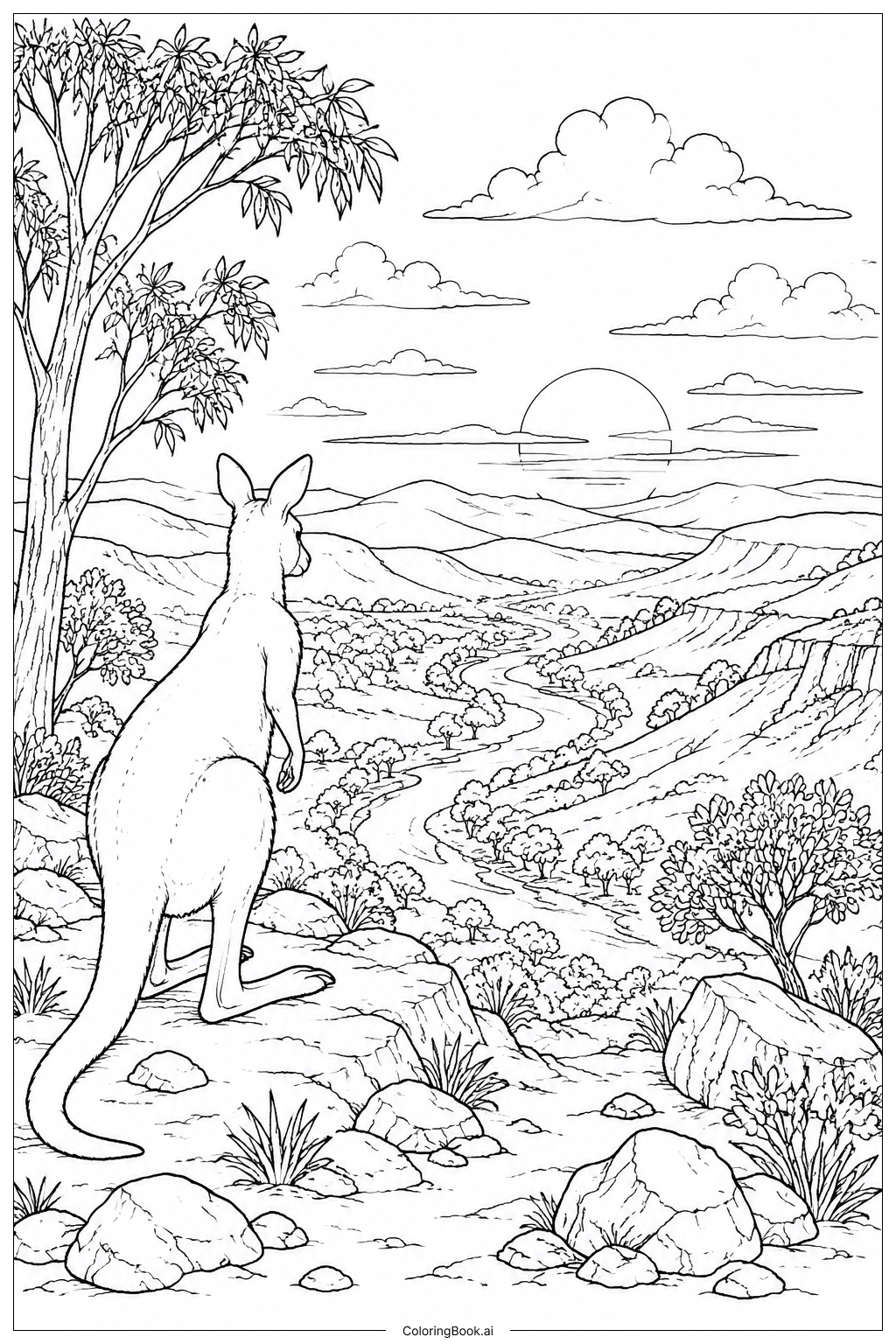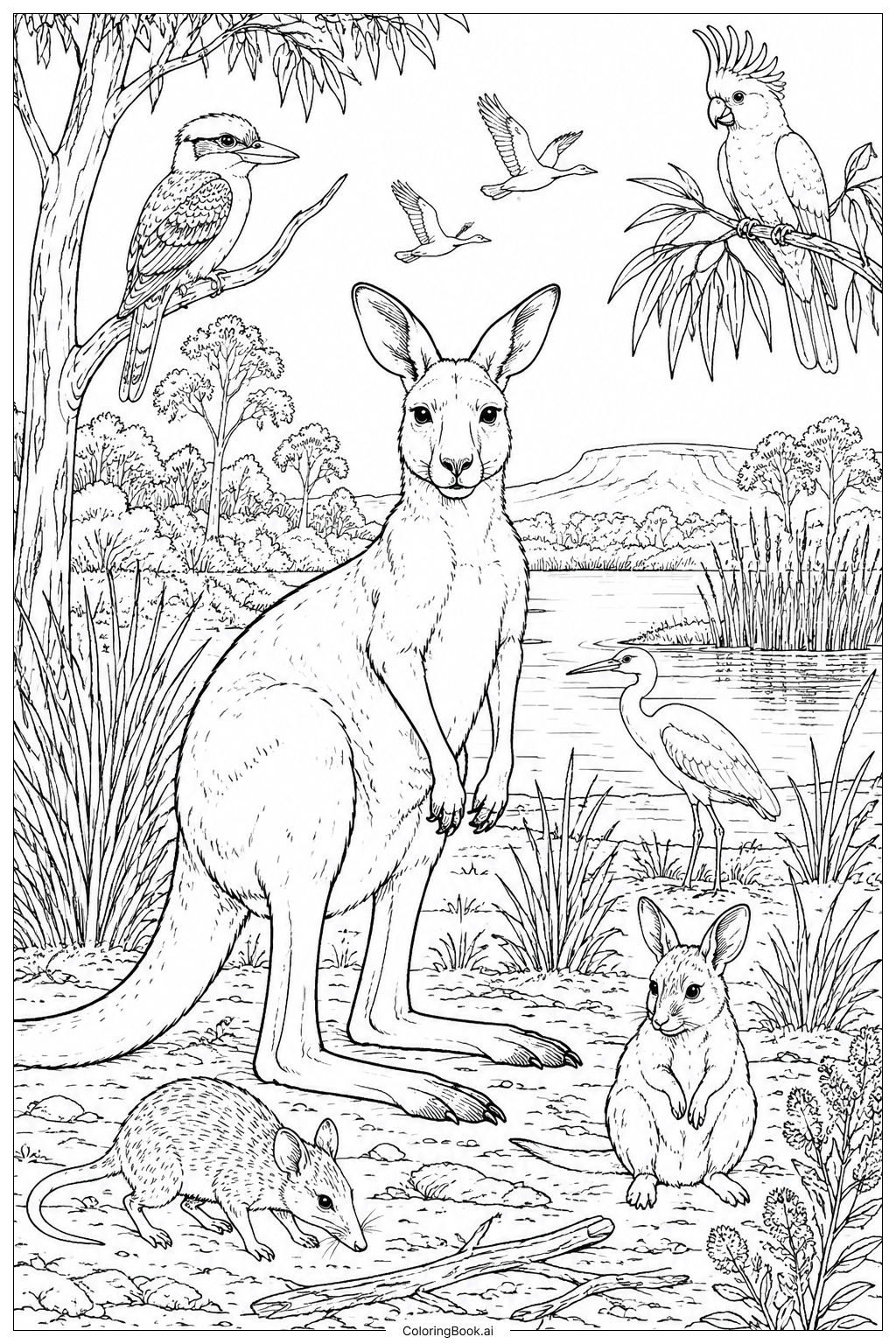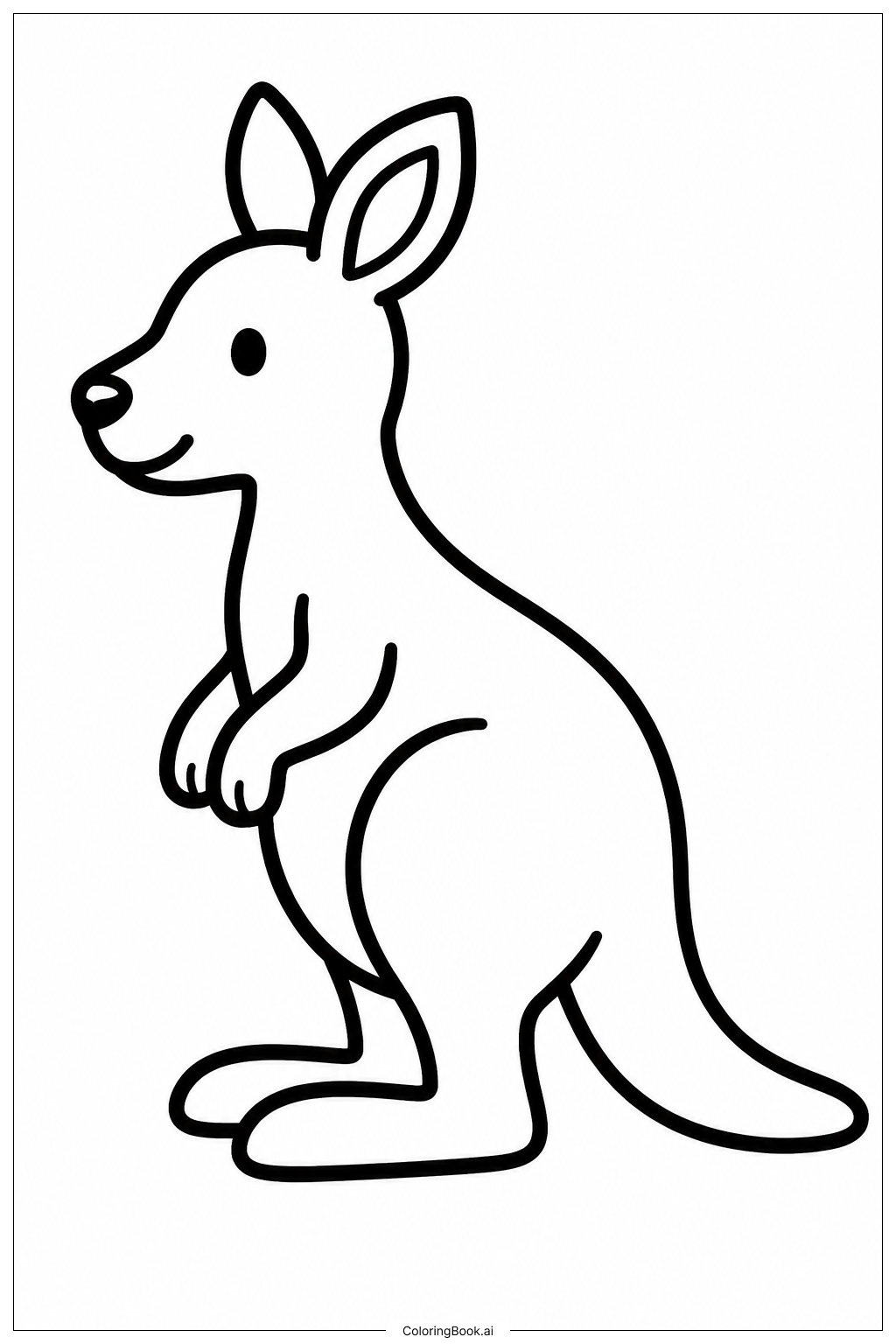
Coloring tips: How to color Kangaroo Standing Side View coloring page well?
Give the kangaroo's body a warm sandy brown or golden tan color — this is very close to real kangaroo fur! Use a slightly darker shade of brown for the back, the top of the head, and the tail to show shadow and depth. The belly and inner ears can be colored a soft cream or light peach tone. The nose can be a dark brown or black, and the eyes can be dark brown with a tiny white dot to make them look shiny and alive. If the kangaroo has a joey peeking from its pouch, color the joey a slightly lighter shade. Feel free to use your own creative colors too — an orange kangaroo or a purple one can look amazing and fun!
Coloring challenges: Which parts are difficult to color and need attention for Kangaroo Standing Side View coloring page?
• **Staying Within the Lines on Curved Body Parts:** The kangaroo's body is full of smooth, flowing curves — along the back, the belly, and the tail. These curved edges can be tricky, especially for younger children. It takes a steady hand and slow, careful strokes to color neatly along these gentle curves without going outside the outline.
• **Shading the Muscular Legs:** The kangaroo's powerful hind legs are large and have a strong, muscular shape. Creating a sense of depth and roundness in the legs using lighter and darker shades of the same color can be challenging. Blending colors smoothly in this area requires some practice and patience.
• **Coloring the Fine Details of the Face and Ears:** The ears are tall and narrow, making it difficult to fill them in neatly with color. The area around the eyes and nose is also small and detailed. Using a fine-tipped colored pencil or a thin marker works best here to avoid smudging or going over the lines.
• **Balancing the Tail:** The tail is thick and long, and colorists need to remember to apply consistent color all the way to the tip without losing evenness. It can be easy to press too hard at the base and too lightly at the tip, creating an uneven look. Practicing consistent pressure helps a lot.
• **Keeping the Overall Color Harmony:** Because the kangaroo is one main subject on a simple background, all the colors need to look balanced together. Choosing shades that complement each other — like warm browns and creams — helps the finished image look polished and natural.
Benefits of coloring books: Advantages of drawing Kangaroo Standing Side View coloring page
Coloring this Kangaroo Standing Side View page offers many wonderful benefits for kids and beginners alike. First, it helps children learn about real animals — kangaroos are fascinating creatures from Australia, and coloring one sparks curiosity and a love for nature and wildlife. Second, working carefully within the curved lines and detailed areas of the kangaroo's body helps build fine motor skills and hand-eye coordination, which are important skills for writing and drawing. Third, choosing colors and deciding how to shade the fur encourages creativity and artistic thinking. Children get to make their own decisions and feel proud of a finished piece of art. Fourth, focusing quietly on coloring helps reduce stress and supports mindfulness — it's a calm, relaxing activity that kids truly enjoy. Finally, completing the page gives children a real sense of achievement, which builds confidence and encourages them to keep creating!