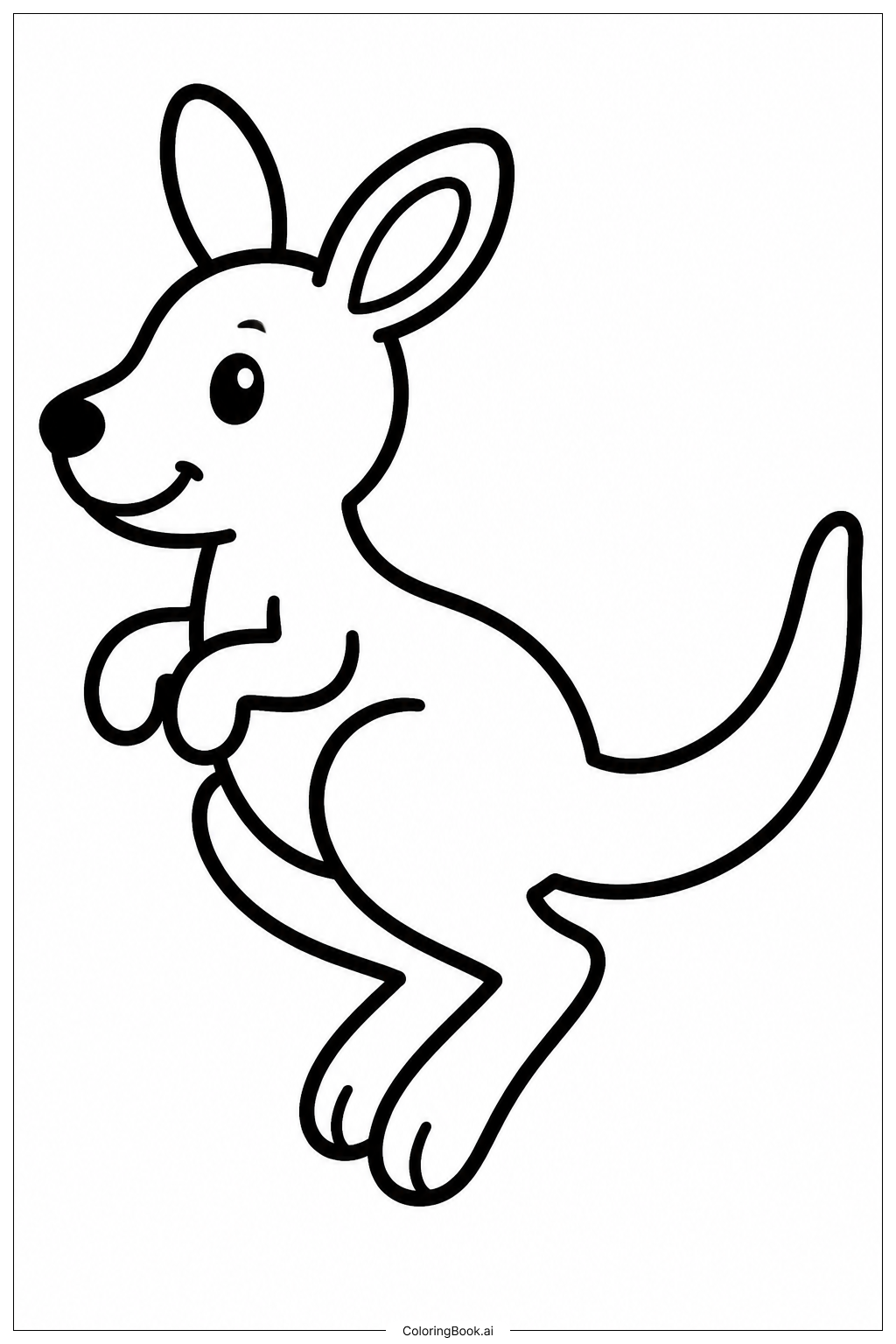
Coloring tips: How to color Kangaroo Jumping coloring page well?
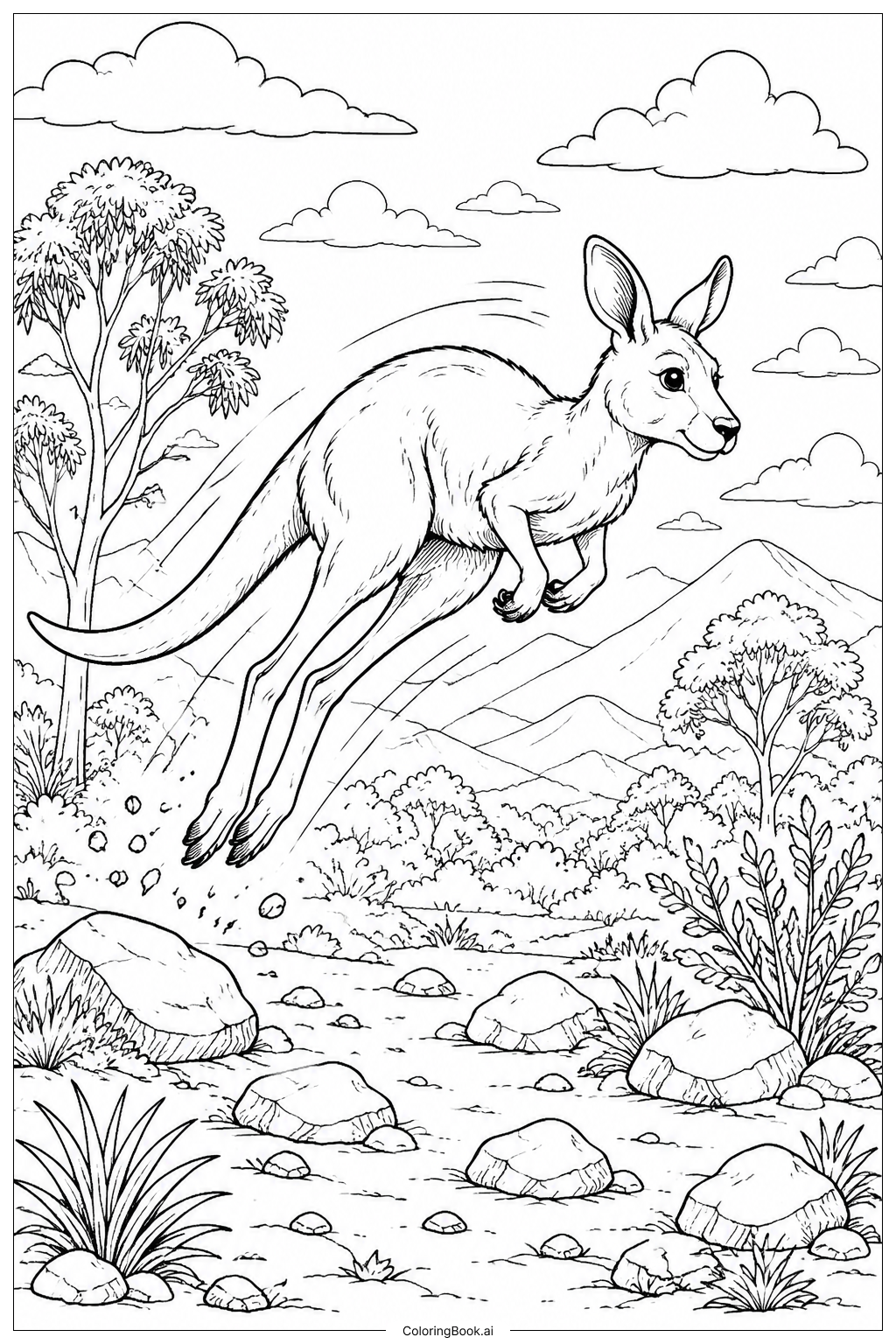
Start by choosing warm brown and orange shades for the Kangaroo’s fur to make it appear natural and vibrant. You can use lighter tans for the belly and inner ears to add contrast. For the eyes and nose, try dark brown or black. The background can be filled with soft greens and yellows to represent grass and sunlight. Feel free to get creative by adding blue for the sky or even some colorful flowers around to make the scene lively. Use smooth strokes to follow the Kangaroo’s body shape and bring this jumping moment to life.
Coloring challenges: Which parts are difficult to color and need attention for Kangaroo Jumping coloring page?
• The Kangaroo’s body has many curved lines and shapes that require careful coloring to stay inside the lines. Precision helps maintain its natural look.
• The tail is long and thin, which can be tricky for younger children to color evenly without going outside the edges.
• Capturing the fur texture with coloring requires blending shades subtly to avoid flatness, which can be a challenge for beginners.
• The animal’s legs are in motion, meaning some overlapping shapes that need attention to detail in separating with color.
• The ears and facial features are small and detailed, so using fine-tipped coloring tools is recommended to stay neat while preserving details.
Benefits of coloring books: Advantages of drawing Kangaroo Jumping coloring page
Coloring this Kangaroo Jumping page helps develop fine motor skills and hand-eye coordination as children carefully fill in the shapes. It encourages observing nature and learning about animals, making it educational and fun. The image challenges kids to practice blending colors and shading, boosting creativity and confidence. Additionally, concentrating on this dynamic pose helps improve attention to detail and patience, valuable skills for young artists. Overall, it’s a joyful way to explore Australian wildlife through art.