Coloring tips: How to color Sleeping Jellyfish coloring page well?
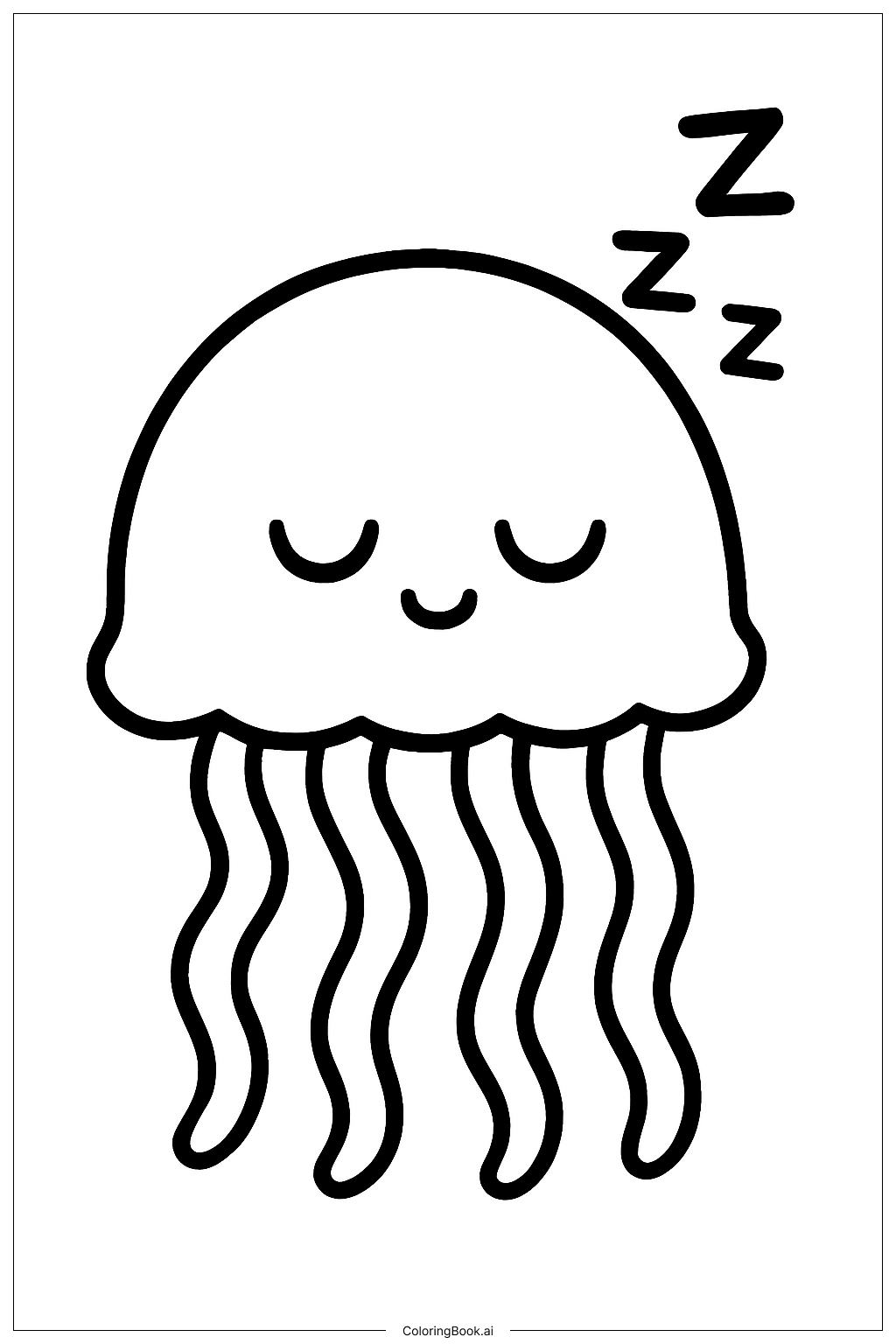
For coloring the jellyfish, bright and cheerful colors work best. You can choose soft pastels like light pink, baby blue, or lavender for the jellyfish's body. These colors create a calming effect. For the tentacles, you might use a slightly darker shade to add contrast. Consider adding sparkles with glitter pens for a magical touch. Don't forget to color the background too! Light blues can represent water, while sandy yellows can evoke a beach vibe. Use crayons, colored pencils, or markers—whichever tools you prefer. Mix and match colors for a fun, vibrant result!
Coloring challenges: Which parts are difficult to color and need attention for Sleeping Jellyfish coloring page?
1. **Tentacles' Texture:** The tentacles of the jellyfish are wavy and intricate. Coloring them can be tricky due to their flowing shape, making it hard to stay within the lines. Children should practice control while coloring these areas. 2. **Color Blending:** Some kids may want to blend colors smoothly, especially if they wish to create depth or highlight certain areas. Mixing colors can sometimes lead to messy results, so guidance may be needed. 3. **Background Choices:** Deciding how to color the background can be challenging. Kids might struggle with incorporating colors that complement the jellyfish without overwhelming the main character. 4. **Light Reflection:** Adding highlights to make the jellyfish look shiny might confuse some. Kids could find it difficult to figure out where to place lighter hues, so some examples might help. 5. **Color Overlap:** Using markers or water colors can lead to accidental smudging or color bleeding, which might frustrate young artists, especially when trying to maintain a clean look.
Benefits of coloring books: Advantages of drawing Sleeping Jellyfish coloring page
Coloring this jellyfish page provides many benefits. First, it boosts creativity. Kids can choose colors and make it unique. This freedom allows them to express their artistic side. Second, coloring improves fine motor skills. Holding crayons or markers helps develop hand-eye coordination and dexterity. These skills are essential for writing and everyday tasks. Third, it offers relaxation. Coloring can be soothing and helps reduce stress. Children can focus on the task and take a break from screens. Lastly, it encourages learning about jellyfish and marine life. Kids can discover interesting facts while coloring, combining fun and education!