Coloring tips: How to color Jellyfish With Rock Pile coloring page well?
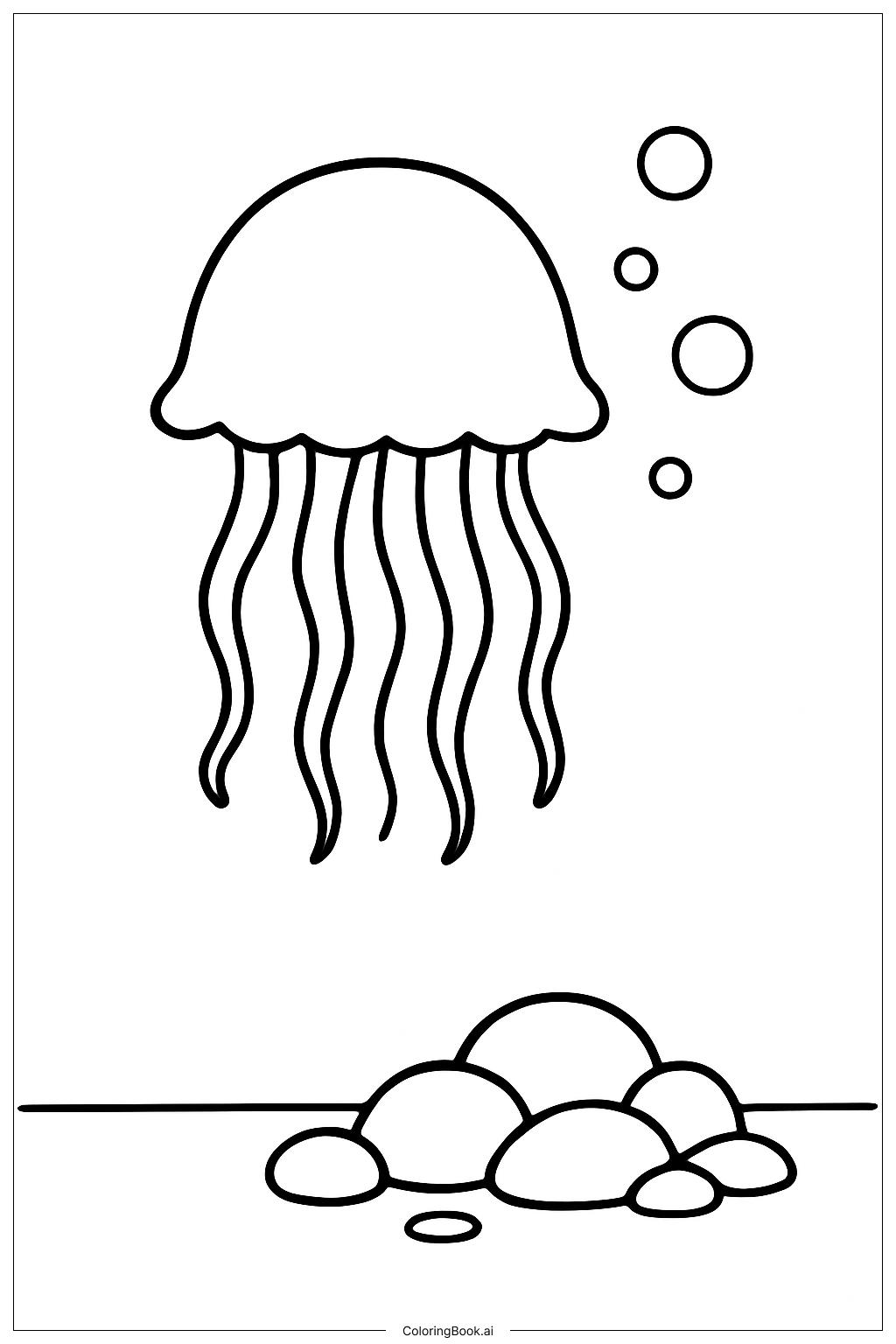
Start with the jellyfish bell using soft, light colors. Try pale blue, lavender, or pink to give it a glowing, translucent look. You can blend two colors together to make it look like light is shining through. For the tentacles, use slightly deeper shades of the same color family, like medium purple or teal, and let them fade gently toward the tips. Add thin highlights in white or light yellow to make them look shimmery. For the rock pile, use earthy tones like gray, brown, tan, and dark green. Vary the shades slightly on each rock to show depth and texture. Add darker color in the crevices between rocks to make them look three-dimensional. For the background water, try deep blue or blue-green and leave the area around the jellyfish lighter to create a soft glow effect. This will make the jellyfish look like it is floating and lit from within.
Coloring challenges: Which parts are difficult to color and need attention for Jellyfish With Rock Pile coloring page?
• Jellyfish Bell Transparency: The jellyfish bell is meant to look see-through and glowing. Getting this effect with crayons or colored pencils can be tricky. You need to layer very light colors carefully and avoid pressing too hard. Blending two similar shades together, like light pink and pale lavender, helps create a soft, glowing look. Take your time and build up the color slowly.
• Tentacle Gradients: The long, flowing tentacles require a smooth color transition from darker near the bell to lighter at the tips. This gradient effect is hard to do neatly, especially in thin areas. Use a light touch and short strokes, and try switching to a slightly lighter pencil or crayon as you move down each tentacle.
• Rock Texture and Depth: The rock pile has many overlapping rounded shapes. Each rock needs its own light and shadow side to look solid and three-dimensional. Coloring so many similar shapes in slightly different shades without making them look flat or confusing takes patience and careful color selection.
• Small Crevices Between Rocks: The narrow gaps and crevices between the rocks are small and easy to accidentally fill in with the wrong color. Using a sharp colored pencil tip helps you stay precise in these tight spots. Darker shades should go only into the deeper cracks to show depth.
• Background Water Gradient: Creating a smooth ocean background that fades from deep blue at the edges to lighter blue near the jellyfish requires careful blending. If the transition is too sharp, the glowing effect around the jellyfish will be lost. Work slowly in circular or layered strokes for the best result.
Benefits of coloring books: Advantages of drawing Jellyfish With Rock Pile coloring page
Coloring this Jellyfish With Rock Pile page offers many wonderful benefits for kids and beginners alike. Working on the jellyfish's flowing tentacles and rounded bell helps develop fine motor skills and steady hand control. Choosing colors for the rocks and water encourages creative thinking and color awareness. Children learn to observe how light and shadow work by shading different surfaces on the rocks. Blending soft colors on the jellyfish bell introduces basic color theory in a fun and relaxed way. The peaceful underwater scene also makes this a great calming activity. Focusing on the details of the image helps improve concentration and patience. Finishing the full picture gives a real sense of accomplishment and boosts confidence. This page is also a gentle way to spark curiosity about ocean life and underwater ecosystems. Whether coloring alone or with friends, this image invites creativity, exploration, and quiet focus. It is a perfect activity for a relaxing afternoon.