Coloring tips: How to color Jellyfish In Kelp Forest coloring page well?
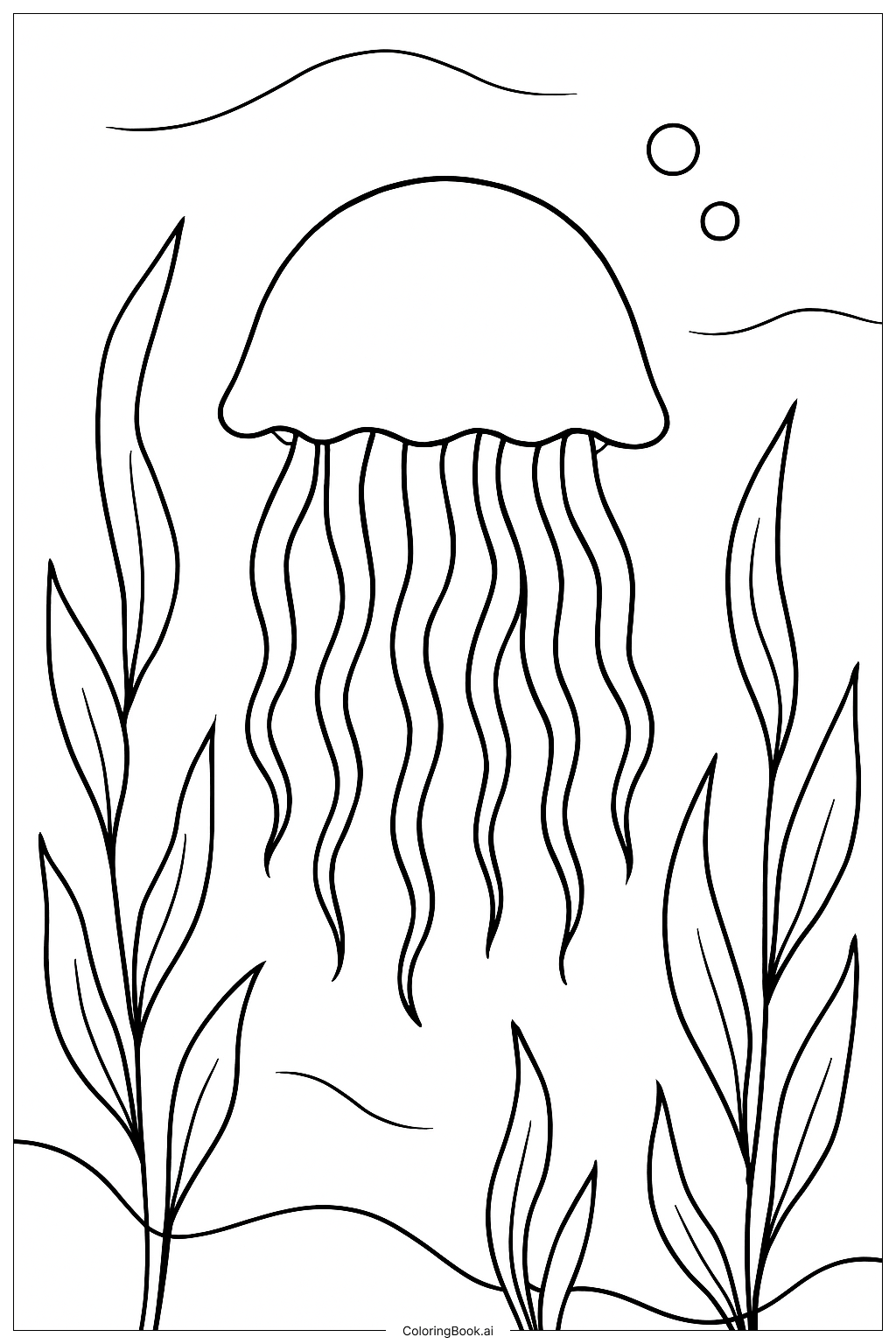
Start with the jellyfish bell at the center of the page. Use soft, see-through colors like pale blue, light purple, or soft pink to show its glowing, translucent body. Add a slightly darker shade around the edges to give it a rounded, 3D look. For the tentacles, use long, flowing strokes of the same color family, getting lighter toward the tips. Color the kelp in shades of green and golden brown. Use darker greens at the base and lighter yellows near the top to show sunlight coming from above. For the water background, try a deep ocean blue or teal. You can blend it softly to create a sense of depth. If there are small sea creatures hiding in the kelp, give each one a fun, bright color to make them stand out. Take your time with each section and enjoy the calming process of bringing this underwater world to life!
Coloring challenges: Which parts are difficult to color and need attention for Jellyfish In Kelp Forest coloring page?
• Jellyfish Transparency Effect: The jellyfish has a translucent, glowing body that can be tricky to color. To show this see-through quality, you need to layer very light shades carefully. Using too much pressure or too dark a color will make it look solid and flat instead of soft and glowing. Try building up color in thin layers, leaving the center lighter than the edges.
• Flowing Tentacle Details: The long, curling tentacles twist and overlap in many directions. Staying inside the fine lines while following each curve takes steady hands and patience. Colored pencils with a sharp tip or fine-tipped markers work best here. Going slowly and following the natural flow of each tentacle will give the best results.
• Overlapping Kelp Fronds: The kelp leaves are layered and overlap each other throughout the scene. Each frond needs a slightly different shade of green or brown so they look separate and not blended together. Deciding which frond is in front and which is behind helps guide your color choices and adds a sense of depth to the scene.
• Background Depth and Light: Creating the feeling of deep ocean water behind the kelp and jellyfish is a real challenge. The background needs to shift from darker blue at the bottom to lighter blue or teal higher up where light enters. Blending these transitions smoothly without streaks requires practice and the right tools, such as blending stumps or watercolor washes.
• Small Hidden Details: Tiny creatures, bubbles, and texture patterns throughout the image are easy to miss or accidentally color over. Take time to look at the full image before starting so you can plan which small details to highlight and which colors to use for them.
Benefits of coloring books: Advantages of drawing Jellyfish In Kelp Forest coloring page
Coloring this Jellyfish In Kelp Forest scene brings so many great benefits for kids and adults alike. First, it helps build focus and concentration. The detailed kelp fronds and flowing tentacles encourage you to slow down and pay close attention, which is great practice for school and everyday tasks. Second, it sparks creativity. Choosing colors for an underwater world lets your imagination run free. There are no wrong answers — you can make your jellyfish purple, golden, or rainbow-colored if you like! Third, coloring is wonderfully calming. The gentle, flowing shapes of the jellyfish and kelp have a soothing quality that helps reduce stress and anxiety. Many people find coloring to be a relaxing break from screens and busy schedules. Fourth, this image teaches kids about ocean life. As they color, children naturally become curious about jellyfish and kelp forests, sparking interest in marine biology and nature. Finally, completing a finished piece builds a real sense of achievement and pride. Whether you are 5 or 50, finishing this beautiful underwater scene feels rewarding and satisfying. Pick up your colors and dive in!