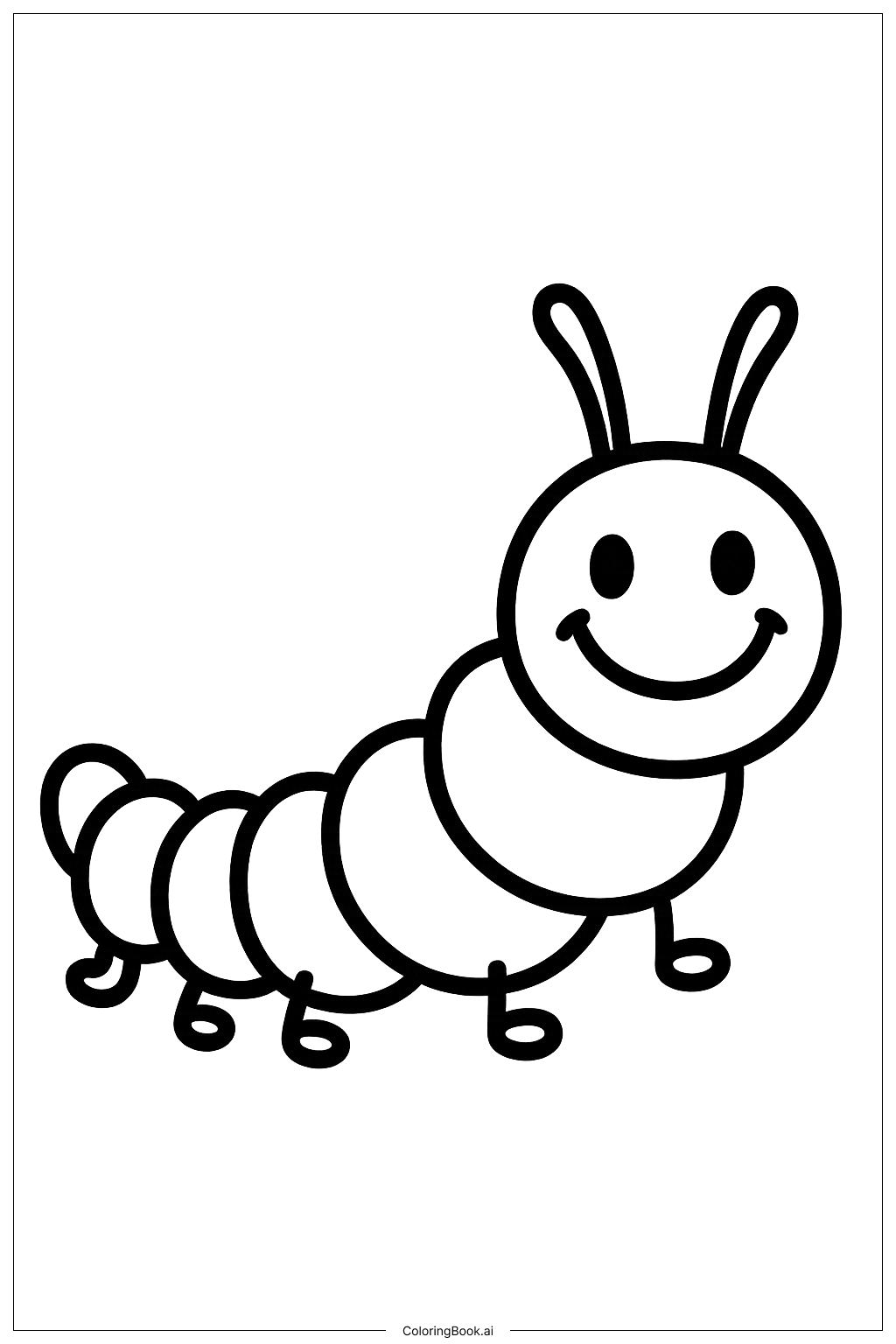
Coloring tips: How to color Hungry Caterpillar With Smile coloring page well?
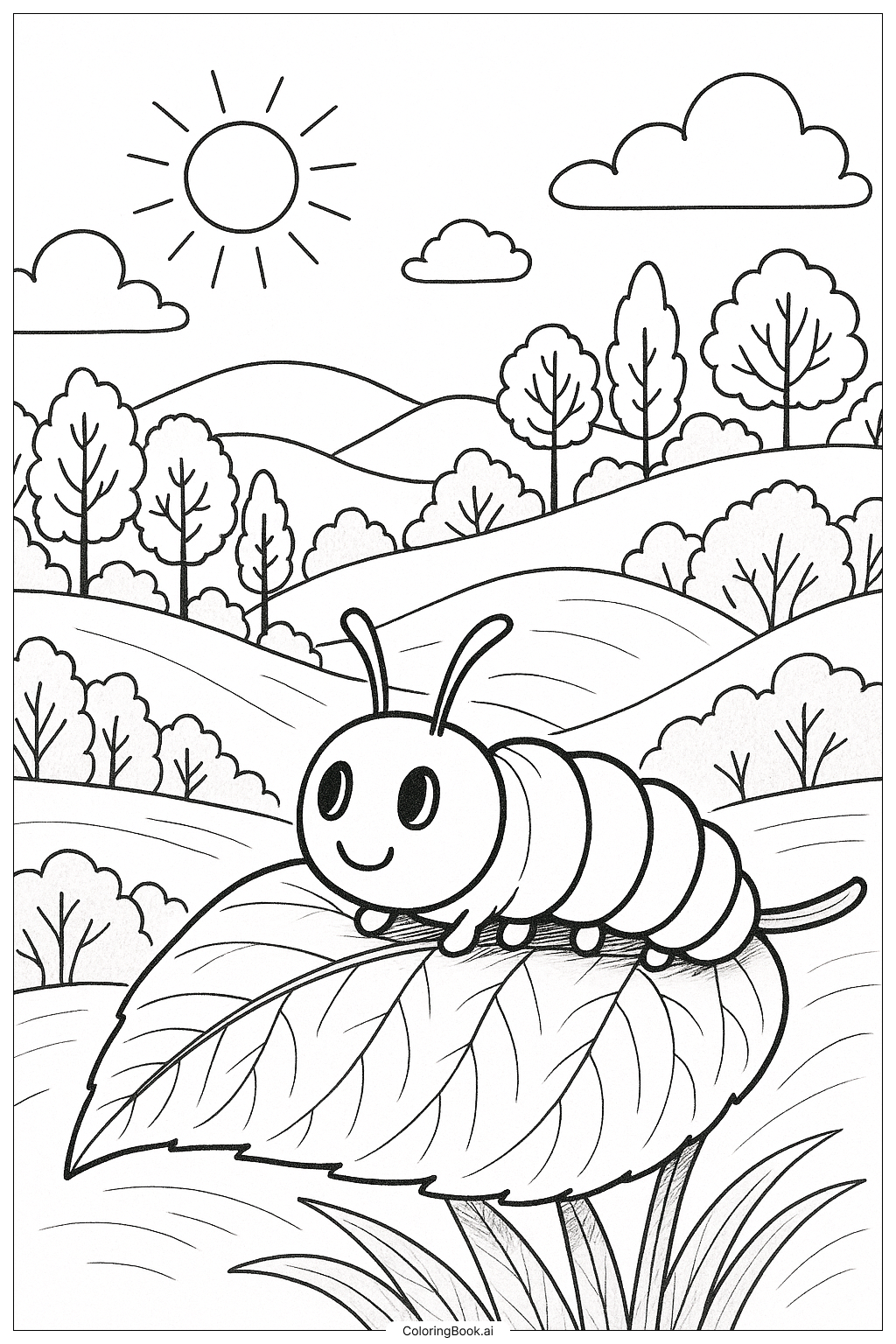
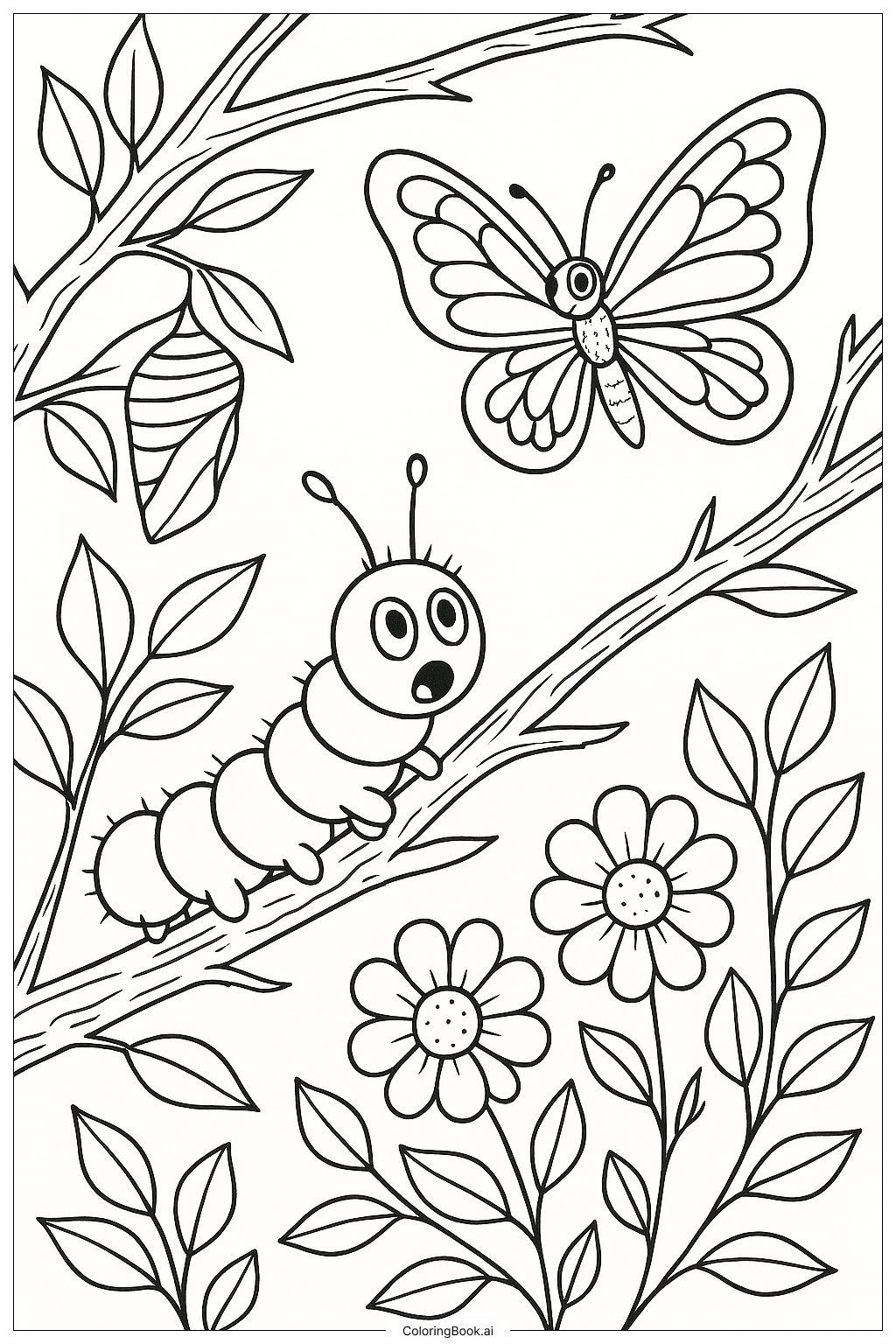
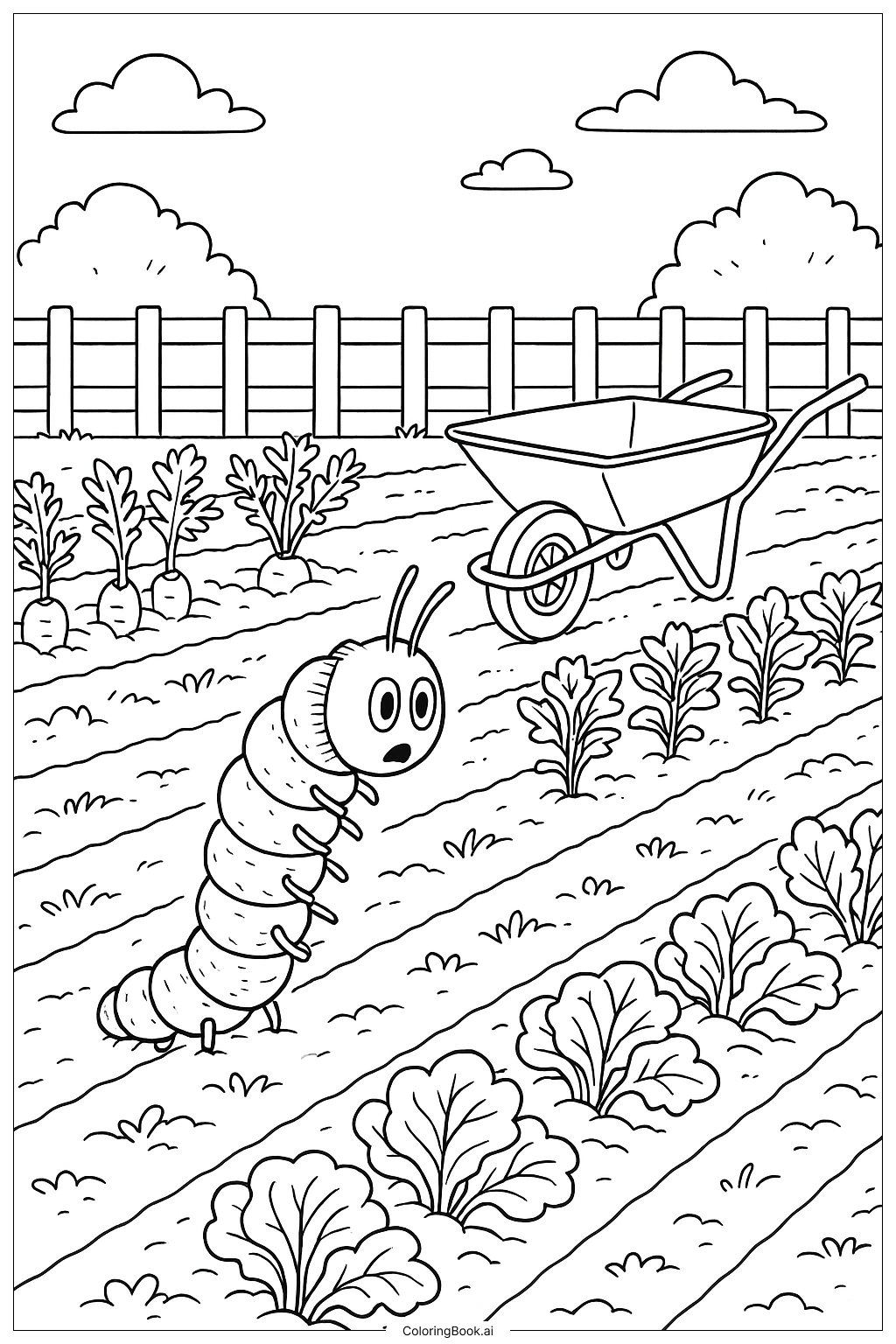
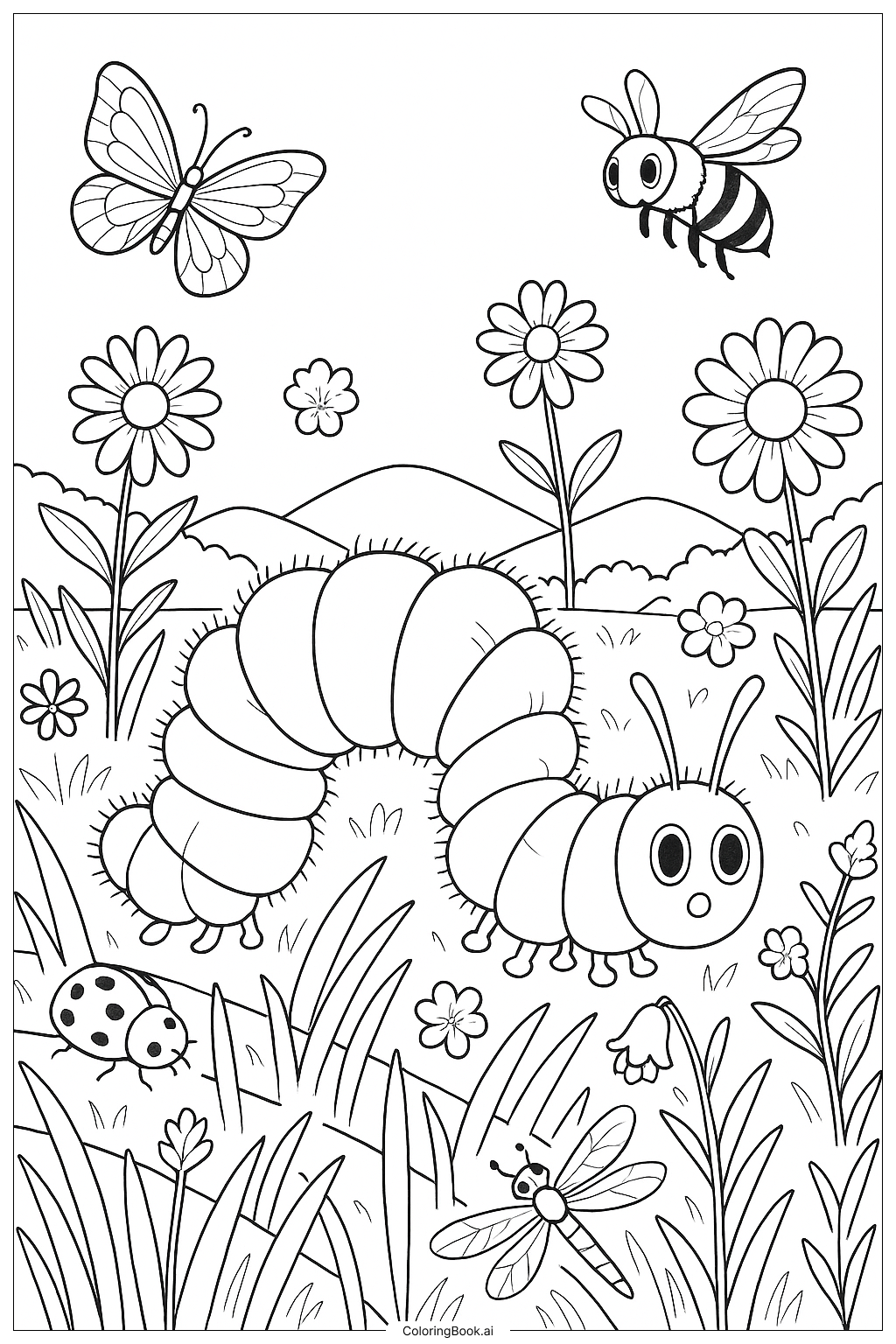
Start with the caterpillar's body. Each rounded segment can be a different bright color — try red, orange, yellow, green, and blue to make it look fun and lively. Use a warm peach or light tan for the face. Color the eyes with a bright white base, then add dark pupils with tiny white highlights to make them look shiny. The antennae can be green or yellow. For the leaves and background elements, use various shades of green to add depth. Light green works well for highlights, and a darker green fills in the shadows. Encourage kids to mix and match colors freely. There are no wrong choices here. Using crayons, colored pencils, or markers all work great. Younger children can focus on one color per segment, while older kids might try shading or blending to make the caterpillar look rounder and more three-dimensional.
Coloring challenges: Which parts are difficult to color and need attention for Hungry Caterpillar With Smile coloring page?
• Coloring the Body Segments: The caterpillar's body is made of multiple rounded segments placed close together. Keeping each segment a clean, distinct color without bleeding into the next one can be tricky, especially for younger children. Using a fine-tipped marker or a sharpened colored pencil to outline each segment before filling it in can help maintain clean borders.
• Capturing the Facial Expression: The caterpillar's big smile and expressive eyes are the heart of this image. Coloring the eyes carefully is important — leaving a small white dot as a highlight gives the eyes life and sparkle. Rushing through this area or using too dark a color overall can flatten the expression and make it look less cheerful.
• Working with Curved Outlines: Almost every line in this image is curved and rounded. Staying inside curved borders requires a steady hand and good pencil control. Young colorists may find it helpful to slow down and rotate the page as they work, rather than twisting their wrist awkwardly to follow the curves.
• Adding Depth to Round Shapes: Each body segment is essentially a sphere shape. To make the caterpillar look full and three-dimensional, colorists can try adding a slightly darker shade along the edges of each segment and leaving the center lighter. This simple shading technique adds volume but requires some patience and practice.
• Small Details Like Legs and Antennae: The tiny legs and antennae are narrow and small. Filling them with color without going outside the lines takes precision. A fine-point tool works best here, and it helps to save these small details for last so the surrounding areas are already dry.
Benefits of coloring books: Advantages of drawing Hungry Caterpillar With Smile coloring page
Coloring the Hungry Caterpillar With Smile offers a wide range of benefits for children of all ages. First, it builds fine motor skills. Carefully staying within the rounded outlines strengthens hand muscles and improves pencil control, which supports handwriting development. Second, it sparks creativity. Choosing colors for each body segment encourages children to make their own decisions and express their unique sense of style and imagination. There are no rules, and that freedom is empowering. Third, it supports focus and patience. Completing a detailed image like this one teaches kids to slow down, concentrate, and work through a task from start to finish — a valuable habit in and out of the classroom. Fourth, it connects children to a beloved story. The Hungry Caterpillar is a classic character that many kids already love. Bringing it to life with color deepens that emotional connection and can inspire a love of reading and storytelling. Finally, it is simply enjoyable. The cheerful smile and bright, playful design of this image create a positive, relaxing experience that reduces stress and brings joy to young colorists. It is a wonderful quiet-time activity for both Boys and Girls.