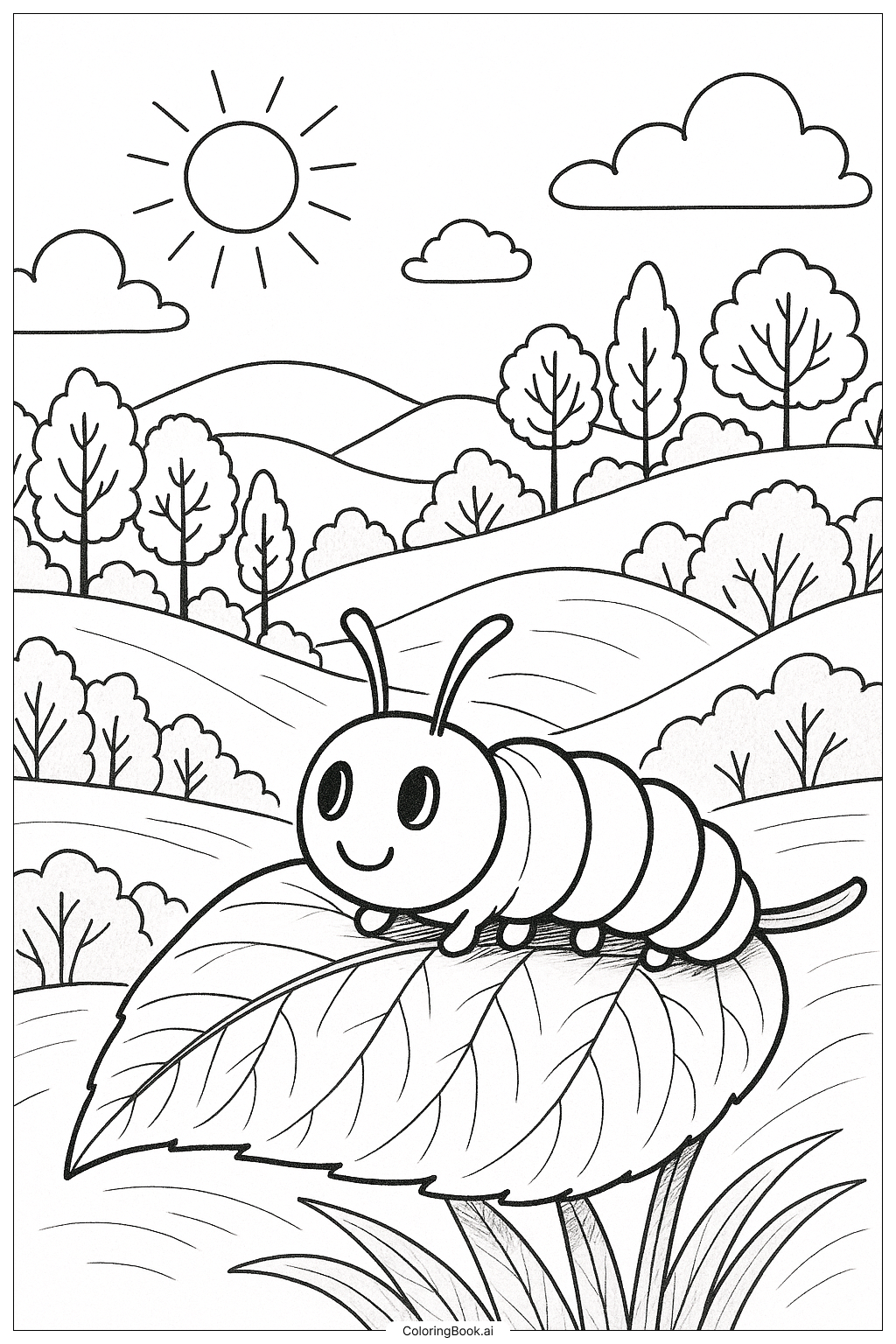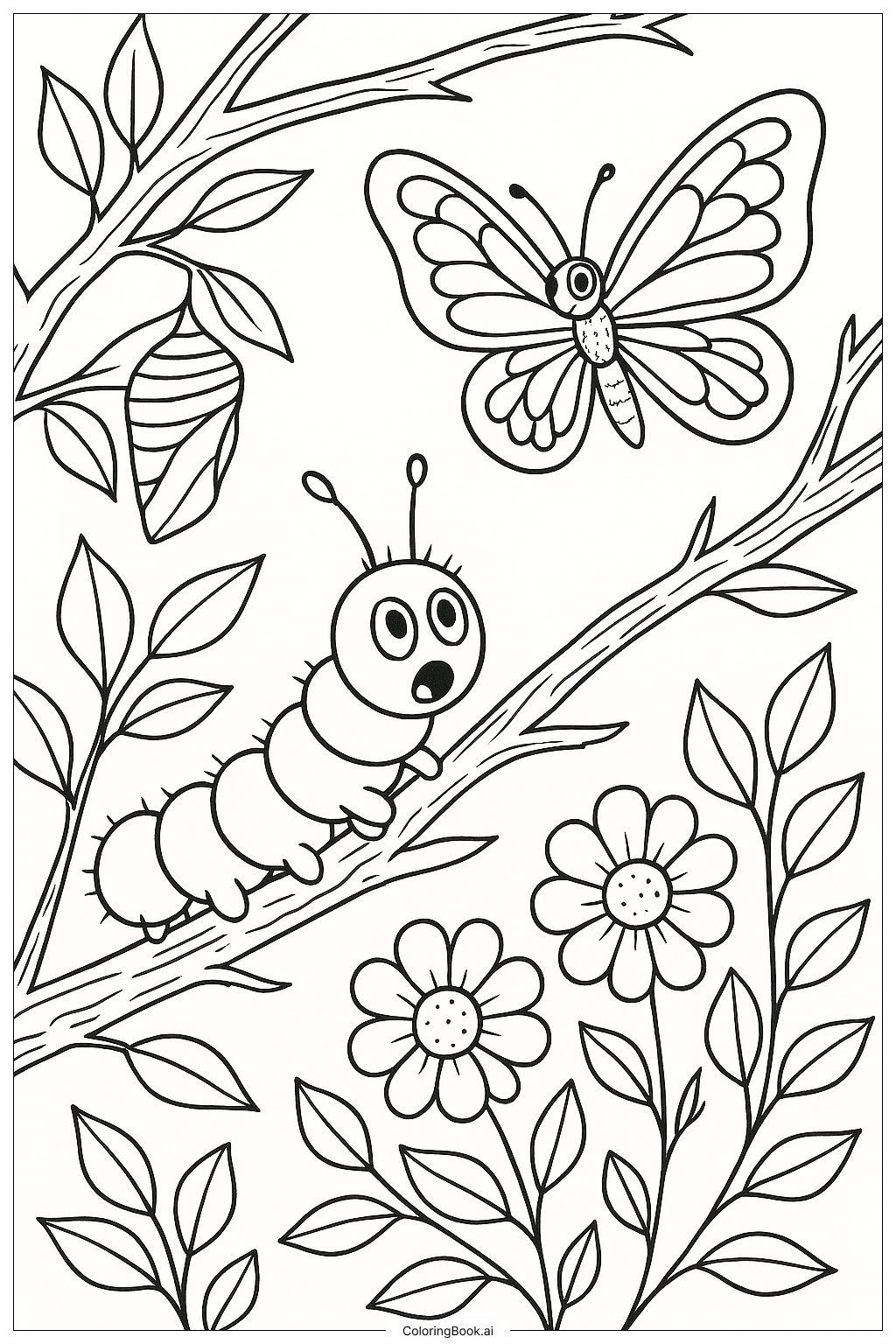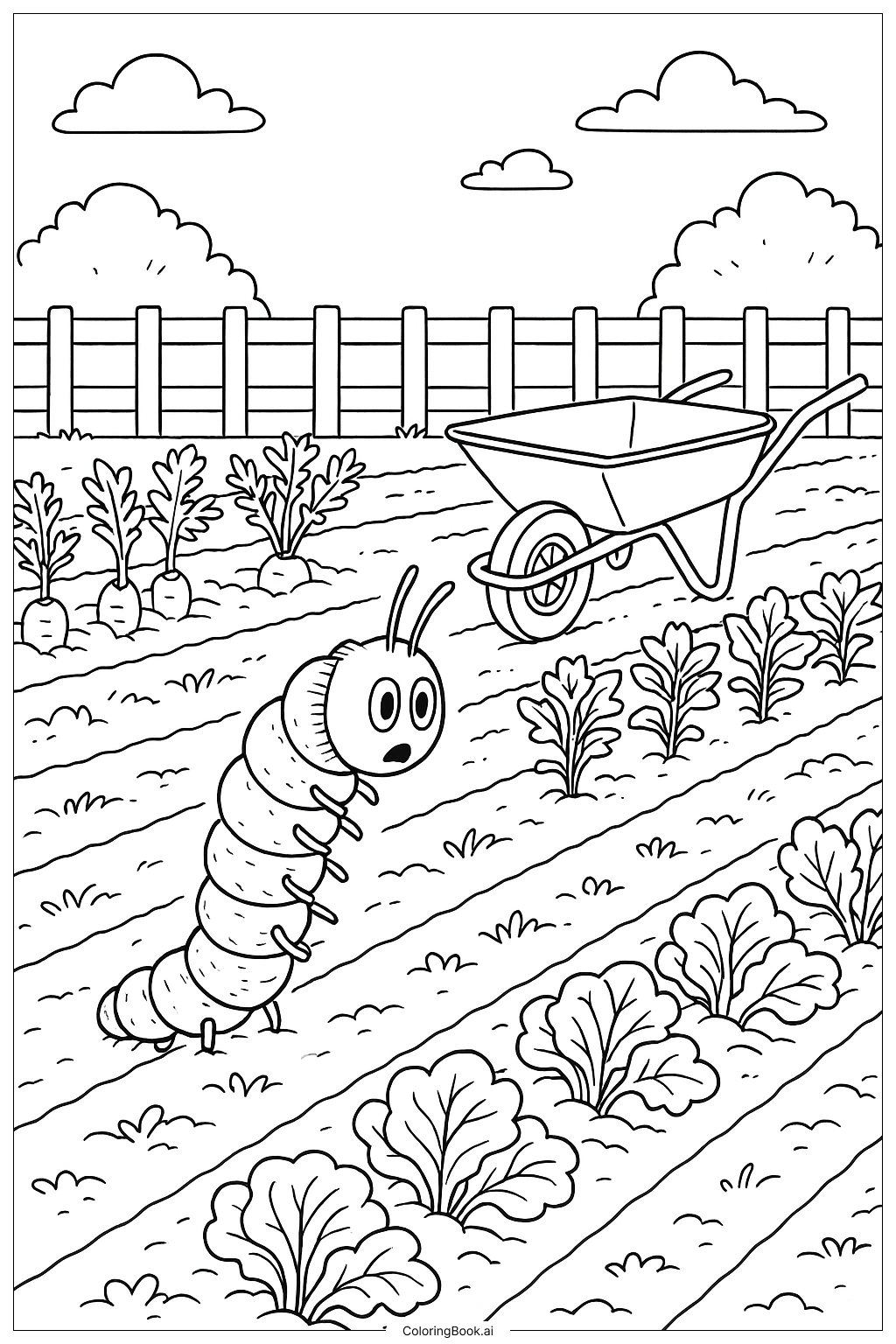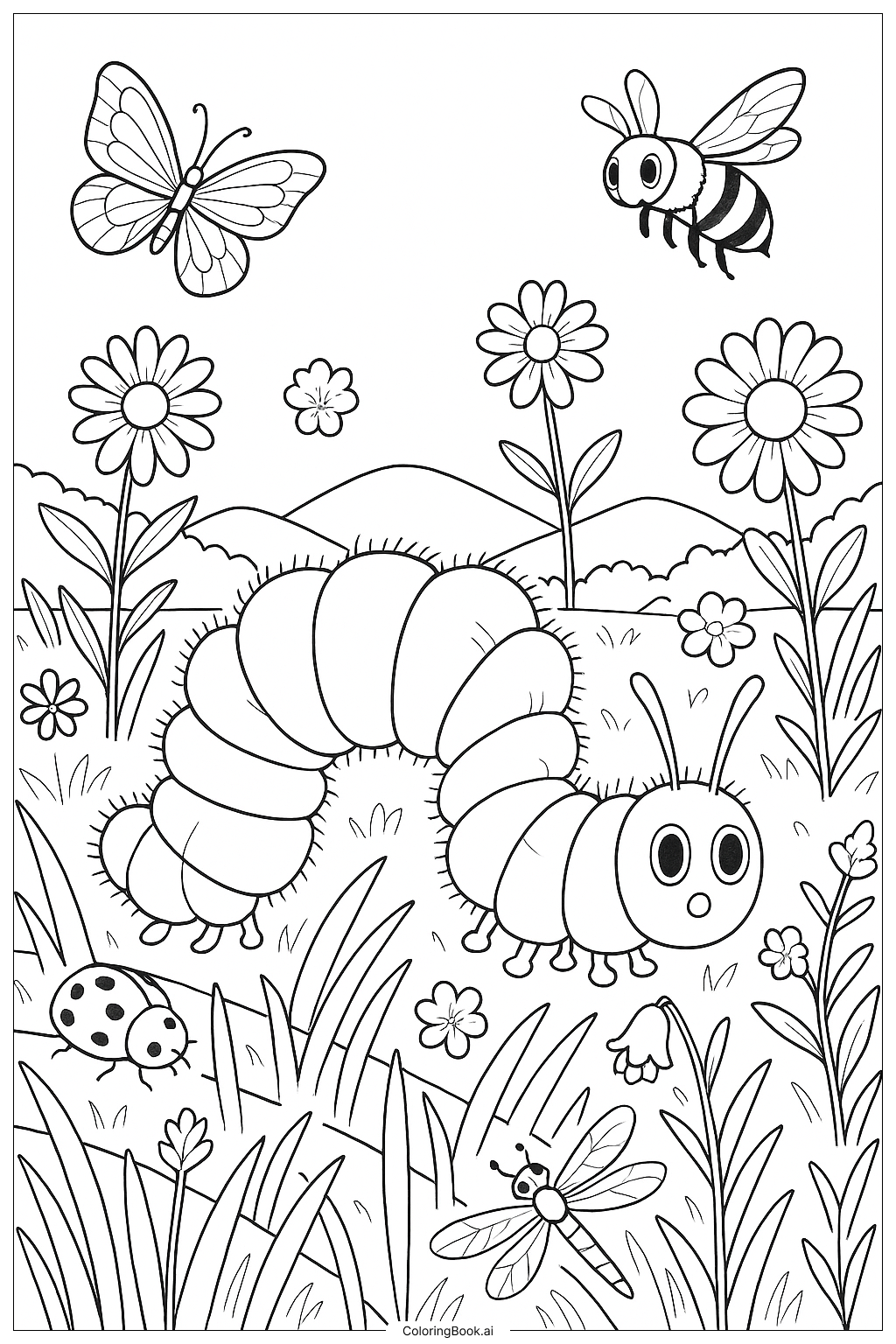
Coloring tips: How to color Hungry Caterpillar Visiting Picnic Plate coloring page well?
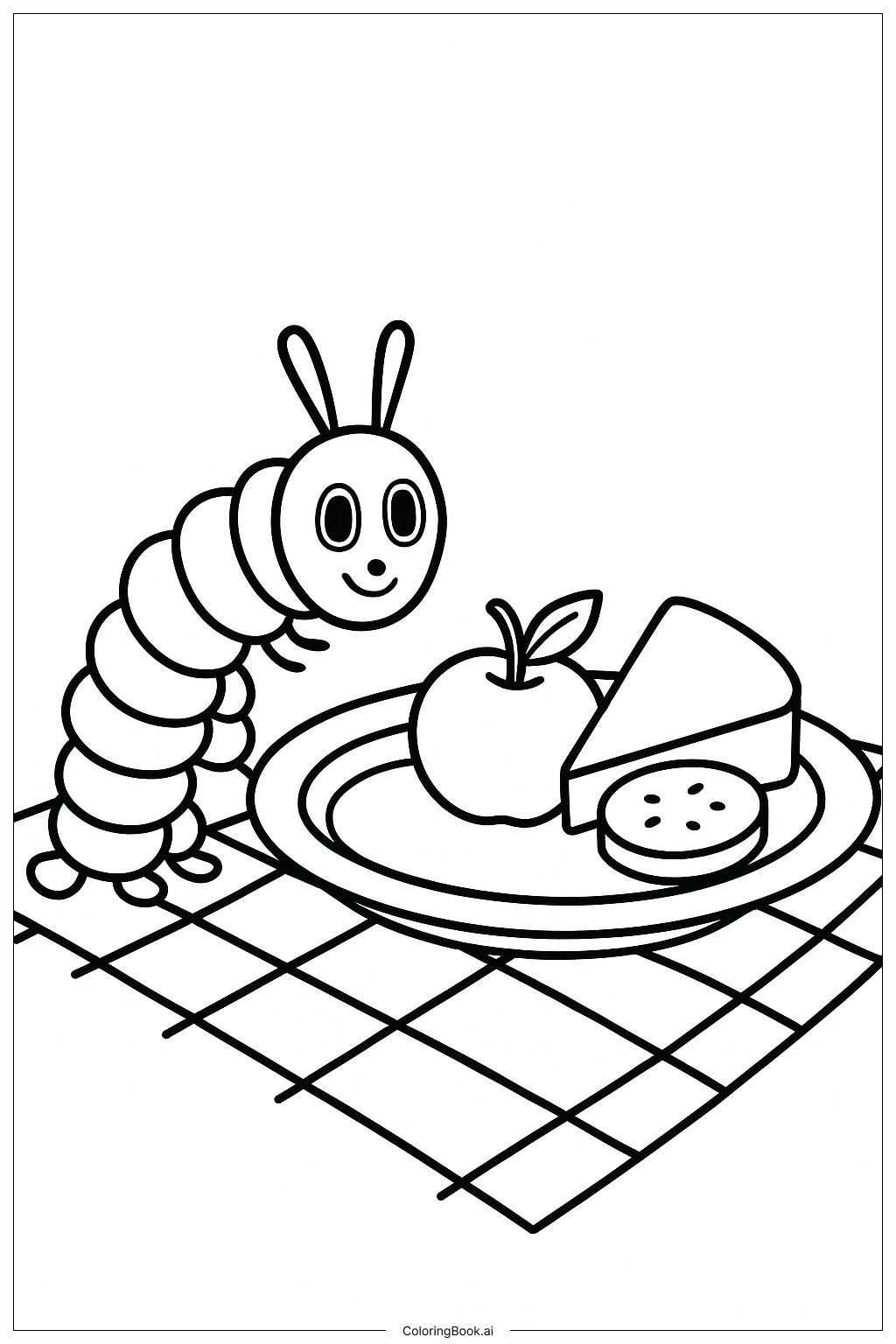
Start with the caterpillar's body using bright greens, and add yellow or light lime for highlights on each segment to give it a round, plump look. Use red for the head to match the classic Hungry Caterpillar style. For the food on the plate, go bold and fun — bright red strawberries, sunny yellow bananas, deep orange slices of citrus, and rich brown for any chocolate treats. The plate itself looks great in white or soft cream. Add a warm tan or beige for the crust of sandwiches. Use light greens for any leaves nearby. Do not be afraid to mix shades of the same color to add depth. Children can experiment freely with any colors they love — there are no wrong choices here. Coloring this scene is a great chance to practice mixing warm and cool tones while keeping the overall look bright and appetizing.
Coloring challenges: Which parts are difficult to color and need attention for Hungry Caterpillar Visiting Picnic Plate coloring page?
• Caterpillar Body Segments: The caterpillar's body is made up of many round segments, each needing its own careful coloring. Staying inside the curved lines without going over can be tricky, especially for younger children. Using a fine-tipped crayon or colored pencil will help keep each segment neat and distinct.
• Small Food Details: The picnic plate is packed with tiny food items, each with its own shape and texture. Coloring small pieces like seeds on a strawberry or the criss-cross texture on a sandwich crust requires patience and a steady hand. Skipping these details is fine, but adding them makes the image much more lively.
• Plate Border and Round Shape: The circular plate has a distinct border that frames all the food. Following its curved outline cleanly while switching between different food colors right next to each other can be challenging. Taking it section by section helps avoid accidentally bleeding one color into another.
• Overlapping Objects: Some food items and the caterpillar's body overlap each other on the plate. Where two objects meet, choosing slightly different shades of a similar color helps each element stand out. This is a good opportunity to practice the concept of contrast and visual separation.
• Facial Expression Details: The caterpillar's face has small, expressive features — eyes, a smile, and possibly antennae. These tiny areas benefit from careful outlining before filling in with color, so the face keeps its cheerful personality without the details getting lost in surrounding colors.
Benefits of coloring books: Advantages of drawing Hungry Caterpillar Visiting Picnic Plate coloring page
Coloring this Hungry Caterpillar Visiting Picnic Plate scene offers a wonderful mix of fun and learning for children of all ages. Because the image features both a beloved character and everyday food items, it naturally sparks curiosity and conversation about healthy eating and nature.
For younger children, tracing around the caterpillar's segments and the round plate builds fine motor skills and strengthens hand-eye coordination. Choosing colors for different fruits and foods also helps reinforce color recognition and vocabulary.
Older children benefit from the creative challenge of shading and blending. Deciding how to make a strawberry look juicy or a banana look ripe encourages them to observe the real world and translate what they see onto the page.
Emotionally, this image is calming and joyful. The friendly caterpillar and cheerful picnic setting create a positive atmosphere that helps children relax and focus. Completing the page gives a genuine sense of accomplishment.
The scene also supports imaginative thinking. Children might invent a story about where the caterpillar came from or what it plans to eat next, turning a simple coloring activity into a full creative exercise. Overall, this page is a delightful way to combine artistic expression with early childhood learning.