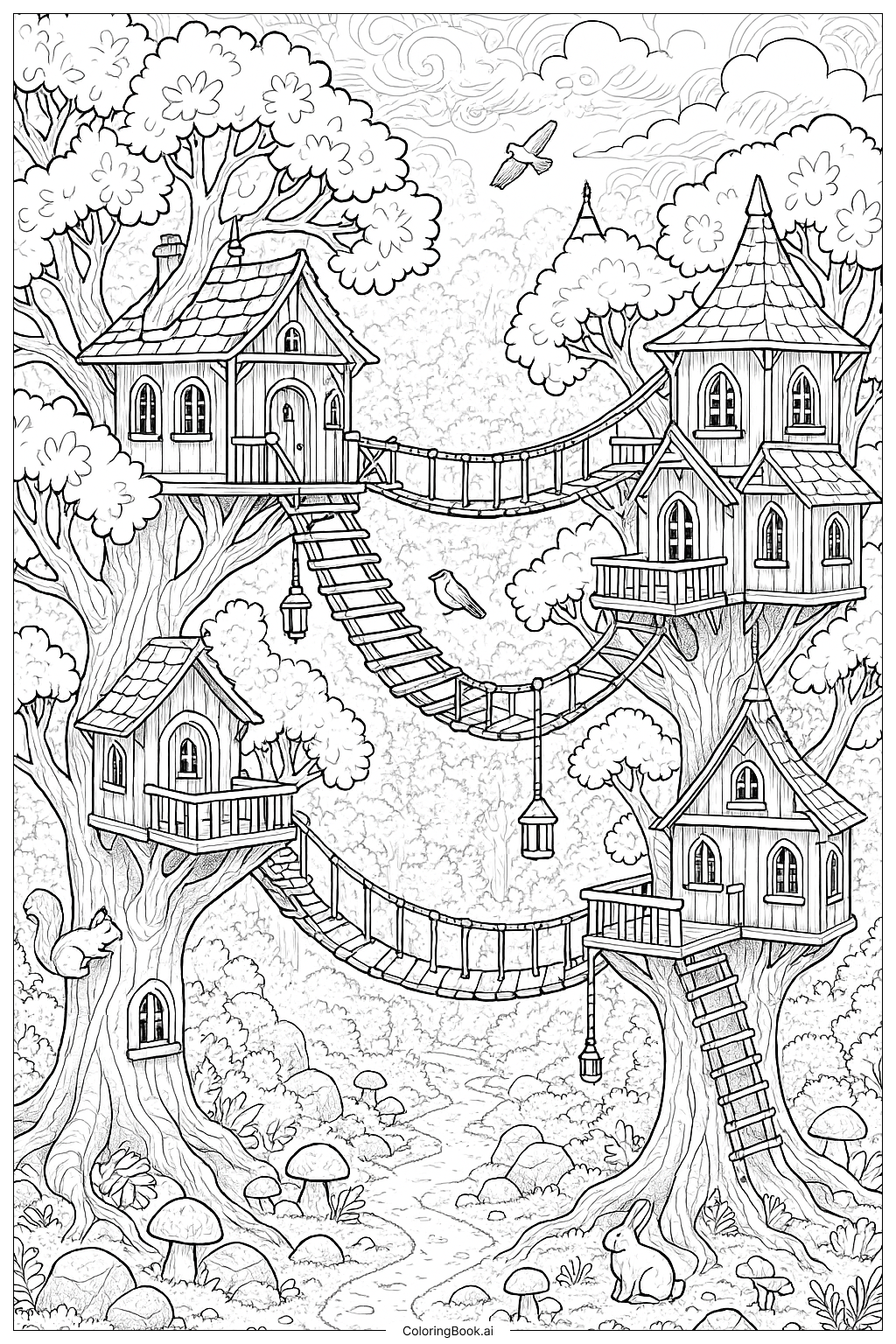
Coloring tips: How to color A Tree House Village in the Forest coloring page well?
Start with the sky peeking through the treetops. Use light blue or soft lavender to give the scene a dreamy feel. Color the tree trunks and wooden houses in warm browns and tans. Use different shades like dark brown for shadows and light tan for highlights to give the wood a natural look. For the leaves and foliage, try mixing several shades of green — dark green, lime green, and yellow-green — to make the forest feel full and alive. Add small pops of color with flowers, mushrooms, and moss using reds, oranges, and bright yellows. The rope bridges can be done in golden yellow or sandy beige. Encourage kids to be creative — maybe one tree house is painted red, another is blue. There are no rules in this magical forest village. Use lighter colors first and build up to darker shades. Leave some white space to create a feeling of light shining through the trees.
Coloring challenges: Which parts are difficult to color and need attention for A Tree House Village in the Forest coloring page?
• Tree Bark Texture: The tree trunks have detailed lines and grooves that mimic real bark. Coloring these carefully with multiple brown tones takes patience. Kids may find it tricky to stay inside the thin lines and layer shades without making the trunks look flat or too dark. Using a light base color first and adding darker strokes on the edges helps create depth.
• Overlapping Foliage: The leaves and branches overlap throughout the entire scene. It can be hard to tell where one cluster of leaves ends and another begins. Choosing different shades of green for different sections helps separate them visually. Younger children may feel overwhelmed by the number of leaf shapes to fill in.
• Rope Bridges and Small Details: The rope bridges connecting the tree houses have many small lines, knots, and wooden planks. These tiny details require a sharp pencil or fine-tipped marker to color neatly. Rushing through these sections can cause colors to bleed together and make the bridges look messy.
• Multiple Tree Houses: Each tree house has its own windows, doors, and roof details. Keeping a consistent color scheme across all the houses while making each one feel unique is a creative challenge. It requires planning ahead and deciding on a color palette before starting.
• Forest Floor Elements: Mushrooms, roots, and ground plants at the base of the trees are small and closely packed. Coloring each element a distinct color without muddying the overall look requires careful attention and a steady hand, especially for younger colorists.
Benefits of coloring books: Advantages of drawing A Tree House Village in the Forest coloring page
Coloring this tree house village scene offers wonderful benefits for children and anyone who picks up a crayon or marker. The detailed forest setting encourages focus and concentration, helping kids practice sitting still and working carefully for longer periods of time. Choosing colors for the trees, houses, and forest floor sparks creativity and imaginative thinking — there is no single right answer, so every child's version becomes their own unique artwork. The variety of shapes and textures in the scene helps develop fine motor skills as kids navigate small details like windows, ropes, and leaves. Working through a complex, multi-element scene also builds patience and a sense of accomplishment when the page is finally complete. For older children, the challenge of shading and layering colors to create depth and dimension teaches early lessons in art technique. The peaceful forest theme also has a calming effect, making this a great quiet-time activity that reduces stress and anxiety. Coloring together as a family or in a classroom builds connection and encourages conversation about nature, adventure, and storytelling. Overall, this page is a fun and enriching activity that grows both artistic skills and a love of the natural world.