Coloring tips: How to color Horton Hears A Who Horton With Butterfly coloring page well?
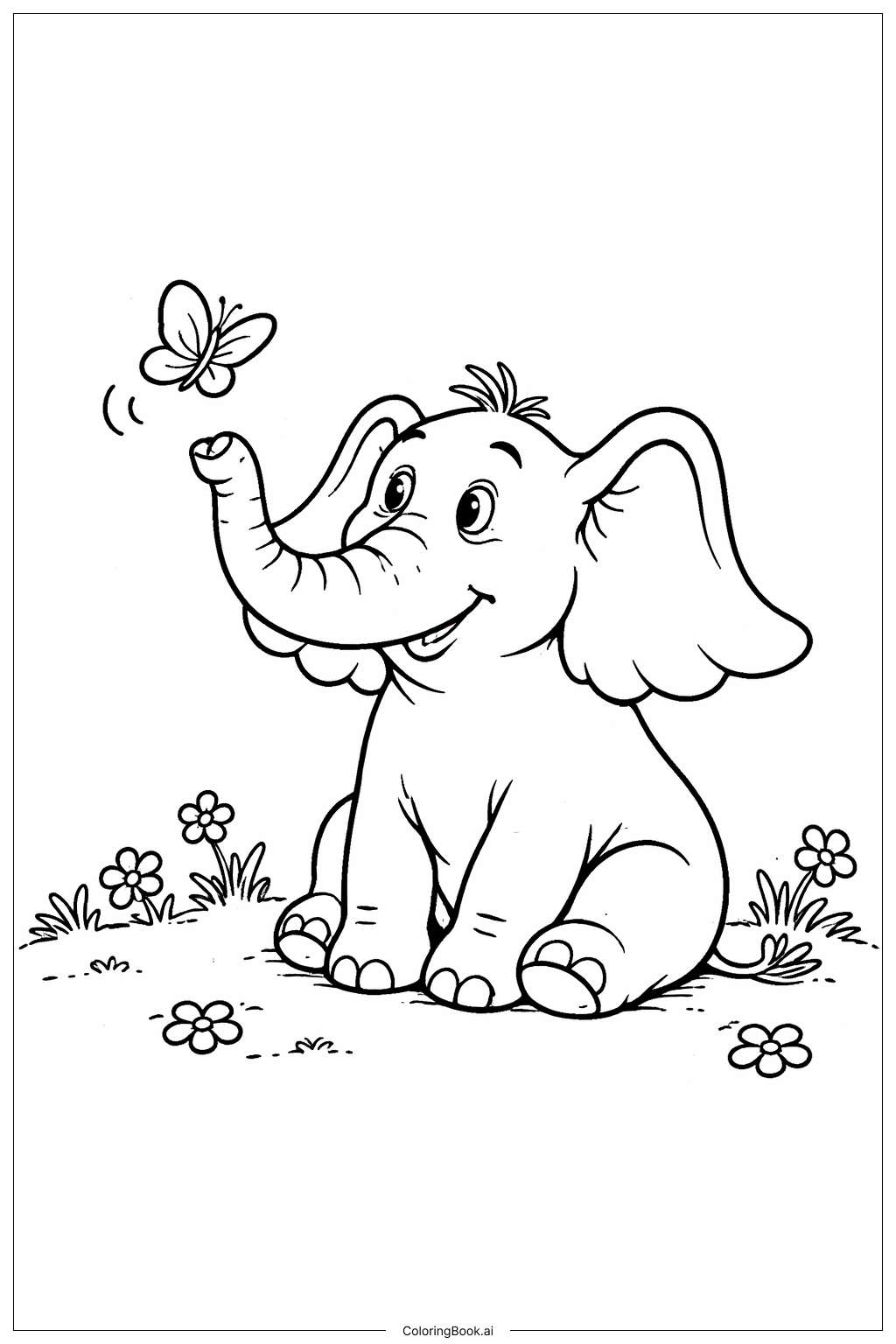
Use soft gray or light blue tones for Horton's skin to keep him gentle and friendly. Color his eyes dark brown or black to make them expressive. The butterfly can be bright, with colors like yellow, orange, or turquoise to make it stand out. Flowers around Horton can be colored using reds, pinks, purples, and yellows for a cheerful, lively garden look. Use green shades for the grass and leaves to make the scene fresh. Try to color gently inside the lines to keep the picture neat.
Coloring challenges: Which parts are difficult to color and need attention for Horton Hears A Who Horton With Butterfly coloring page?
1. Horton's big ears have smooth curves, so it may be hard to color evenly without going outside the lines. 2. The butterfly is small and detailed, requiring careful coloring of tiny wings and body parts. 3. The flowers and grass blades have small spaces and fine lines which need patience and a steady hand. 4. Shading Horton's skin to show roundness and volume can be tricky for younger children. 5. Keeping colors natural but bright enough to make the scene lively may require color blending skills.
Benefits of coloring books: Advantages of drawing Horton Hears A Who Horton With Butterfly coloring page
Coloring this picture helps children develop fine motor skills and hand-eye coordination as they carefully color Horton's big ears and the tiny butterfly. It encourages attention to detail, especially with the small flowers and butterfly wings. The scene also sparks imagination and an appreciation for nature and friendship. Through coloring, children learn to choose colors and practice staying within lines, which boosts focus and patience. This enjoyable activity supports creativity and confidence in art.