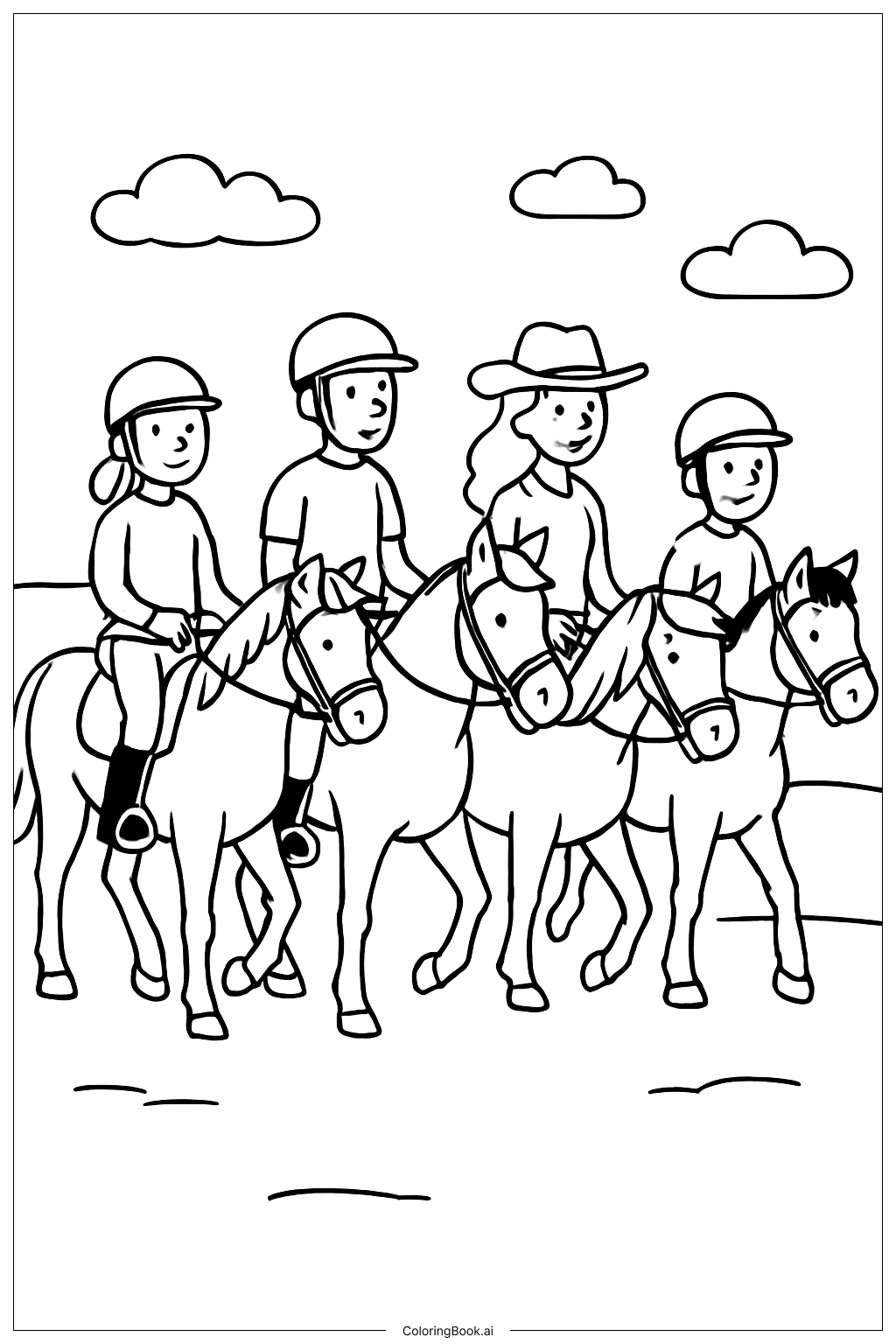
Coloring tips: How to color Horses With Riders coloring page well?
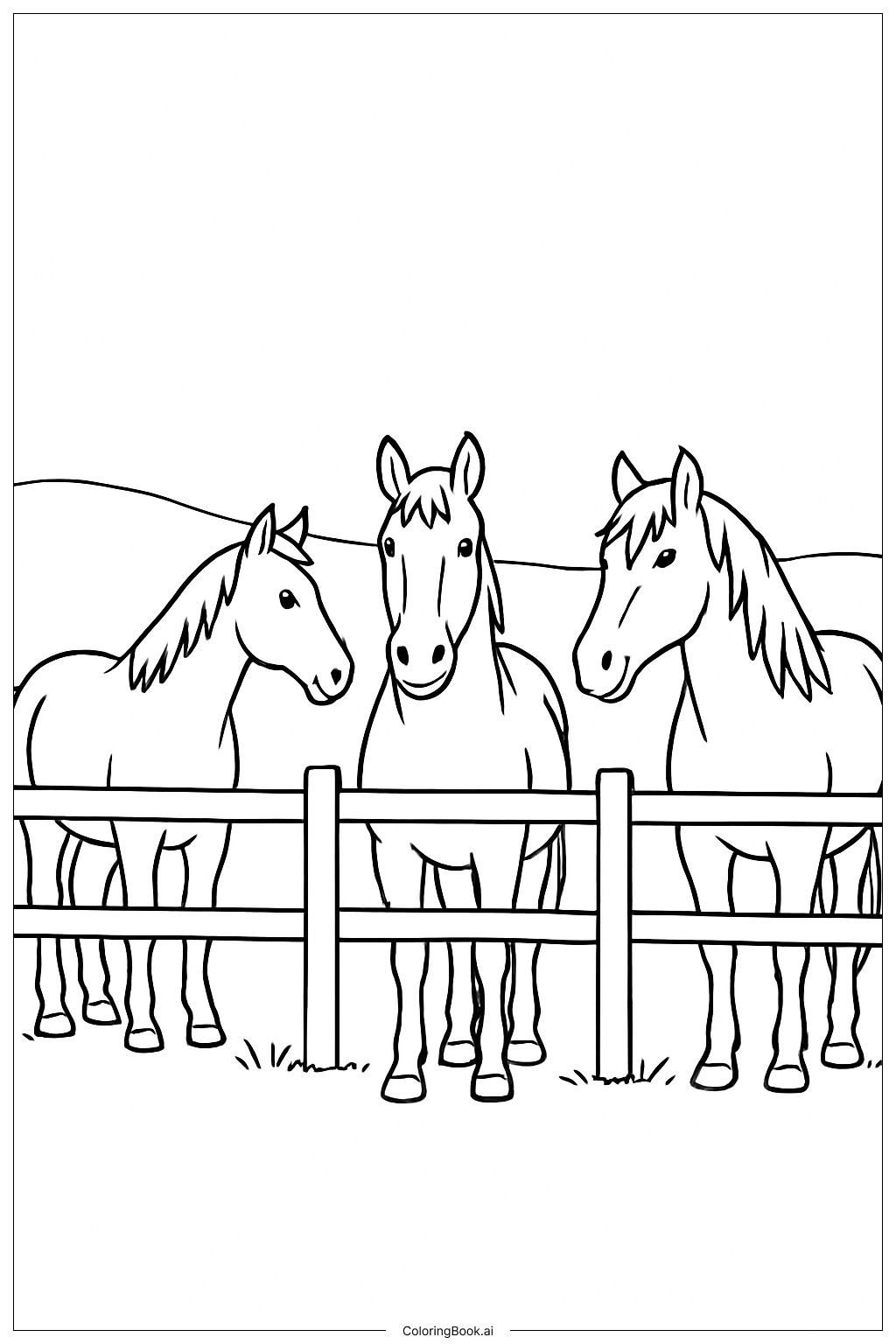
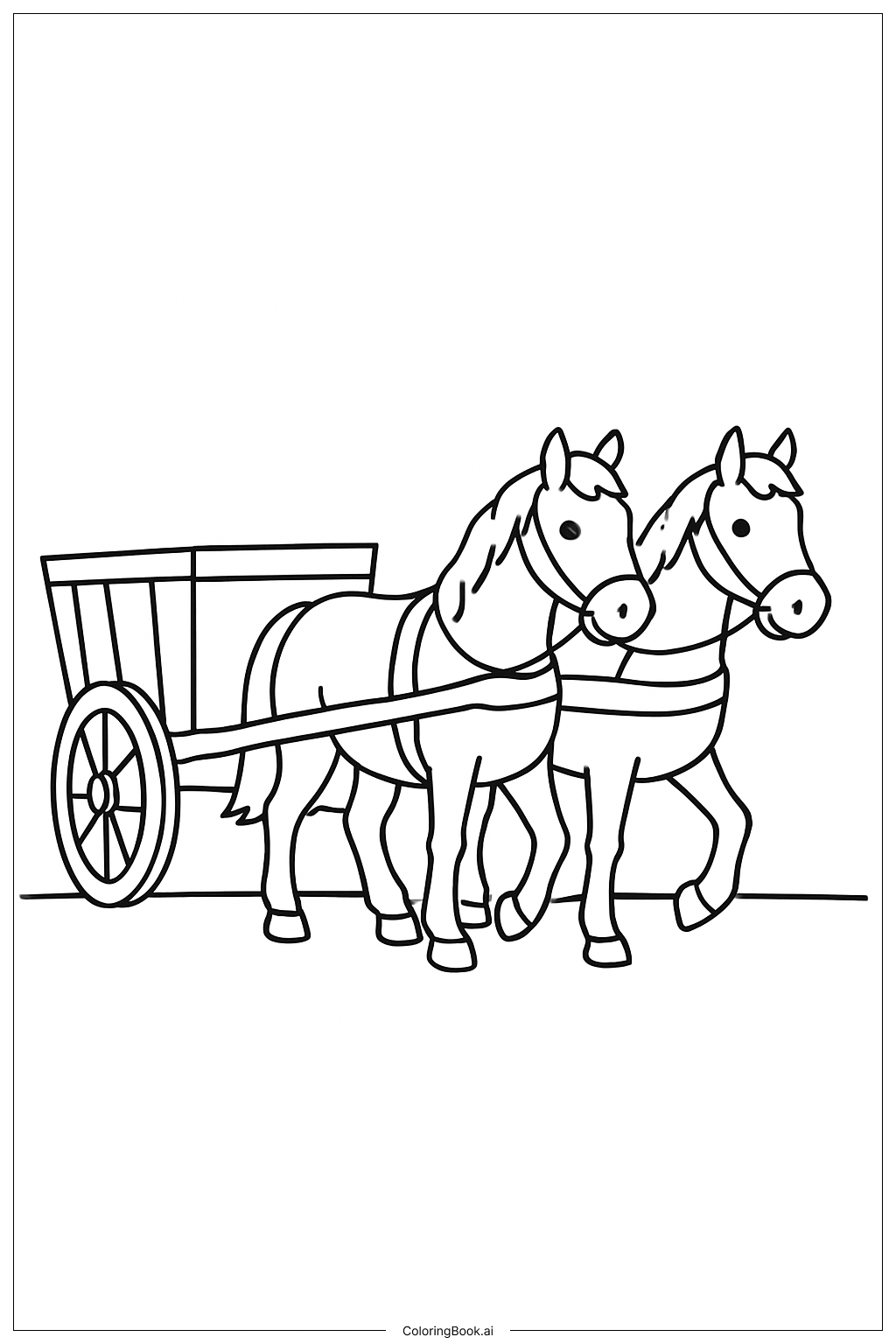
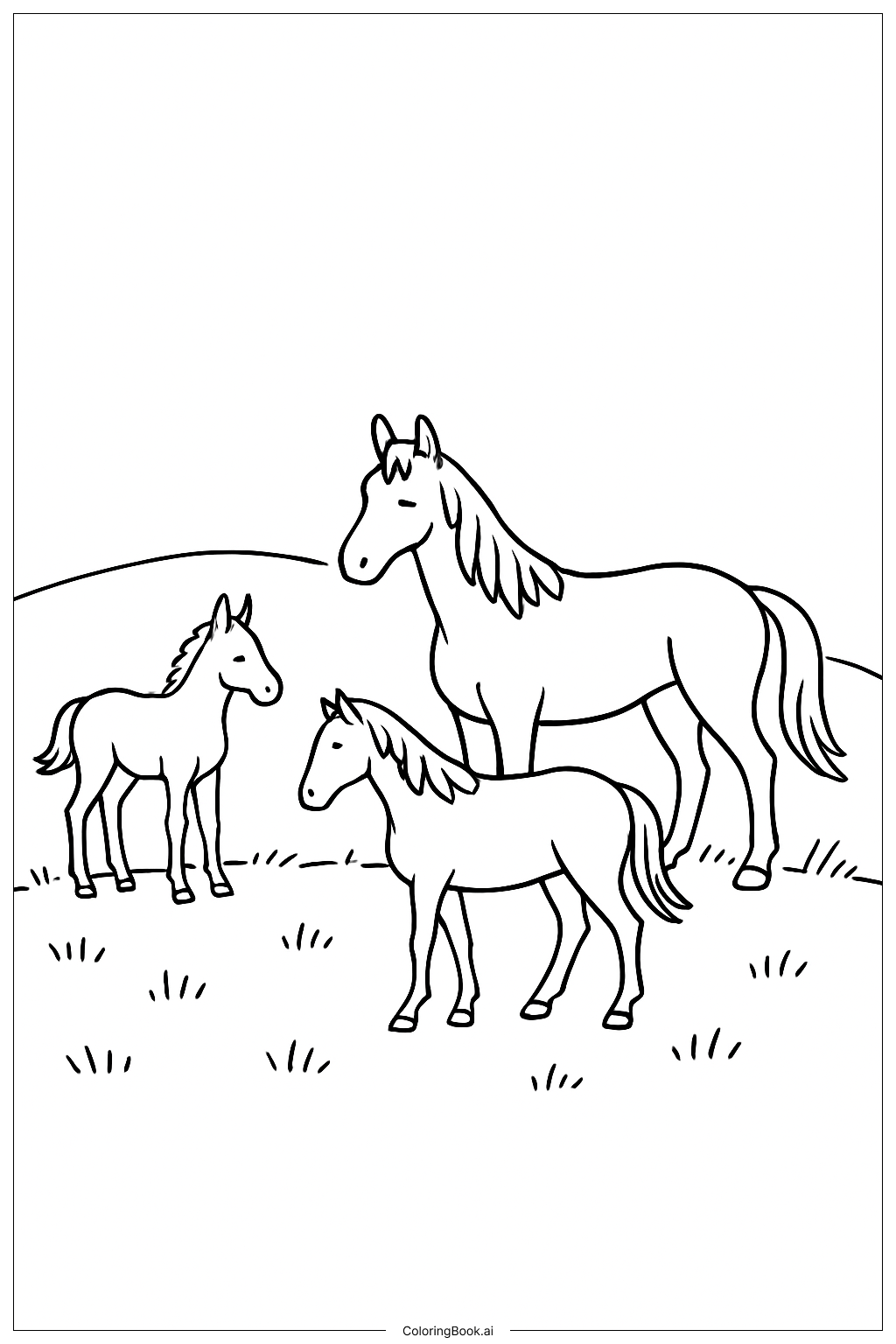
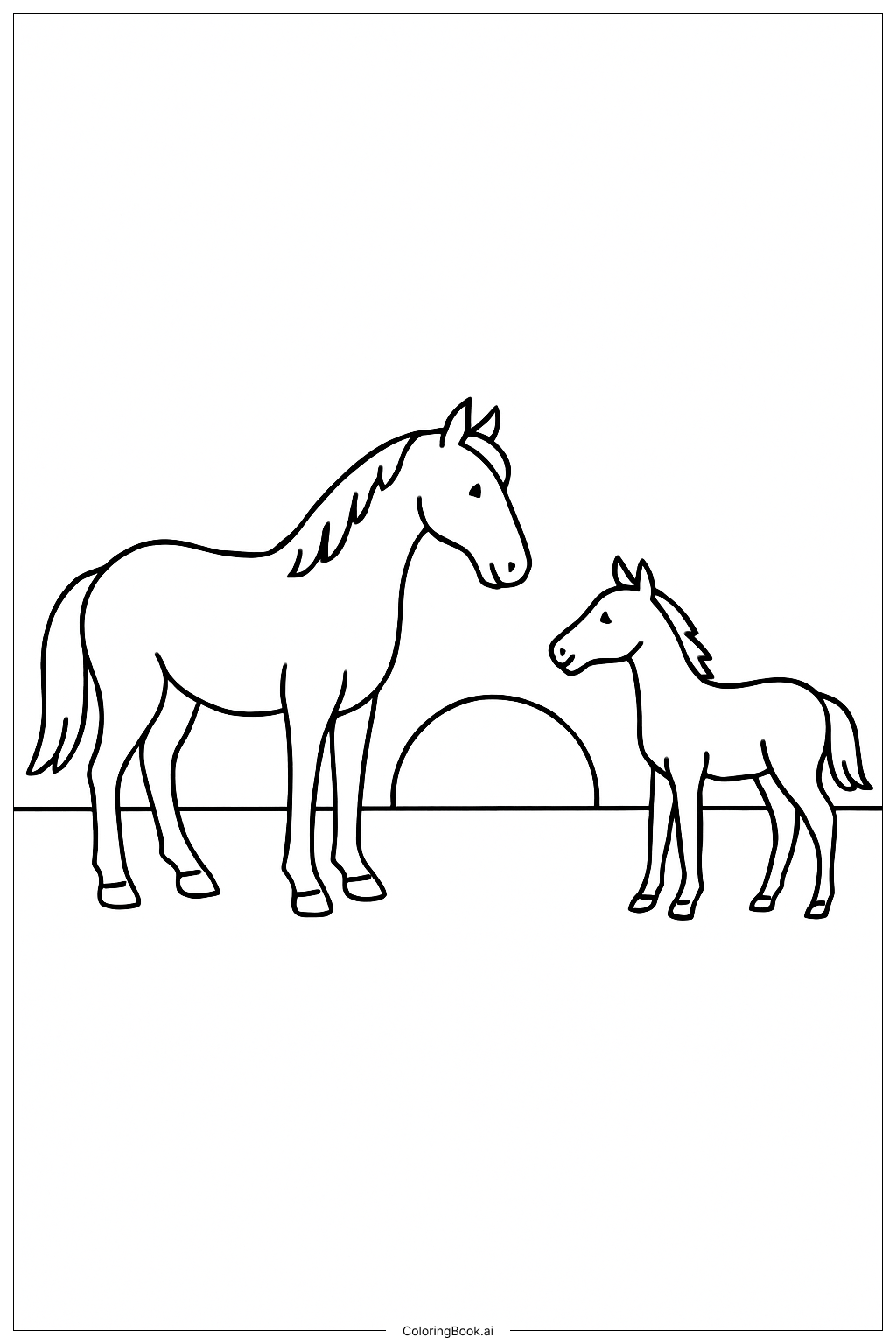
Start with the horses' bodies before moving on to the riders and background. For the horses, choose classic coat colors like chestnut brown, jet black, dapple gray, or golden palomino. Use a slightly darker shade of the same color to shade the muscles and underbelly, giving the horse a three-dimensional look. For the manes and tails, try a contrasting or complementary tone — a cream mane on a chestnut horse looks beautiful. Color the riders' helmets and jackets in bold, sporty colors like red, navy, or forest green. Use tan or dark brown for the riding boots and saddles. The reins and bridle can be done in black or dark leather tones. For the background, soft greens and sky blue keep the focus on the horses and riders while adding a fresh, outdoor feel. Younger colorists can keep it simple with flat colors, while older kids can try blending and layering for a more realistic effect.
Coloring challenges: Which parts are difficult to color and need attention for Horses With Riders coloring page?
Coloring this image comes with several challenges that make it both exciting and rewarding to complete. Here are the main areas to watch out for:
• Horse Muscle Definition: Horses have complex, layered muscle structures that show through their skin. Coloring these curves requires careful shading using at least two tones of the same base color. Rushing this step can make the horse look flat instead of powerful and lifelike.
• Overlapping Figures: The scene includes multiple horses and riders, and their bodies overlap in places. Keeping each figure visually separate requires using distinct color choices for neighboring areas. If two touching sections are too similar in color, the image can look muddy and hard to read.
• Rider Gear Details: The riders wear helmets, jackets, gloves, and boots, each with small details like straps, buckles, and folds in the fabric. These tiny areas need a fine-tipped tool and a steady hand. Coloring outside the lines in these spots can make the gear look messy.
• Mane and Tail Flow: The flowing manes and tails have many thin, curved lines packed closely together. Coloring inside each strand without bleeding into the next takes patience. Using short, directional strokes that follow the flow of the hair gives the best result.
• Background Balance: The background needs to complement the main figures without overpowering them. Using colors that are too bright or too dark in the background can distract from the horses and riders, so soft, muted tones work best here.
Benefits of coloring books: Advantages of drawing Horses With Riders coloring page
Coloring this Horses With Riders page offers a wide range of benefits for children and young colorists of all ages.
For younger children, staying within the detailed lines of the horses and riders builds fine motor skills and hand-eye coordination. It also develops patience and focus, as they work through each section of the image one step at a time.
Choosing colors for the horses' coats, riders' outfits, and backgrounds encourages creative thinking and personal expression. There is no single right answer — every child's version can look completely unique and special.
For older kids and teens, the challenge of shading horse muscles and layering colors for realistic effects introduces basic art techniques like color theory and tonal contrast. These skills carry over into drawing, painting, and other creative pursuits.
The subject itself — horses and riders — sparks curiosity about equestrianism, animals, and nature. Coloring can open conversations about horse breeds, riding sports, and caring for animals, turning a fun activity into a learning moment.
Completing a full page also gives children a real sense of accomplishment. Finishing something they are proud of boosts confidence and motivates them to take on more creative challenges. Overall, this page turns quiet coloring time into a productive, joyful, and enriching experience.