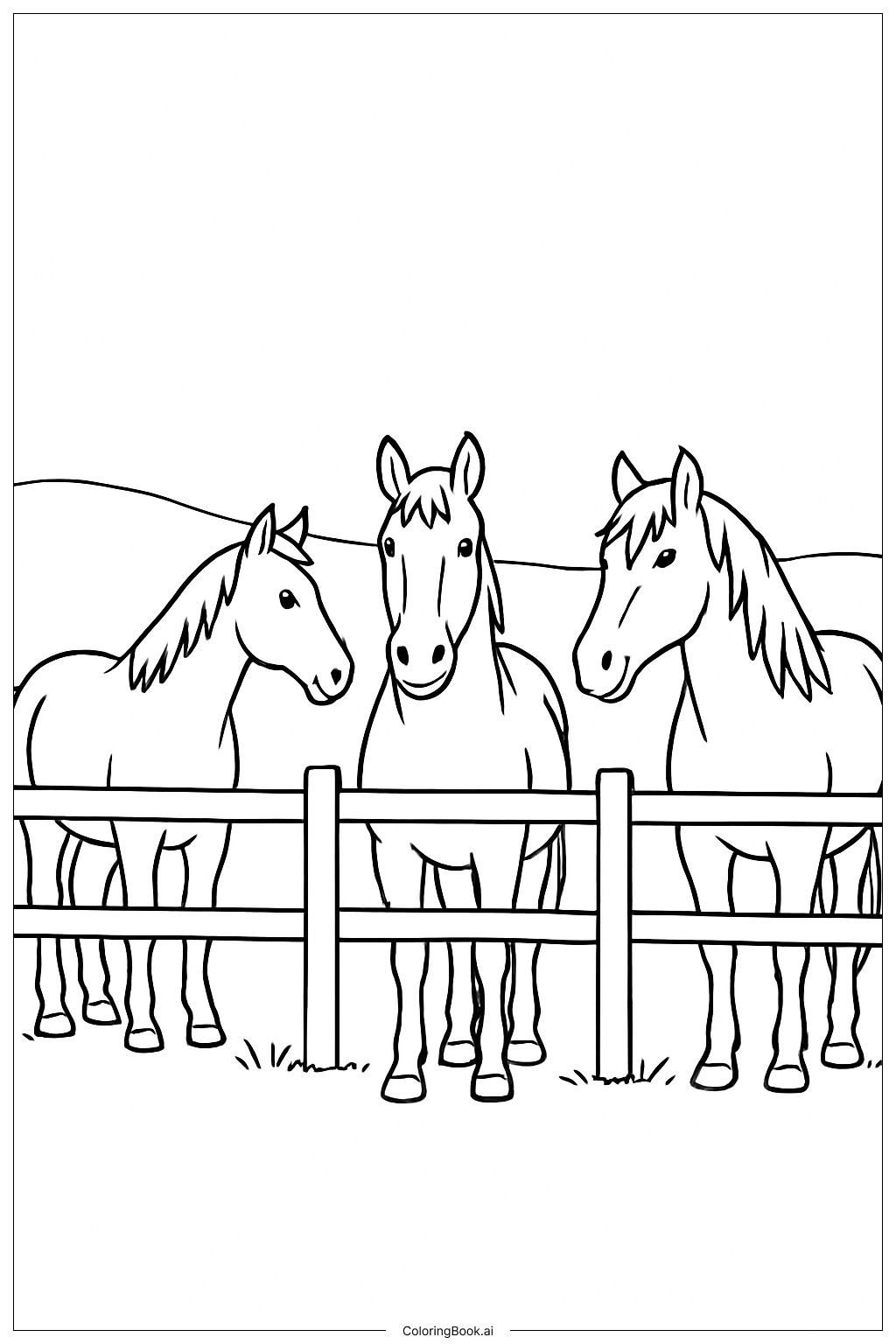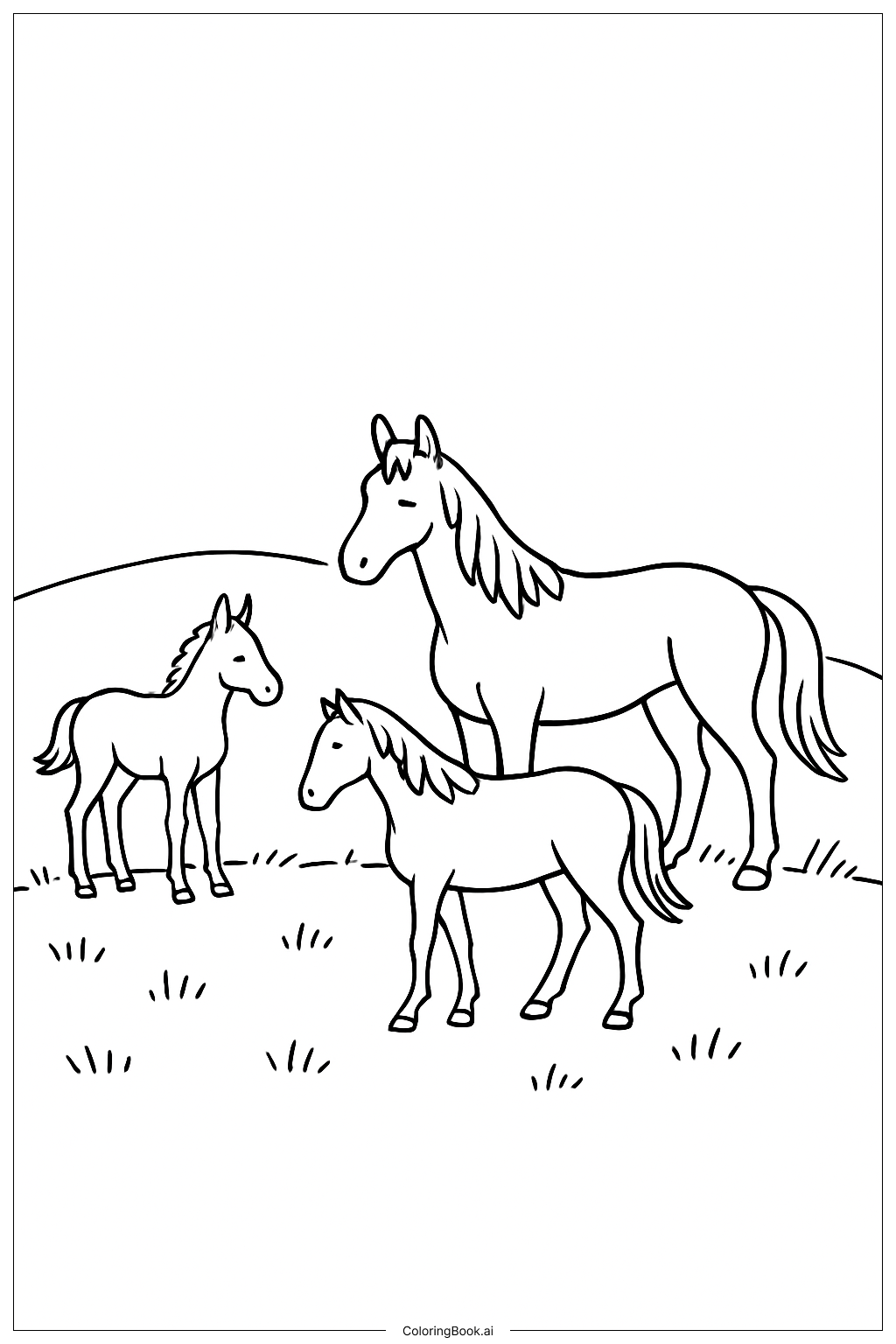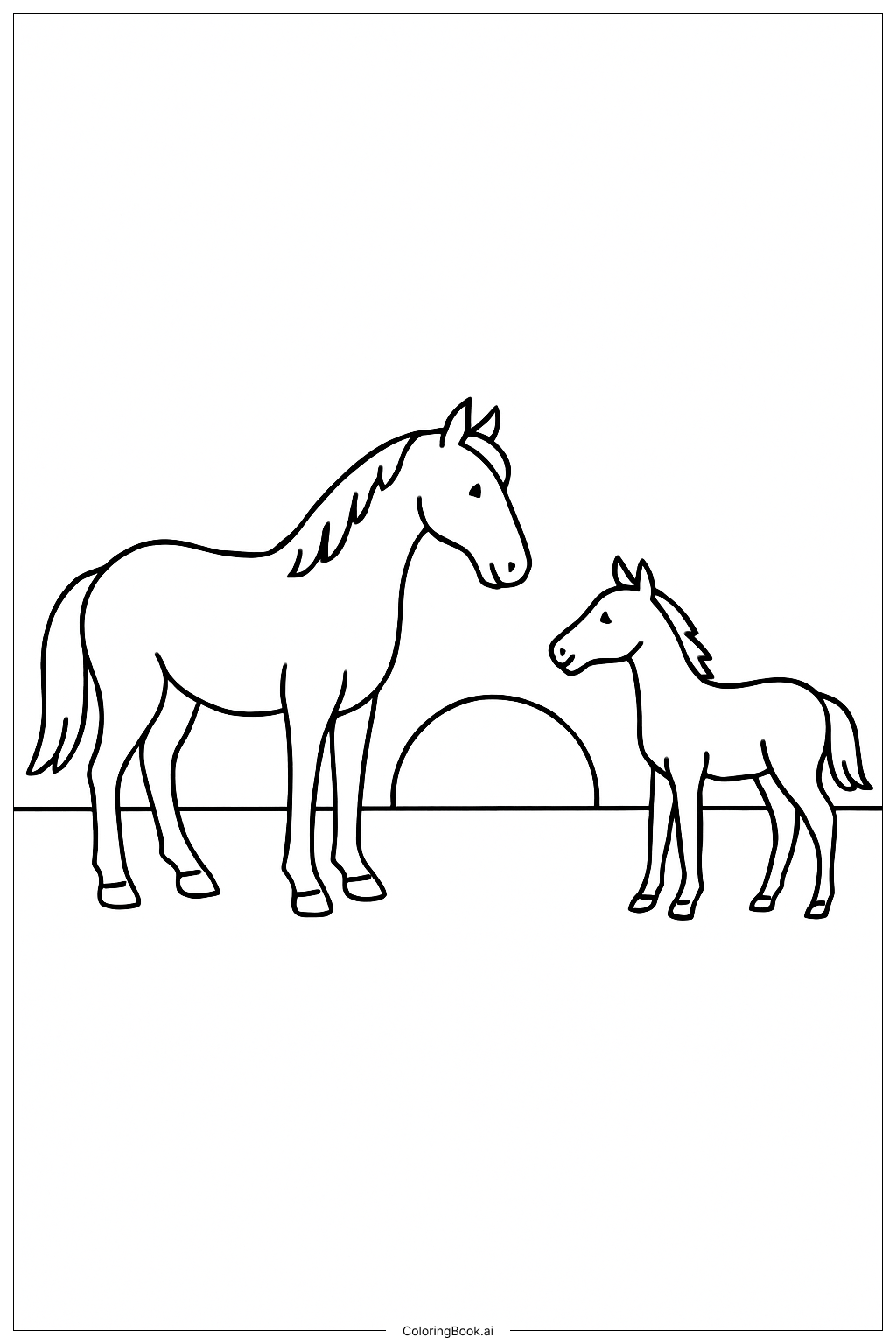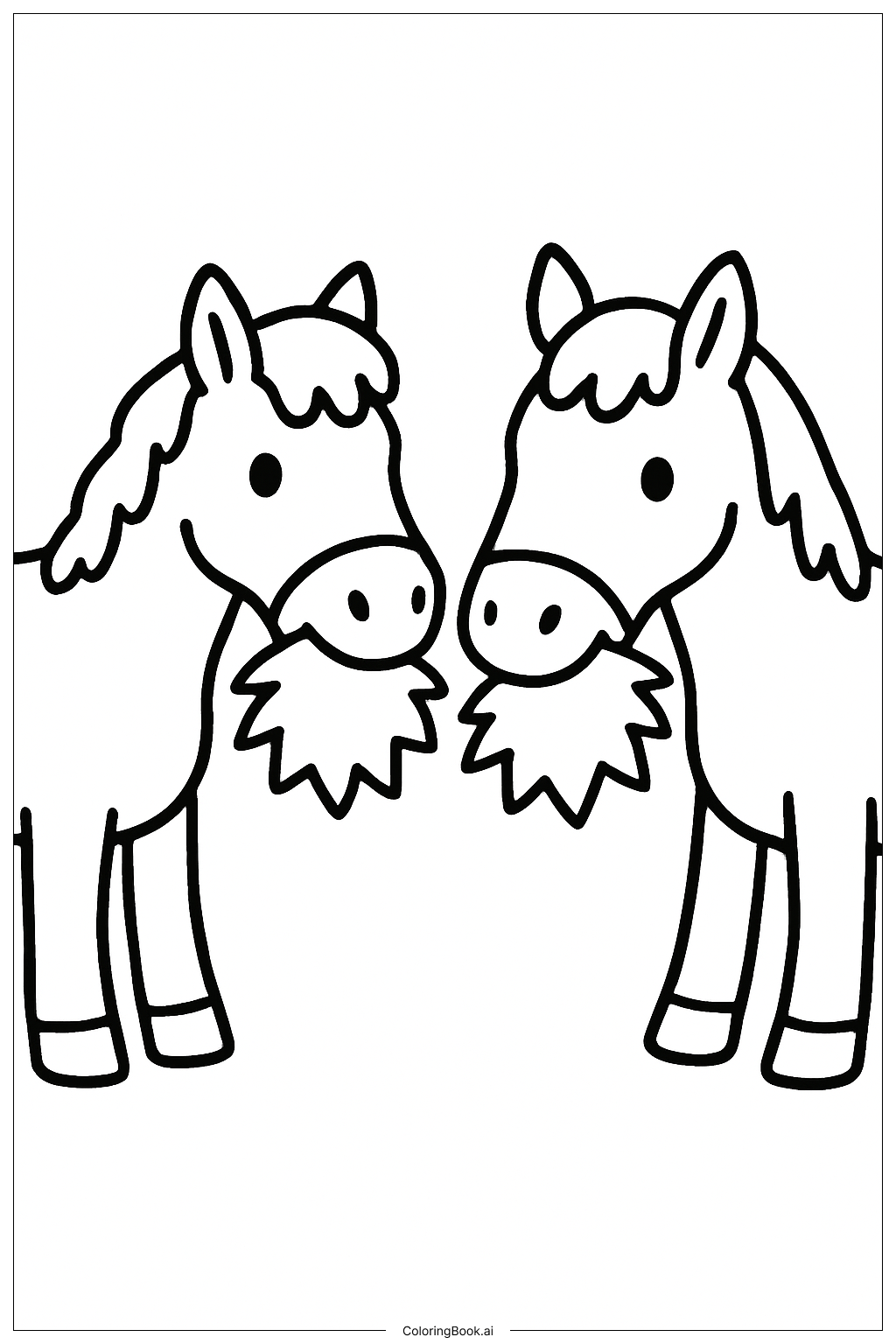
Coloring tips: How to color Horses Eating Hay coloring page well?
Start with the horses' bodies. Most horses are brown, chestnut, black, gray, or golden — pick your favorite! Use a light base color first, then add darker shading along the belly, legs, and under the neck to give the body a rounded, three-dimensional look. For the manes and tails, use a slightly darker or contrasting shade to make them stand out. Color the hay in warm yellows, golds, and light oranges, mixing the shades to show different strands. The ground can be earthy brown or tan. If there is a fence or barn in the background, try warm wood browns or faded red for a classic farm feel. Use soft greens for any grass nearby. Don't worry about being perfectly realistic — feel free to use your imagination and try fun colors to make the scene uniquely yours!
Coloring challenges: Which parts are difficult to color and need attention for Horses Eating Hay coloring page?
• Horse Body Shading: Horses have large, curved bodies with muscle definition. Capturing depth and dimension takes patience. Try layering two or three shades of the same color — light on the top and sides where light hits, darker underneath and around the legs. Blending smoothly between these areas will make the horses look solid and lifelike rather than flat.
• Mane and Tail Details: The flowing mane and tail have many individual strands running in different directions. Coloring each strand separately with thin, careful strokes creates a natural, realistic look. Using two or three tones — a base color and a slightly darker one — adds texture and movement to the hair.
• Hay Texture: A pile of hay is made of dozens of thin, overlapping strands. To make it look convincing, use at least two or three shades of yellow, gold, and light tan. Short, quick strokes following the direction of each strand will help capture the loose, messy texture of real hay.
• Facial Features and Expression: The horses' faces include eyes, nostrils, and mouths that are small relative to the rest of the body. These details require a fine-tipped pencil or marker and a steady hand. A gentle highlight in the eye adds life and warmth to the expression.
• Background Balance: The barn, fence, and ground should complement the horses without stealing attention. Use softer, less saturated tones for the background so the horses remain the clear focal point of the scene.
Benefits of coloring books: Advantages of drawing Horses Eating Hay coloring page
Coloring this Horses Eating Hay page offers a wonderful range of benefits for children and young artists. First, it builds fine motor skills. Carefully staying within the lines of the horses' bodies, manes, and hay strands strengthens hand control and pencil grip. Second, it encourages focus and patience. Completing a detailed scene like this one takes time and concentration, which helps children practice sitting with a task and seeing it through to the end. Third, it sparks creativity. Choosing colors for the horses, hay, and farm background invites personal expression — there is no single right answer, which builds confidence. Fourth, it teaches children about nature and farm animals in a playful, hands-on way. Learning that horses eat hay and live on farms becomes more memorable when connected to a fun activity. Finally, coloring is simply relaxing. It gives kids a calm, screen-free way to unwind, express themselves, and feel proud of something they created with their own hands.