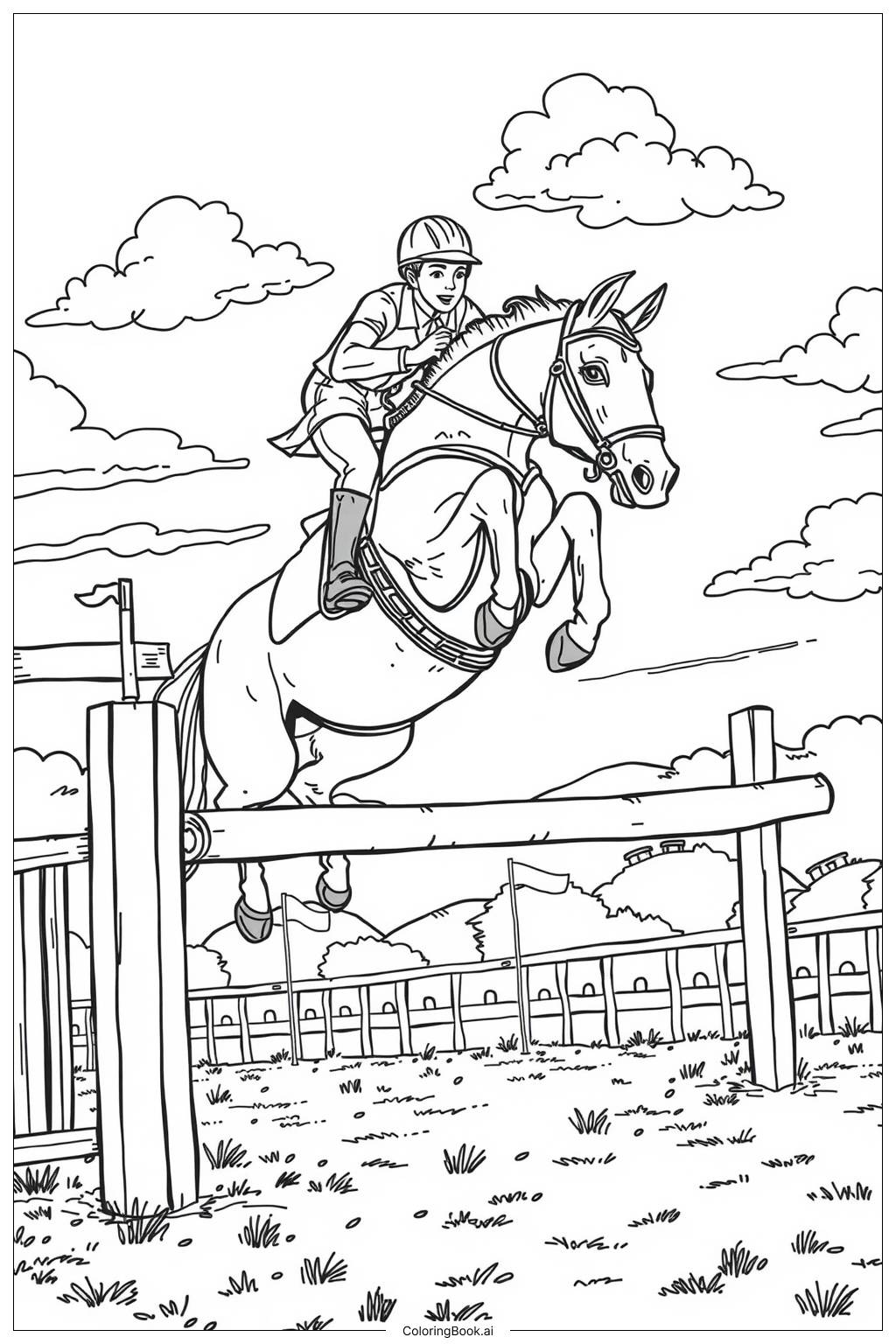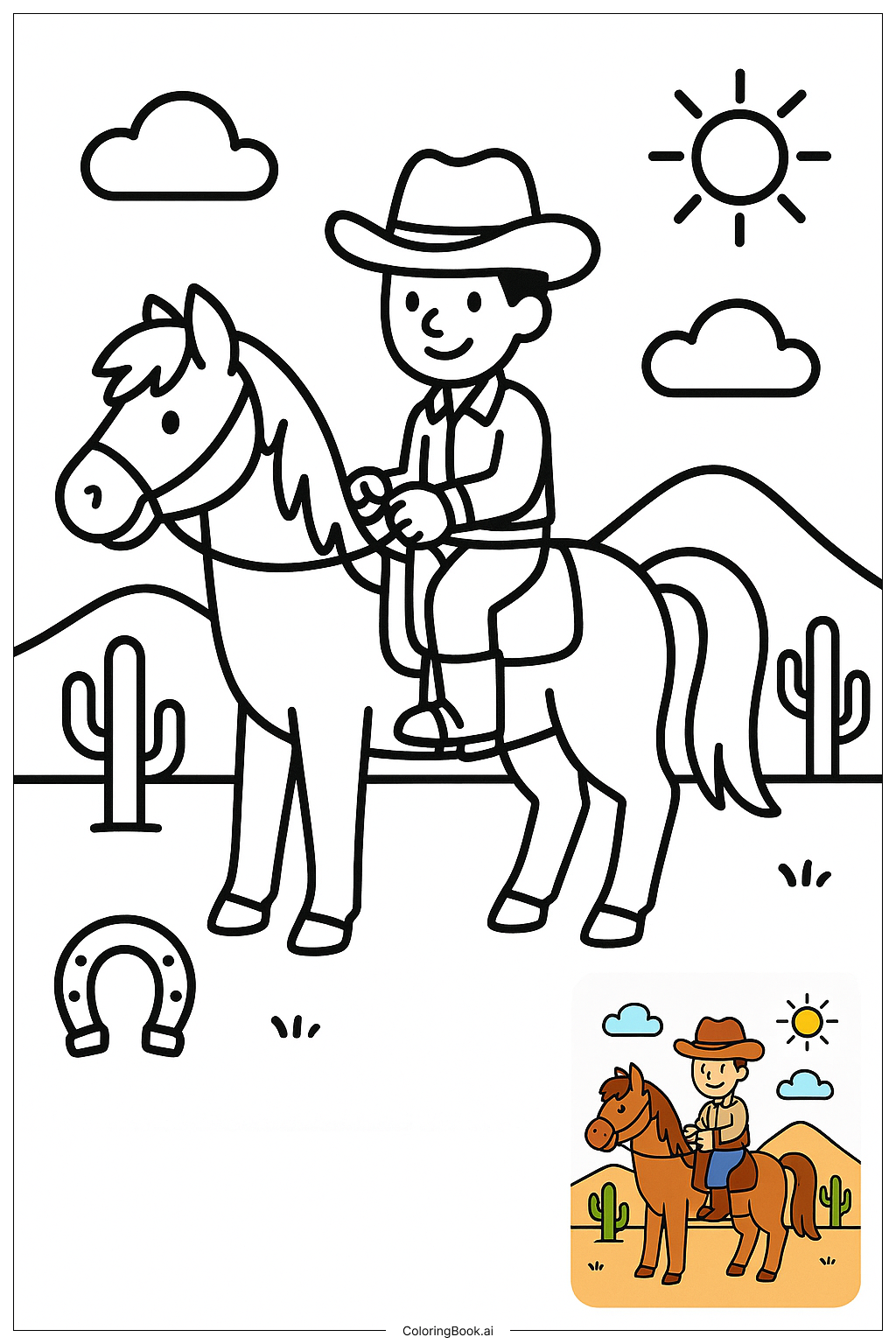
Coloring tips: How to color Western Horse With Cowboy Rider coloring page well?
Start with the horse's body using warm browns, chestnuts, or a classic black or gray. Use a slightly darker shade for shading along the belly, legs, and under the neck to give the horse a rounded, three-dimensional look. Color the mane and tail with flowing strokes in dark brown or black. For the cowboy, try a denim blue shirt, tan or brown pants, and classic brown leather boots. The wide-brimmed hat looks great in tan, brown, or black. Use warm golden or orange tones for the saddle and leather tack details. Try adding a sandy yellow or golden brown for the dusty ground, and a soft blue with white streaks for the open sky background. Keep colors bold and confident to match the adventurous Western theme. Children can also get creative with bright, fun colors to make the scene uniquely their own.
Coloring challenges: Which parts are difficult to color and need attention for Western Horse With Cowboy Rider coloring page?
• Horse Anatomy and Muscle Detail: The horse's body is filled with curves and muscle lines that require careful attention. Staying within these detailed outlines while smoothly blending shading can be tricky, especially for younger colorists. Taking time to follow the muscle shapes will make the horse look realistic and strong.
• Saddle and Tack Details: The Western saddle and leather gear include intricate stitching, buckles, and decorative elements. These small areas require a steady hand and fine-tipped coloring tools to fill in neatly without going outside the lines. Rushing through these parts can make the finished image look messy.
• Cowboy Clothing Layers: The cowboy wears several layers, including a hat, shirt, vest, pants, and boots. Each layer needs a different color and tone to stand out from the others. Choosing colors that contrast well while still looking natural takes some planning before you start coloring.
• Flowing Mane and Tail: The horse's mane and tail have long, flowing strands that curve and overlap. Coloring these areas smoothly and following the direction of each strand gives a natural look, but the overlapping lines can cause confusion about where one strand ends and another begins.
• Background and Depth: The open plains background may include sky, ground, and distant landscape elements. Keeping the background colors lighter than the foreground helps create a sense of depth, but balancing this contrast without making the background too bold or too faint requires a thoughtful touch.
Benefits of coloring books: Advantages of drawing Western Horse With Cowboy Rider coloring page
Coloring this Western Horse With Cowboy Rider page offers a wide range of benefits for children and young artists. First, it helps build fine motor skills and hand-eye coordination as kids carefully color inside detailed lines and small areas like the saddle buckles and boot spurs. This kind of focused activity strengthens the small muscles in the hands and fingers, which is important for writing and other everyday tasks.
Second, choosing colors for the horse, cowboy, and landscape encourages creative thinking and decision-making. Kids learn to think about which colors work well together and how shading can make a flat drawing look three-dimensional.
Third, completing this image gives children a real sense of accomplishment. Finishing a detailed scene like this builds confidence and teaches patience and persistence.
Fourth, the Western theme sparks imagination and storytelling. Children may invent names for the horse, imagine where the cowboy is riding, or create a whole adventure in their minds while they color.
Finally, coloring is a calming, screen-free activity that helps kids relax and focus. It is a healthy way to unwind after school while still keeping the mind engaged and creative. This page is a wonderful mix of art, fun, and learning.