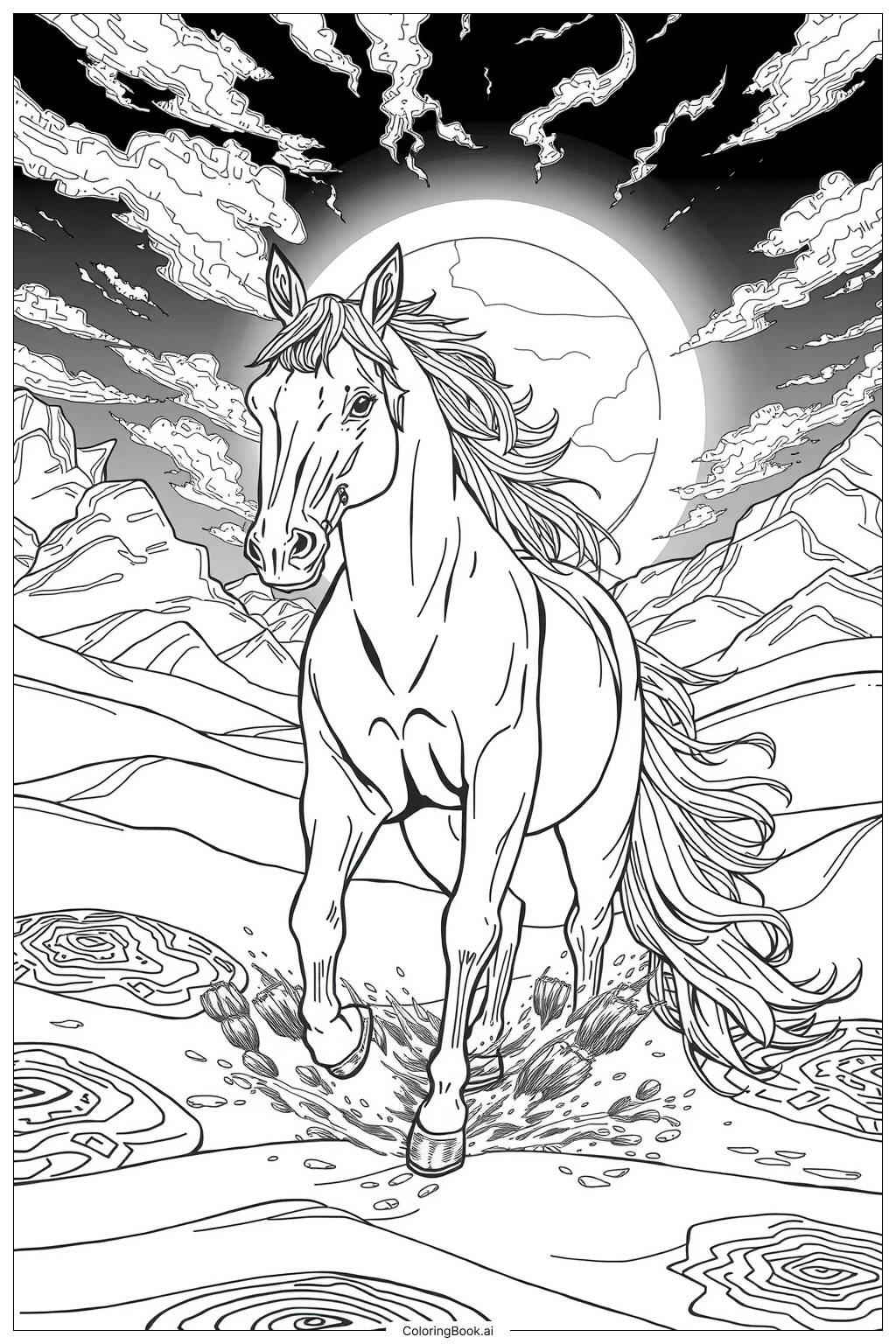
Coloring tips: How to color Realistic Draft Horse Pulling a Cart coloring page well?
Start with the horse's body. Use warm tan, golden brown, or dark chestnut for the coat. Add a lighter shade on the belly and inner legs to show depth. Color the mane and tail a slightly darker or matching shade. Use black or dark brown for the hooves and lower legs. For the feathering, try soft white or cream.
Color the harness and collar with dark brown or black leather tones. Add small highlights in light gray or tan to show buckles and straps.
For the wooden cart, use warm brown tones for the planks and frame. Paint the spoked wheels a slightly darker brown. Add gray or black for iron wheel rims and metal parts.
Fill in the background with soft greens and blues to suggest an open field or country road. Keep the colors warm and earthy to match the classic feel of the scene.
Coloring challenges: Which parts are difficult to color and need attention for Realistic Draft Horse Pulling a Cart coloring page?
• Horse Muscle Definition: The draft horse's body has many large muscle groups with subtle curves and shadows. Capturing the shape of the chest, hindquarters, and neck takes careful shading. Use two or three tones of the same base color — light, medium, and dark — and blend them gently along the muscle lines to give the horse a three-dimensional look.
• Feathering on the Hooves: The long, thick hair around the lower legs, called feathering, has many fine overlapping strands. Coloring each strand individually can be time-consuming. Try using short, light strokes with a white or cream pencil over a darker base to suggest texture without over-complicating the area.
• Harness and Strap Details: The harness system includes many overlapping straps, buckles, rings, and a padded collar. Each part connects at different angles and layers. Take your time with this area. Use darker shades along the edges of the straps and lighter highlights down the center to separate each piece clearly.
• Spoked Cart Wheels: The wheels have many thin spokes radiating from the center hub to the outer rim. Coloring between the spokes neatly without going outside the lines is one of the trickiest parts of this page. A fine-tipped colored pencil or a thin marker works best here.
• Background and Ground Integration: Balancing the foreground details of the horse and cart against a background scene can be tricky. If the background is too bright, it will compete with the horse. Keep background colors soft and muted so the horse remains the clear focal point.
Benefits of coloring books: Advantages of drawing Realistic Draft Horse Pulling a Cart coloring page
Coloring this draft horse and cart page offers a wonderful range of benefits for kids and older colorists alike.
For younger children, filling in the large shapes of the horse's body and the wooden cart helps build hand-eye coordination and fine motor skills. Choosing colors and planning which shades to use encourages creative thinking and decision-making.
For older kids and teens, the detailed harness, spoked wheels, and muscle shading provide a satisfying challenge. Working through these complex areas builds patience, focus, and the ability to plan ahead — skills that carry over into school and everyday life.
Learning about draft horses while coloring also sparks curiosity about history and nature. These horses were essential to farming and transportation for centuries, and this page brings that story to life in a hands-on way.
For adults, the detailed line work makes this page a calming, meditative activity. Concentrating on small details like the harness buckles or the feathering on the hooves helps quiet a busy mind and reduce stress.
Overall, this page is a great way to combine creativity, history, and relaxation in one enjoyable coloring session.