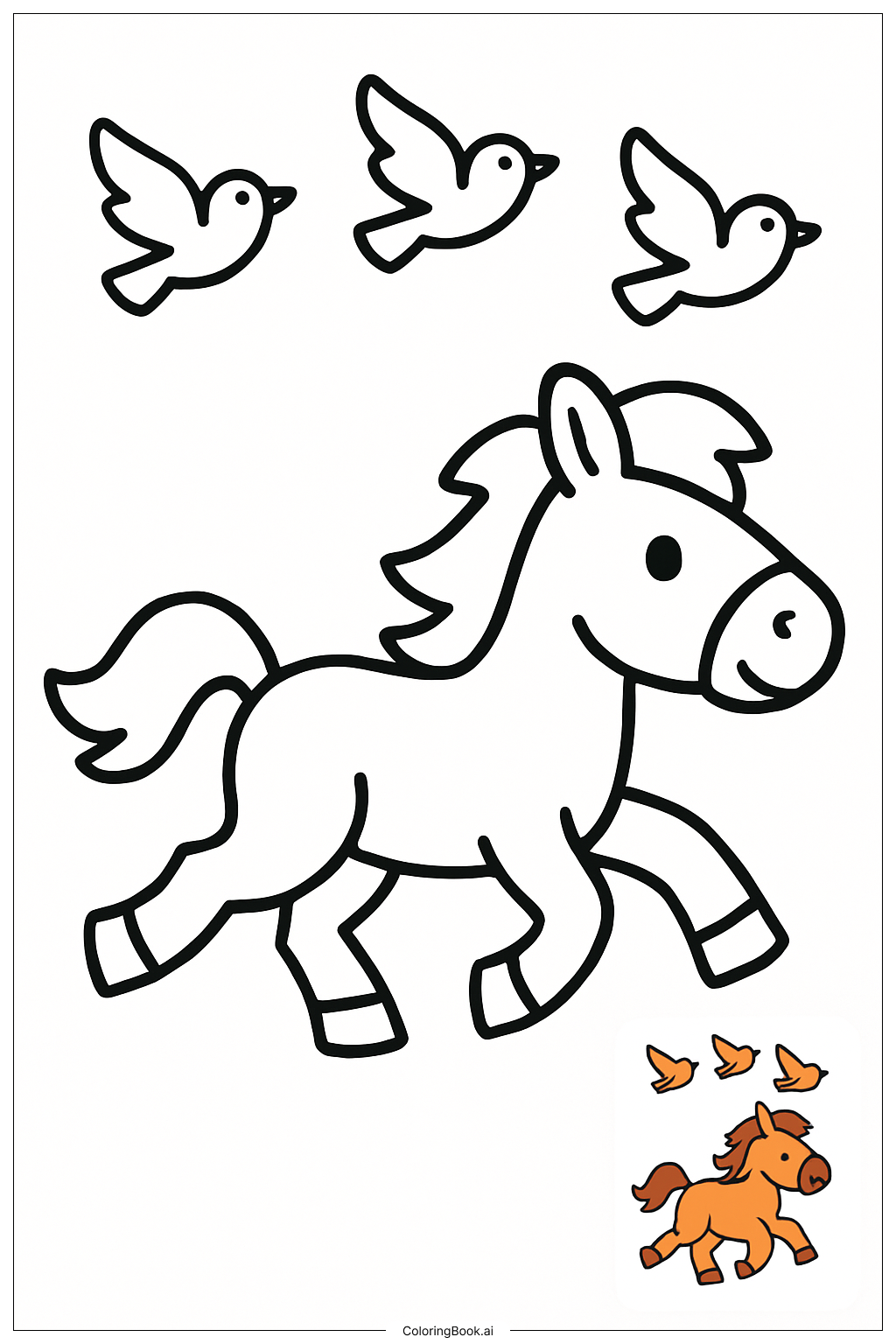
Coloring tips: How to color Horse Chasing Wild Birds coloring page well?
Start with the horse. Use warm shades like chestnut brown, golden tan, or deep black to fill in the body. Add lighter tones to the belly and inner legs to show muscle shape. Use a bright or contrasting color for the mane and tail, like sandy yellow or dark brown. For the wild birds, try a mix of colors — blues, grays, blacks, and whites work well for common wild birds. Add a splash of orange or red for beaks and feet. Color the background with soft greens for the grass and a light blue for the sky. Use yellow or orange near the horizon to give the scene a warm, golden glow. Encourage kids to experiment and make every bird a different color to keep the image fun and personal.
Coloring challenges: Which parts are difficult to color and need attention for Horse Chasing Wild Birds coloring page?
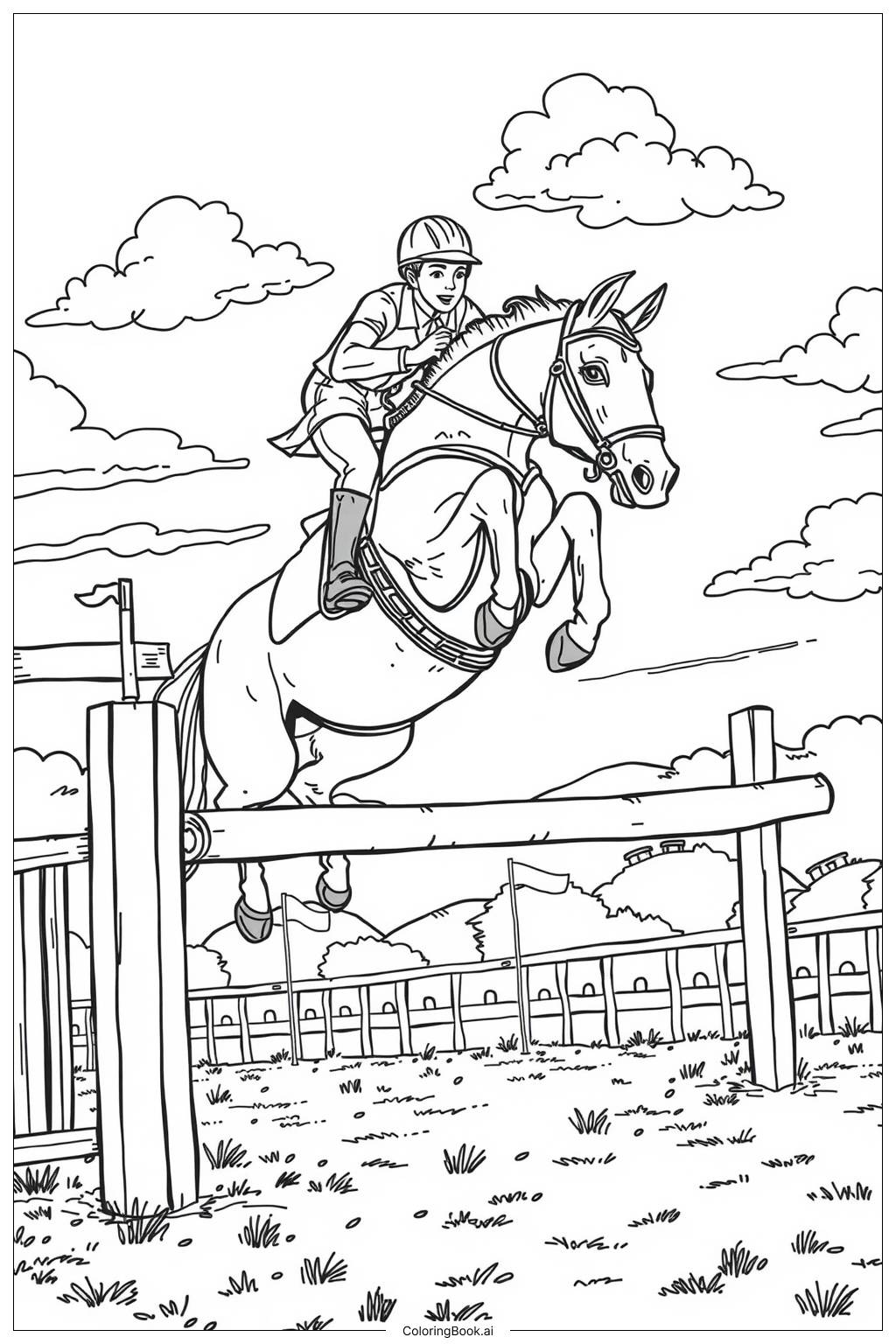
• Horse Body Shading: The horse has a large, curved body with visible muscle groups. Getting the shading right can be tricky. You need to use at least two or three tones of the same color — a darker shade for the sides and a lighter tone for the top and belly — to make the horse look three-dimensional rather than flat.
• Flowing Mane and Tail: The horse's mane and tail are shown in motion, with many thin, overlapping strands. Coloring each strand separately takes patience. Using a fine-tipped marker or colored pencil works best here. Blending light and dark shades along the flow of the hair adds a realistic touch.
• Birds in Motion: Each bird is small and mid-flight, with outstretched wings and individual feather lines. The tiny details on each wing can be hard to color without going outside the lines. A sharp pencil tip or thin marker is essential for this section. Coloring each bird slightly differently adds depth to the flock.
• Background Depth: The open field and sky in the background require careful color gradation. The grass should shift from a darker green near the ground to a lighter green in the distance. The sky works best when it fades from a deeper blue at the top to a pale blue or white near the horizon.
• Grass and Ground Details: Short grass strokes near the horse's hooves add texture to the scene. Coloring these tiny lines without muddying the overall ground color takes a steady hand and a light touch.
Benefits of coloring books: Advantages of drawing Horse Chasing Wild Birds coloring page
Coloring this Horse Chasing Wild Birds page offers a wide range of benefits for kids and beginners alike. The dynamic scene encourages creativity right away — there are so many choices to make, from the horse's coat color to the shades of the birds' wings, giving kids a true sense of ownership over their artwork.
Working on the fine details, like the horse's flowing mane or the individual feathers on each bird, builds focus and patience. These are important skills that carry over into schoolwork and everyday tasks.
The large open areas of the horse's body are perfect for younger children who are still developing their motor skills, while the smaller bird details offer a fun challenge for older kids looking to practice precision.
The outdoor setting also sparks imagination. Kids can dream up their own story — where is the horse running? Why are the birds flying away? This kind of creative thinking supports language development and storytelling.
Coloring is also a calm, screen-free activity that helps reduce stress and anxiety. Finishing a page like this gives children a real sense of accomplishment that builds confidence and encourages them to keep creating.