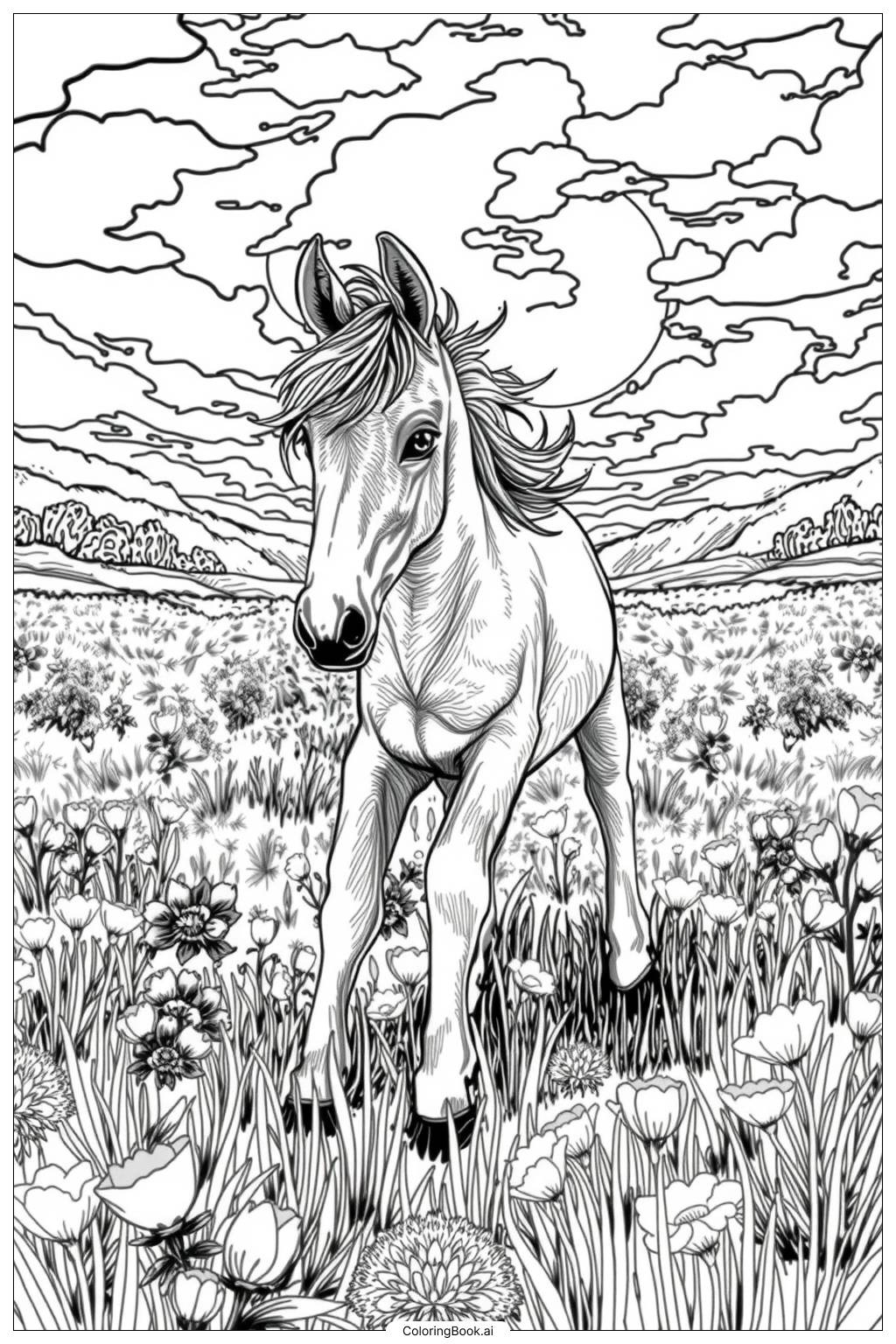
Coloring tips: How to color Baby Horse in a Meadow coloring page well?
Start with the foal's body using a warm light brown or golden tan. Add a slightly darker shade on the legs, muzzle, and around the ears to create soft depth. Use a creamy white or pale beige for the mane and tail to keep it looking soft and young. For the meadow, choose bright greens for the grass and mix in yellow-greens to show sunlight. Color the wildflowers in cheerful colors like purple, yellow, and pink. The sky can be a gentle sky blue with soft white clouds. Use light strokes for the fur texture on the foal's body. Butterflies can be colored in bright, fun shades to add energy to the scene. Keep overall tones warm and inviting so the image feels sunny and joyful. This is a great page for trying color blending for the first time.
Coloring challenges: Which parts are difficult to color and need attention for Baby Horse in a Meadow coloring page?
• Foal Body Shading: The baby horse has a rounded, soft body that requires gentle shading to look three-dimensional. Applying a base coat first and then layering a slightly darker tone along the belly, legs, and neck will help show depth without making the foal look flat or too dark.
• Mane and Tail Texture: The foal's mane and tail have flowing, wispy strands that can be tricky to color neatly. Using light, thin strokes that follow the direction of the hair will give a natural, fluffy look. Avoid pressing too hard or the fine details will disappear.
• Meadow Depth and Grass Variation: The background grass needs multiple shades of green to look realistic and avoid appearing as a flat block of color. Mixing light and dark greens, and adding small patches of yellow-green where sunlight hits, can create a sense of distance and movement in the field.
• Wildflower Details: The small flowers scattered around the foal have tiny petals and centers that require a fine-tipped tool to color accurately. Rushing through these details can cause colors to bleed into one another, so working slowly and using a sharp pencil or thin marker is recommended.
• Sky and Cloud Blending: Achieving a smooth, gradual transition from blue sky to white clouds can be challenging, especially for younger colorists. Blending in soft circular motions or leaving the clouds white while shading only the sky around them is a simple and effective technique for a clean result.
Benefits of coloring books: Advantages of drawing Baby Horse in a Meadow coloring page
Coloring this baby horse in a meadow scene offers a wonderful range of benefits for kids of all ages. Working on the soft curves of the foal's body helps children practice gentle, controlled strokes, which builds fine motor skills and hand strength over time. Choosing colors for the flowers, sky, and grass encourages creative thinking and allows kids to express their own sense of beauty and imagination. Staying within the lines of the detailed meadow elements improves focus and patience, skills that carry over into reading and schoolwork. The peaceful nature theme also has a calming effect, making it a great activity for winding down after a busy day. For older children, experimenting with shading on the foal's body introduces basic art concepts like light, shadow, and texture. This page also sparks curiosity about animals and nature, giving parents and teachers a natural starting point for conversations about horses, meadows, and wildlife. Overall, this is a fun, rewarding coloring experience that blends creativity, learning, and relaxation all in one page.