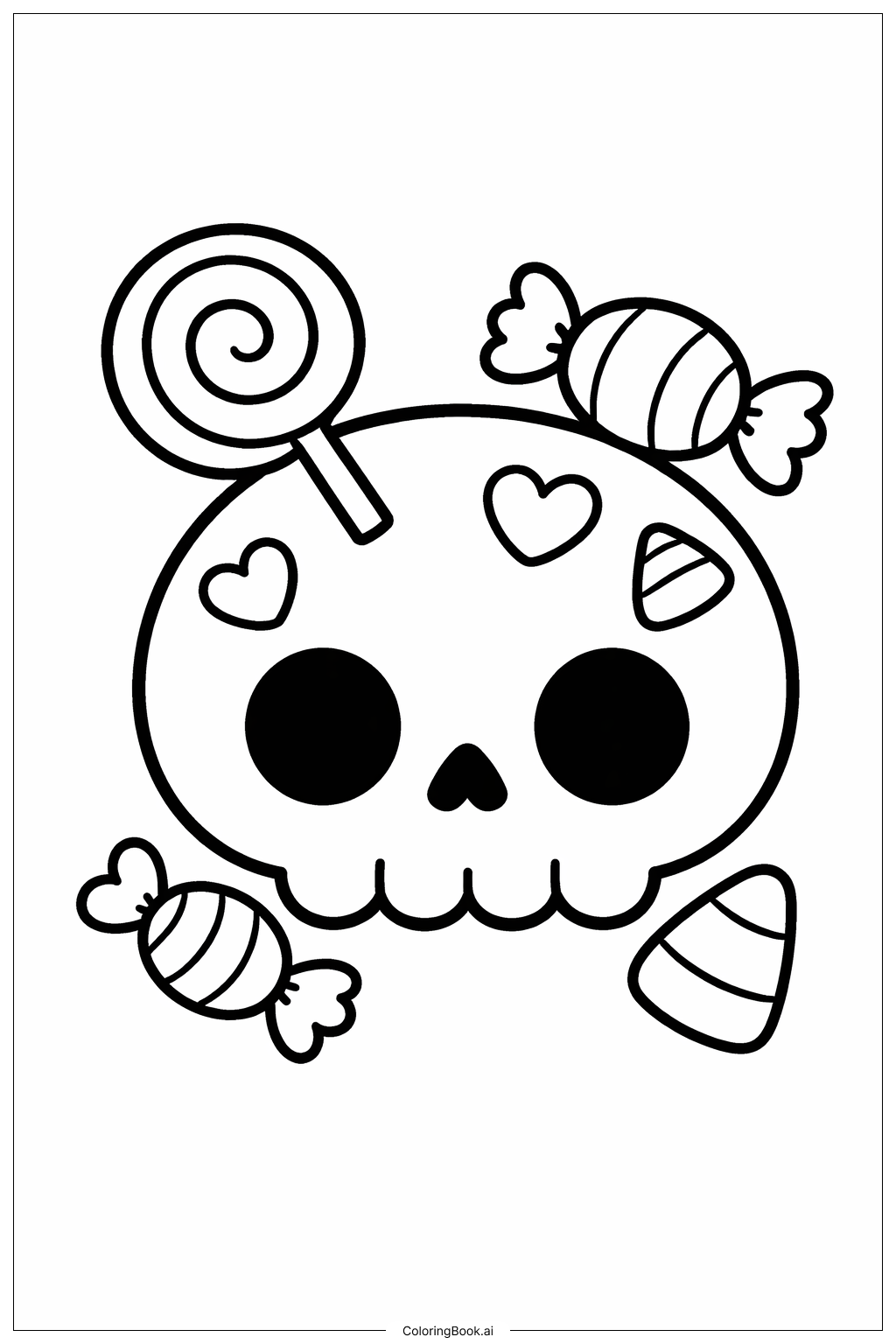
Coloring tips: How to color Horror Candy Skull coloring page well?
Start with the large areas first. Use deep purples, midnight blues, or rich reds for the main skull base to set a spooky mood. For the floral and mandala patterns inside the eye sockets, try bright contrasting colors like gold, orange, and teal to make them pop. The petals and candy decorations around the skull look great in vibrant pinks, yellows, and greens — these add a fun, festive feel that balances the horror theme. Use a darker shade to outline each section before filling it in, which helps keep the details crisp. The teeth can be left white or shaded with light gray for a realistic bone look. For the vines and swirls, earthy tones like olive green or deep brown work well. Try to vary light and dark shades across neighboring sections so each design element stands out clearly. Colored pencils work well for the tiny details, while markers or crayons are great for filling in larger areas quickly.
Coloring challenges: Which parts are difficult to color and need attention for Horror Candy Skull coloring page?
• Eye Socket Mandala Patterns: The circular mandala designs inside the eye sockets contain many tiny, tightly packed shapes. Coloring these without bleeding into neighboring areas requires a fine-tipped tool and a steady hand. Choosing colors that contrast well with the surrounding skull base is also important to make these focal points stand out.
• Symmetrical Color Matching: The skull design is largely symmetrical, meaning the left and right sides mirror each other. Keeping your color choices consistent across both sides can be tricky, especially when working with many small elements. It helps to plan your color palette on paper before you begin and color matching sections on both sides at the same time.
• Floral and Vine Details: The swirling vines and petal motifs are layered closely together, making it easy for colors to blur into one another. Using colored pencils with sharp tips or fine-liner markers gives you the most control in these areas. Leaving small gaps of white between sections can also help each element stay visually distinct.
• Balancing Horror and Festive Tones: This image blends spooky horror elements with colorful candy-style decoration. Finding a color balance that feels both eerie and celebratory takes some planning. Too many dark colors can make the festive details disappear, while too many bright colors may lose the horror atmosphere. Mixing vivid accent colors against a darker base is usually the best approach.
• Teeth and Bone Texture: The wide grinning mouth with its rows of square teeth looks best when given subtle shading. Flat white can look too plain, while too much gray can make them look dirty. Building up light layers of gray or pale yellow in the shadows helps create a convincing bone-like texture without losing brightness.
Benefits of coloring books: Advantages of drawing Horror Candy Skull coloring page
Coloring this Horror Candy Skull page offers a wonderful mix of creative and developmental benefits for kids and teens alike. The intricate patterns and decorative details encourage focus and concentration, helping young artists practice patience as they work through each section carefully. Choosing a color palette that balances the spooky and festive elements builds decision-making skills and boosts creative confidence. The fine details inside the eye sockets and along the floral motifs are excellent for developing fine motor skills and hand-eye coordination. Working with symmetrical designs also trains the eye to notice balance and proportion, which are foundational skills in art and design. For older kids and teens, this page offers a satisfying challenge that rewards effort with a visually stunning result. The horror theme wrapped in decorative beauty is a great conversation starter about cultural traditions like Day of the Dead, sparking curiosity and learning beyond the coloring page itself. Most importantly, the process of coloring is calming and meditative, offering a healthy creative outlet to relax, unwind, and express individuality through color choices.