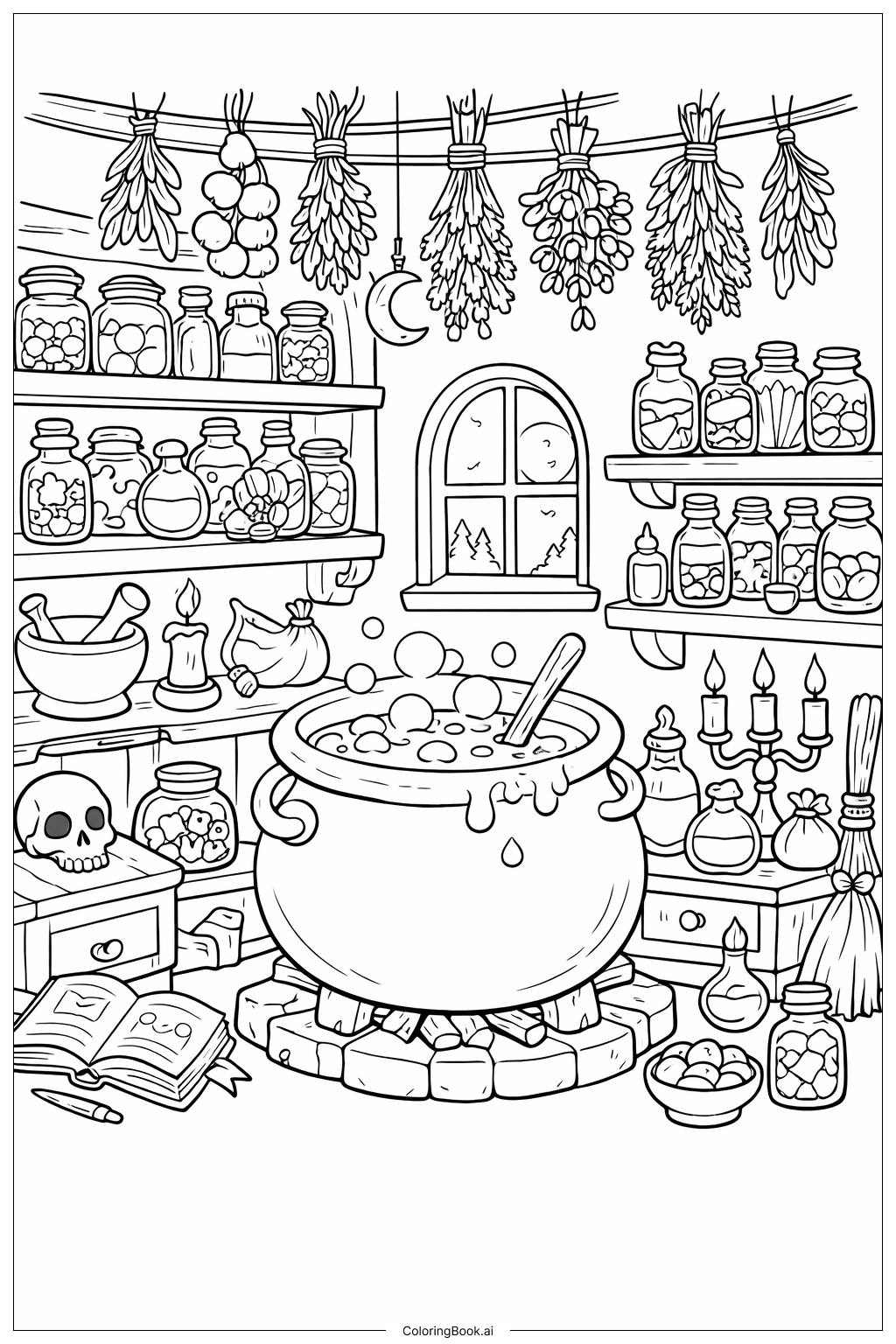
Coloring tips: How to color Horror Witch Kitchen coloring page well?
Start with the background. Use dark purples, deep blues, and blacks for the walls and shadows to set a spooky mood. Color the cauldron gray or dark green with a glowing green or teal liquid inside. Give the witch a classic look with a black robe and a deep purple or dark green hat. Her skin can be pale green or sickly yellow. Use warm amber and orange for the candle flames. Color the jars in muted greens, oranges, and reds to look like strange potions. The black cat should be solid black with bright yellow or green eyes. Add pops of orange for the full moon seen through the window. Use brown tones for the wooden shelves and table. Silver or gray works well for the spider webs. Try to vary your colors across different jars and bottles to make the shelves look full and interesting. Don't be afraid to use bold, dark shades — this is a Horror scene, so dramatic colors work best.
Coloring challenges: Which parts are difficult to color and need attention for Horror Witch Kitchen coloring page?
• Cauldron and Potion Glow: Creating a glowing effect for the bubbling potion inside the cauldron is tricky. You need to blend bright greens or teals at the center and gradually darken the edges. Layering colors carefully is key to making the glow look magical and realistic rather than flat.
• Small Jar Details on Shelves: The shelves are filled with many tiny jars and bottles, each with small labels and unique shapes. Staying inside the lines on such small objects requires a fine-tipped pencil or marker. Choosing slightly different colors for each jar also takes patience and planning.
• Spider Webs in the Corners: Spider webs are made of very thin, delicate lines that are easy to accidentally fill in or smudge. Using a very light gray or leaving parts white helps keep them looking airy and real. These areas call for a gentle hand and careful control of your coloring tool.
• Witch's Face and Expression: The witch's facial features — her crooked nose, narrowed eyes, and wrinkled skin — require careful shading to bring out expression and depth. Blending pale green or yellow skin tones with darker shadow areas around the eyes and nose makes the face look more three-dimensional and creepy.
• Candle Flames and Lighting: Multiple candles create several small light sources in the scene. Coloring the warm glow around each flame, using yellows fading to oranges and then into the darker background, takes time. Getting this right adds a lot of atmosphere to the whole image but demands patience and layering.
Benefits of coloring books: Advantages of drawing Horror Witch Kitchen coloring page
Coloring this Horror Witch Kitchen page brings a wide range of fun and helpful benefits for kids and adults alike. Working through all the spooky details — from the bubbling cauldron to the cluttered shelves — helps build focus and concentration. Staying inside the many small lines trains fine motor skills and improves hand-eye coordination over time.
Choosing colors for a dark, magical scene sparks creative thinking. Kids get to make their own choices about how creepy or colorful to make the witch, the potions, and the shadows. This kind of imaginative freedom builds confidence and self-expression.
The detailed nature of this image also teaches patience. Finishing one small section at a time — a jar here, a candle flame there — gives a satisfying sense of progress and accomplishment. Completing the full page builds a sense of pride and persistence.
For older kids and adults, shading and blending in a complex scene like this is a great way to practice artistic techniques. Learning how to create glowing effects and shadows is a real art skill.
Finally, coloring is a calming activity. Even with a spooky Horror theme, the focused, repetitive motion of coloring helps reduce stress and brings a sense of peace. It's a great way to unwind while creating something truly fun and unique.