Coloring tips: How to color Hedgehog At Farm Gate coloring page well?
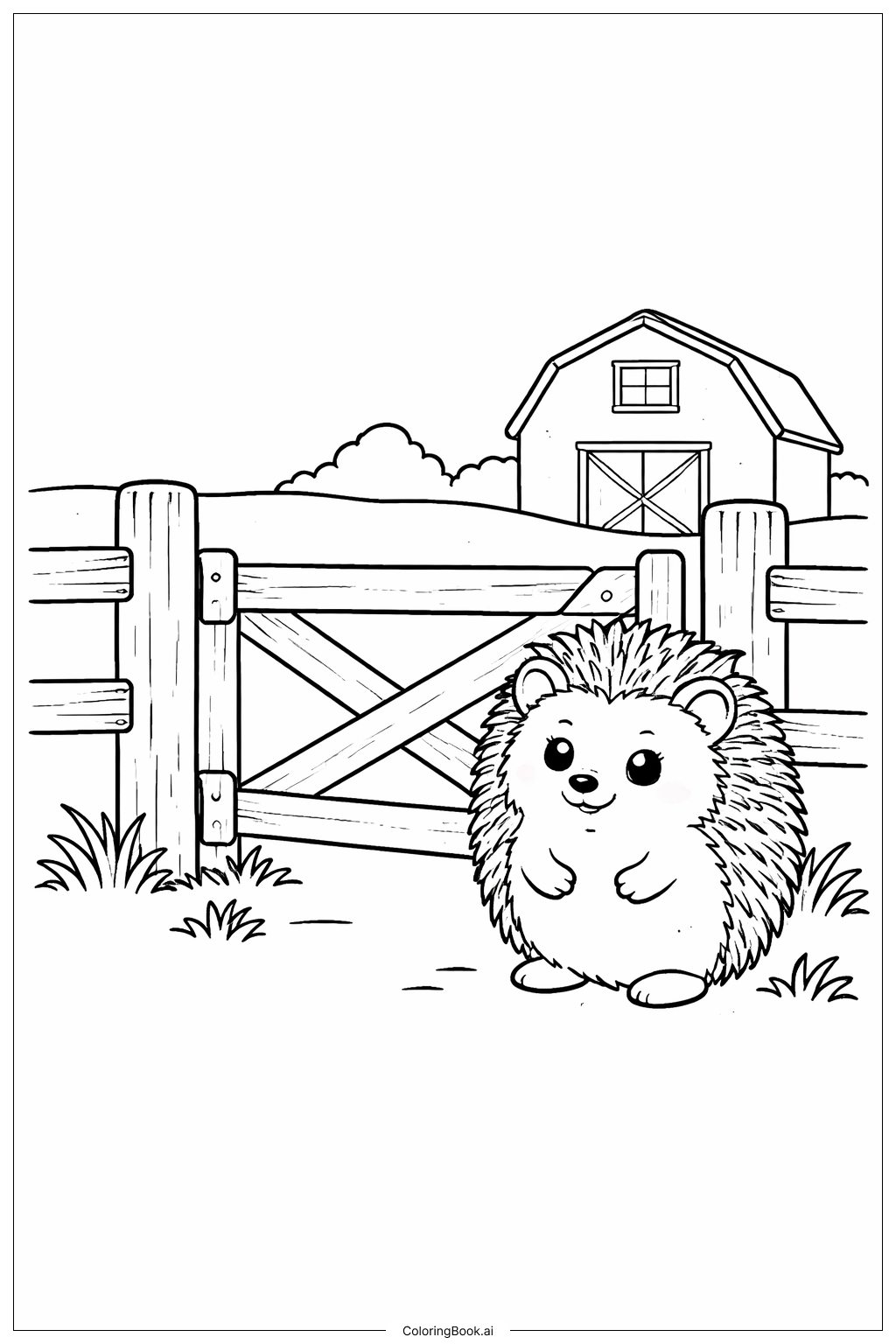
Use warm browns and soft yellows to color the Hedgehog’s spines and face, adding some light shading for depth. For the farm gate, try using natural wood colors like light and dark browns to highlight the texture and grain. The metal hinges can be colored in gray or silver with slight shadows to give a realistic touch. For the surrounding grass and flowers, use various shades of green for leaves and stems, with bright colors like red, yellow, or purple for the flowers to add cheerful accents. You can use lighter colors near the sunlight areas and darker tones for the shaded parts to create a lively, natural look.
Coloring challenges: Which parts are difficult to color and need attention for Hedgehog At Farm Gate coloring page?
• Hedgehog Texture: The Hedgehog’s spines require careful coloring to show their thin and pointy shapes without making the area look too dark or messy. Achieving a balance between light and shadow is key.
• Wooden Gate Details: The wood grain and plank divisions need precise coloring to maintain the natural look without blending the lines. Coloring around the hinges demands neatness to keep the metallic parts distinct.
• Small Details: The grass blades and small flowers are delicate and need fine coloring strokes to avoid blotches, which may be challenging for younger children.
• Contrast Management: Creating contrast between the Hedgehog and the gate background without overpowering the scene can test the color choices and layering skills.
• Natural Shading: Applying shadows and light areas on both the Hedgehog and gate to reflect outdoor sunlight requires attention to detail and gradual transitions in color.
Benefits of coloring books: Advantages of drawing Hedgehog At Farm Gate coloring page
Coloring this Hedgehog At Farm Gate image helps develop fine motor skills, especially through the detailed textures of the Hedgehog’s spines and the wooden gate. It encourages concentration as children focus on staying within the lines and differentiating small sections like grass and hinges. This activity also inspires creativity by choosing natural colors and experimenting with light and shade, enhancing understanding of realistic outdoor scenes. Additionally, it introduces children to farm life and wildlife, fostering appreciation for nature and animals. Coloring such a peaceful, rural image can be calming and rewarding, promoting patience and enjoyment in completing detailed artwork.