Coloring tips: How to color Groundhog Waving Paw coloring page well?
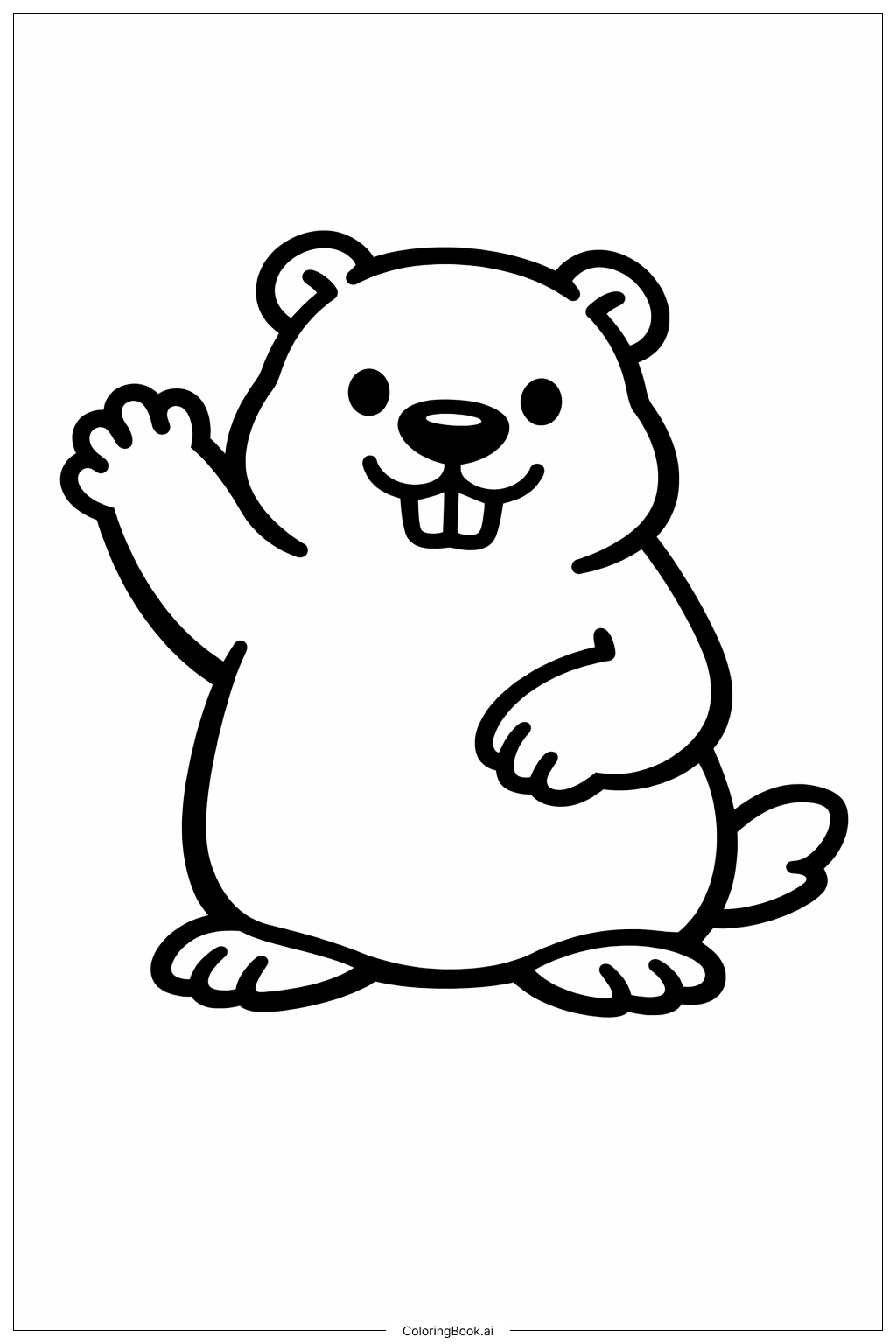
You can color the groundhog’s fur in shades of brown, from light brown to dark brown. Use a soft, warm brown for the body and darker brown for the ears, nose, and tail. The teeth should be left white or very lightly colored. The eyes can be black or dark brown. You can add a pink or red color inside the ears and on the tongue if you want to show it. The background can be colored with green to represent grass or blue for the sky. Feel free to add extra colors if you want to make the picture more lively, like flowers or sunshine in the background.
Coloring challenges: Which parts are difficult to color and need attention for Groundhog Waving Paw coloring page?
1. Coloring the small fingers on the raised paw can be tricky because they are close together and need neat coloring inside the lines. 2. The shape of the ears is small and round, requiring careful coloring to avoid going outside the lines. 3. The tail has small details that are easy to miss or color incorrectly. 4. The big teeth should be kept clean and white, so coloring carefully around them is important. 5. The groundhog’s round body shape means coloring evenly to avoid patches of uneven color is a bit challenging.
Benefits of coloring books: Advantages of drawing Groundhog Waving Paw coloring page
Coloring this groundhog picture helps kids improve their fine motor skills by practicing precise coloring inside small and curved areas. It encourages creativity by choosing different shades of brown and other colors for the background. This activity also teaches children patience and focus as they work on small details like fingers and ears. Moreover, it helps kids learn about animals and nature, making coloring both educational and fun.