Coloring tips: How to color Groundhog On Swing coloring page well?
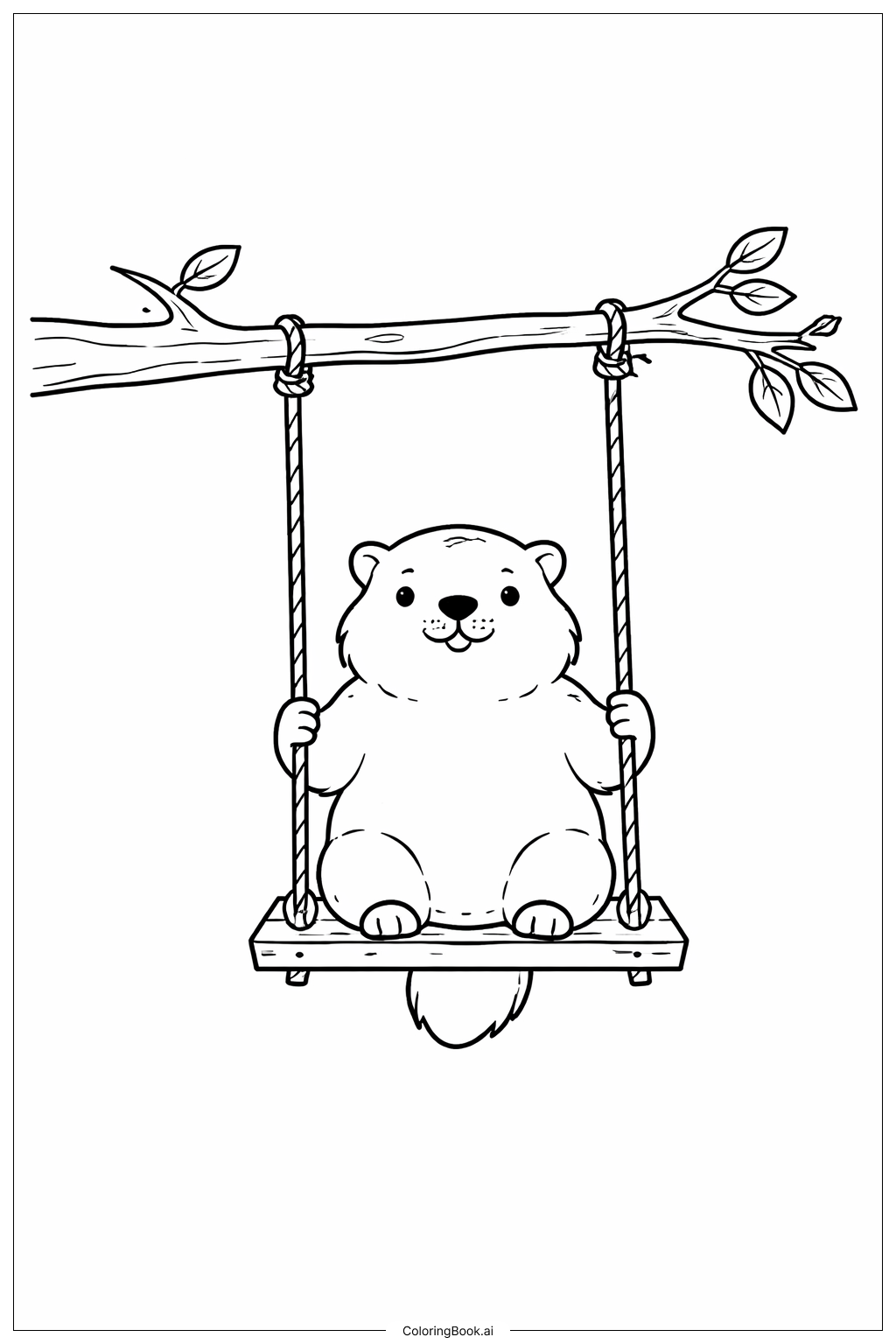
For coloring the groundhog, try using soft brown shades for its fur to make it look warm and friendly. You can add a lighter beige or cream color on its belly and face for contrast. The swing’s wooden seat can be colored in different shades of brown to show the texture of wood. The ropes tied to the swing can be colored gray or a light brown to keep them natural-looking. For the tree branch, use a mix of brown and green shades to color the bark and the leaves. You might also want to add some shadows under the swing and on the ground to make the picture more 3D and realistic.
Coloring challenges: Which parts are difficult to color and need attention for Groundhog On Swing coloring page?
1. The small size of the groundhog’s paws holding the ropes may be tricky to color precisely without coloring outside the lines.
2. The ropes have a twisted pattern that requires careful coloring to show their texture.
3. The leaves on the branch are small and close together, needing attention to detail to color each leaf neatly.
4. Adding shadows and highlights on the groundhog’s fur and the wooden swing for a realistic look can be challenging.
5. Keeping the colors natural and balanced while making the scene vibrant may require effort to avoid over-coloring or dullness.
Benefits of coloring books: Advantages of drawing Groundhog On Swing coloring page
Coloring this picture helps children improve their fine motor skills because of the small details like the ropes and leaves. It also encourages creativity by letting kids choose natural and warm colors to bring the groundhog and its environment to life. The picture teaches focus and patience by requiring careful coloring inside the lines, especially on the twisting ropes and tiny leaves. Overall, coloring this groundhog on the swing is a fun way for children to relax and enjoy nature-themed art.