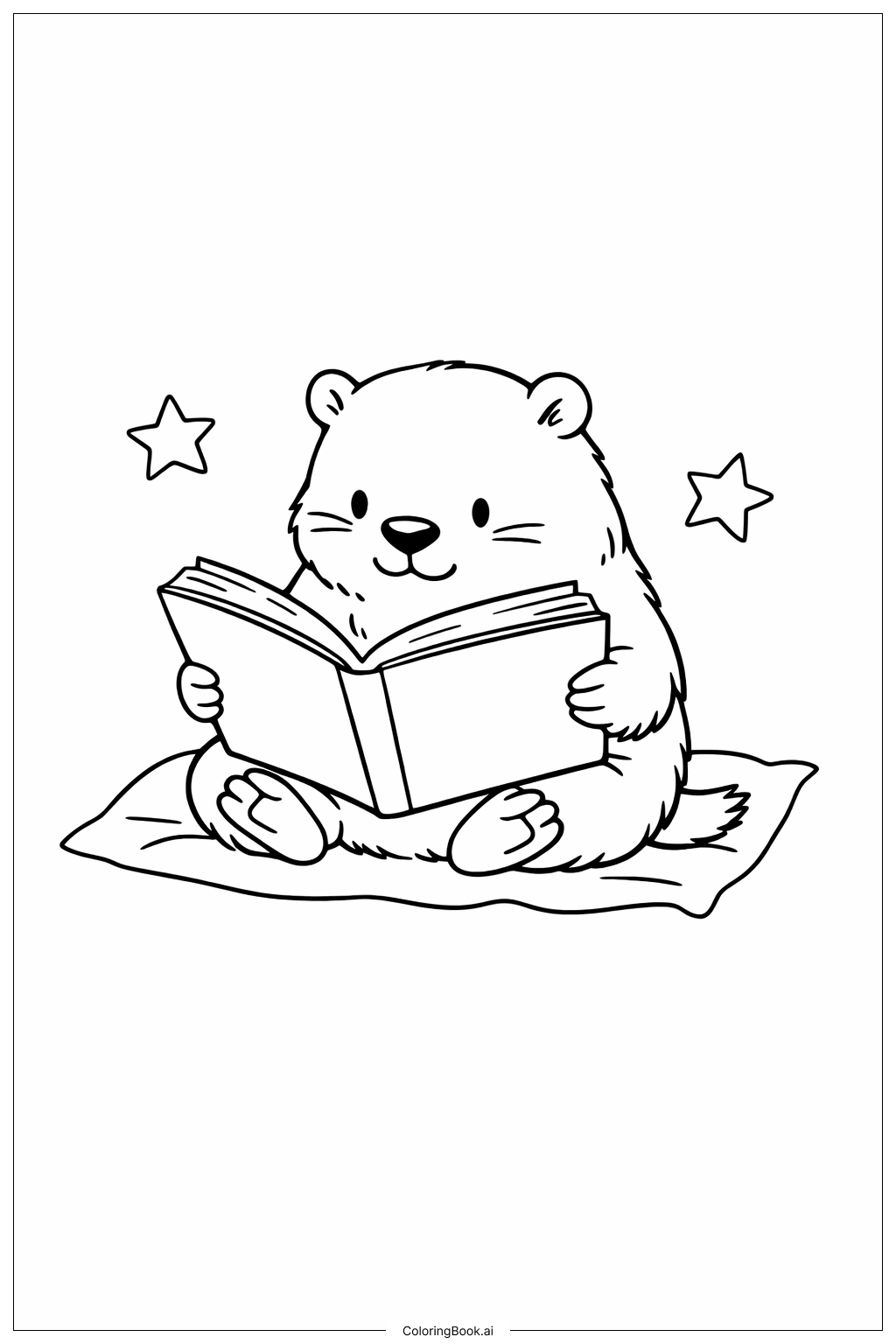
Coloring tips: How to color Groundhog Reading Book coloring page well?
You can color the groundhog in soft brown or gray shades to make it look fluffy and warm. Use lighter colors for the inside of the ears and paws to add contrast. The blanket can be bright and colorful, like red, blue, or green, to make the groundhog stand out. The book can be a fun color like yellow or orange, and you can add details like a colorful book cover or pages with stripes or dots. The stars can be shiny yellow or gold to make them pop against the background. Keep the background simple or use a light pastel color. Use crayons or colored pencils for smooth fills and details.
Coloring challenges: Which parts are difficult to color and need attention for Groundhog Reading Book coloring page?
1. Coloring the small paws and fingers may be tricky because they are tiny and require careful coloring to stay inside the lines. 2. The groundhog’s face needs careful attention to keep its cute and friendly expression clear. Colors must be chosen to highlight the eyes and nose well. 3. The blanket has many lines and folds, which might be hard to color evenly while keeping the texture visible. 4. Adding shading to the book’s pages to show depth might be difficult for beginners. 5. Balancing bright colors for the stars and book without making the picture too busy can be a challenge.
Benefits of coloring books: Advantages of drawing Groundhog Reading Book coloring page
Coloring this picture helps develop fine motor skills by practicing careful coloring inside small spaces like the paws and face. It encourages creativity as children choose colors for the groundhog, blanket, book, and stars. This activity can improve focus and patience, as kids work on bringing the friendly groundhog and its storybook to life. Coloring peaceful scenes like this can also be relaxing and boost mood, making learning fun and calming at the same time.