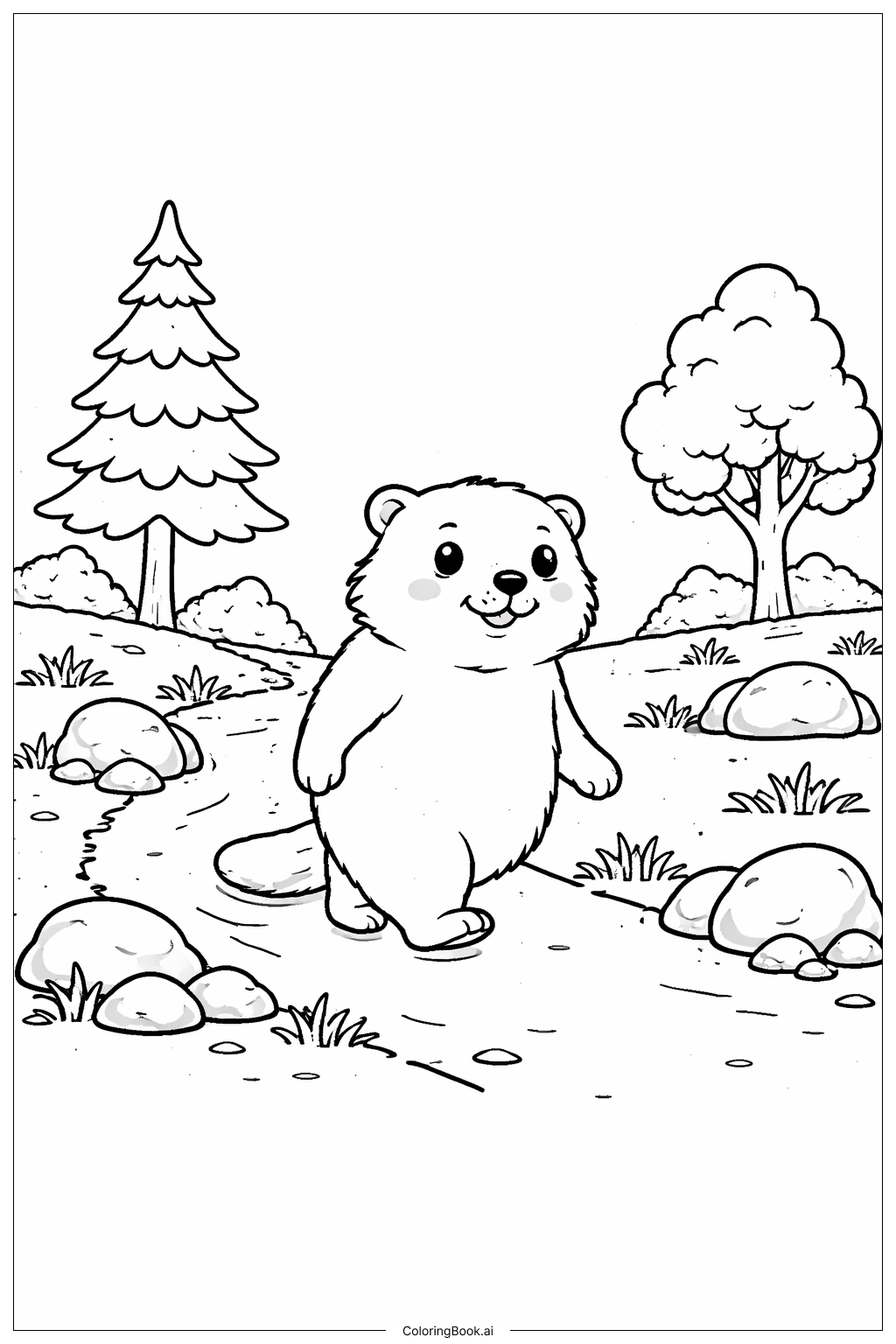
Coloring tips: How to color Groundhog Exploring Forest Path coloring page well?
Use brown shades for the groundhog to make it look soft and furry. Color the trees with different greens: pine tree with dark green and the leafy tree with a lighter green. Rocks can be gray or beige. Use green for grass and bushes, and brown for the path to give a natural feel. You can add some shading to the path and rocks to show depth. Try blending colors gently for the groundhog's fur to make it look more realistic.
Coloring challenges: Which parts are difficult to color and need attention for Groundhog Exploring Forest Path coloring page?
1. Coloring the groundhog’s fur evenly can be tricky because it has a fluffy texture that needs soft and smooth strokes. 2. The trees have detailed leaves and branches that require careful coloring to keep their shape clear. 3. Balancing different green shades for grass, bushes, and trees might be hard without making the picture look too busy. 4. Rocks have smooth surfaces but irregular shapes, so shading to show form without over-coloring can be challenging. 5. The path needs a natural look with some texture, which takes patience to color carefully without crossing the lines.
Benefits of coloring books: Advantages of drawing Groundhog Exploring Forest Path coloring page
Coloring this picture helps improve attention to detail and hand control. It encourages children to think about nature, using different shades of green and brown to make the forest look alive. It also allows kids to practice blending colors and shading. These skills build creativity and patience while making the coloring experience fun and rewarding.