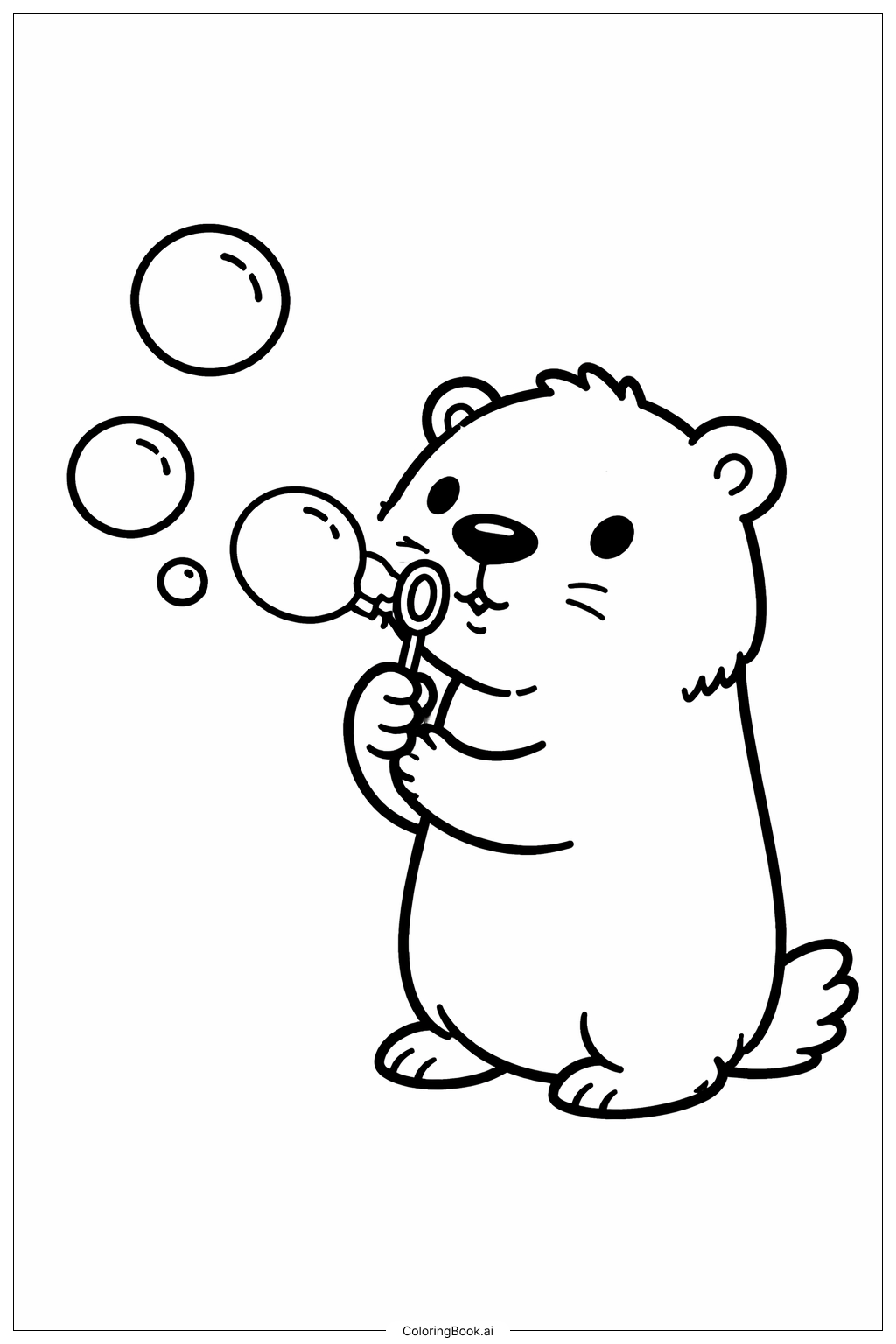
Coloring tips: How to color Groundhog Blowing Bubbles coloring page well?
To color this picture, try using warm browns and tans for the Groundhog’s fur to make it look soft and natural. You can blend lighter shades on the cheeks and belly for dimension. For the bubbles, use light blues, purples, and pinks with soft strokes to give them a shiny, transparent effect. The grass and plants can be bright greens, with a mix of yellows and darker greens to show sunlight and shadows. Don’t be afraid to experiment with soft pastel tones for the background to keep the image cheerful and lively.
Coloring challenges: Which parts are difficult to color and need attention for Groundhog Blowing Bubbles coloring page?
• Small Details: The delicate bubbles require a light touch with colors to avoid making them look heavy or dull, keeping their transparent quality. • Fur Texture: Capturing the Groundhog’s fur texture can be tricky; it needs blending of different brown tones with soft strokes to look fluffy and natural. • Bubble Wand: The thin lines of the bubble wand require careful coloring with a steady hand to stay within the lines and keep the structure clear. • Plant Leaves: The various leaf shapes and sizes demand attention to detail, using varied greens to differentiate them without making the scene too busy. • Light and Shadow: Giving a realistic feel means adding gentle shadows and highlights on the Groundhog, bubbles, and grass, balancing the colors without over-darkening the image.
Benefits of coloring books: Advantages of drawing Groundhog Blowing Bubbles coloring page
Coloring this Groundhog blowing bubbles helps improve hand-eye coordination and fine motor skills as children work on both small and large areas with different textures. It encourages creativity by blending colors to show the transparent bubbles and fluffy fur realistically. This image also nurtures patience as kids carefully color the delicate details and practice controlling their coloring tools. Moreover, it inspires attention to light and shadow, teaching basic art techniques in a fun and playful way. Finally, coloring such a joyful scene brings happiness and relaxation, making it a delightful activity for all ages.