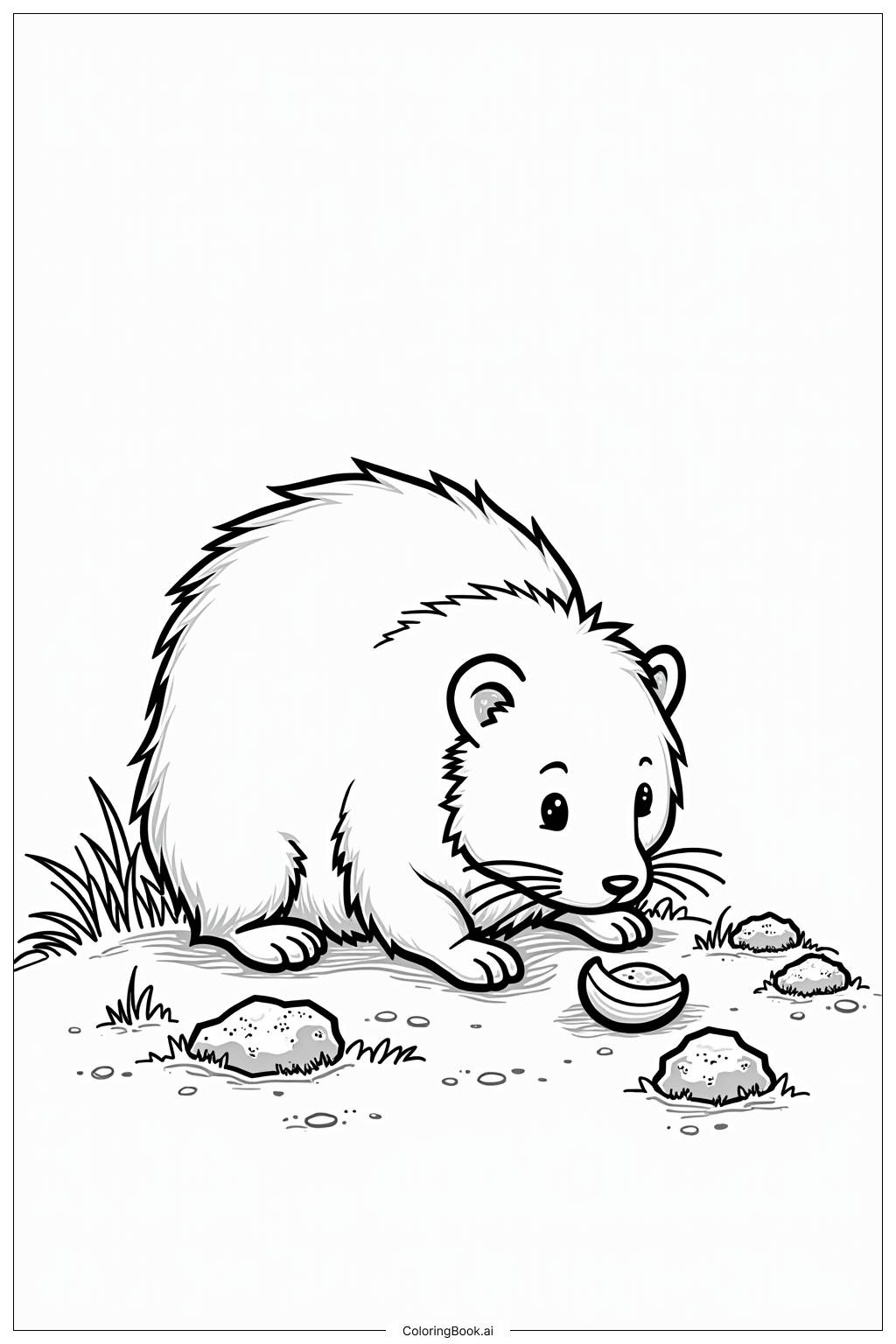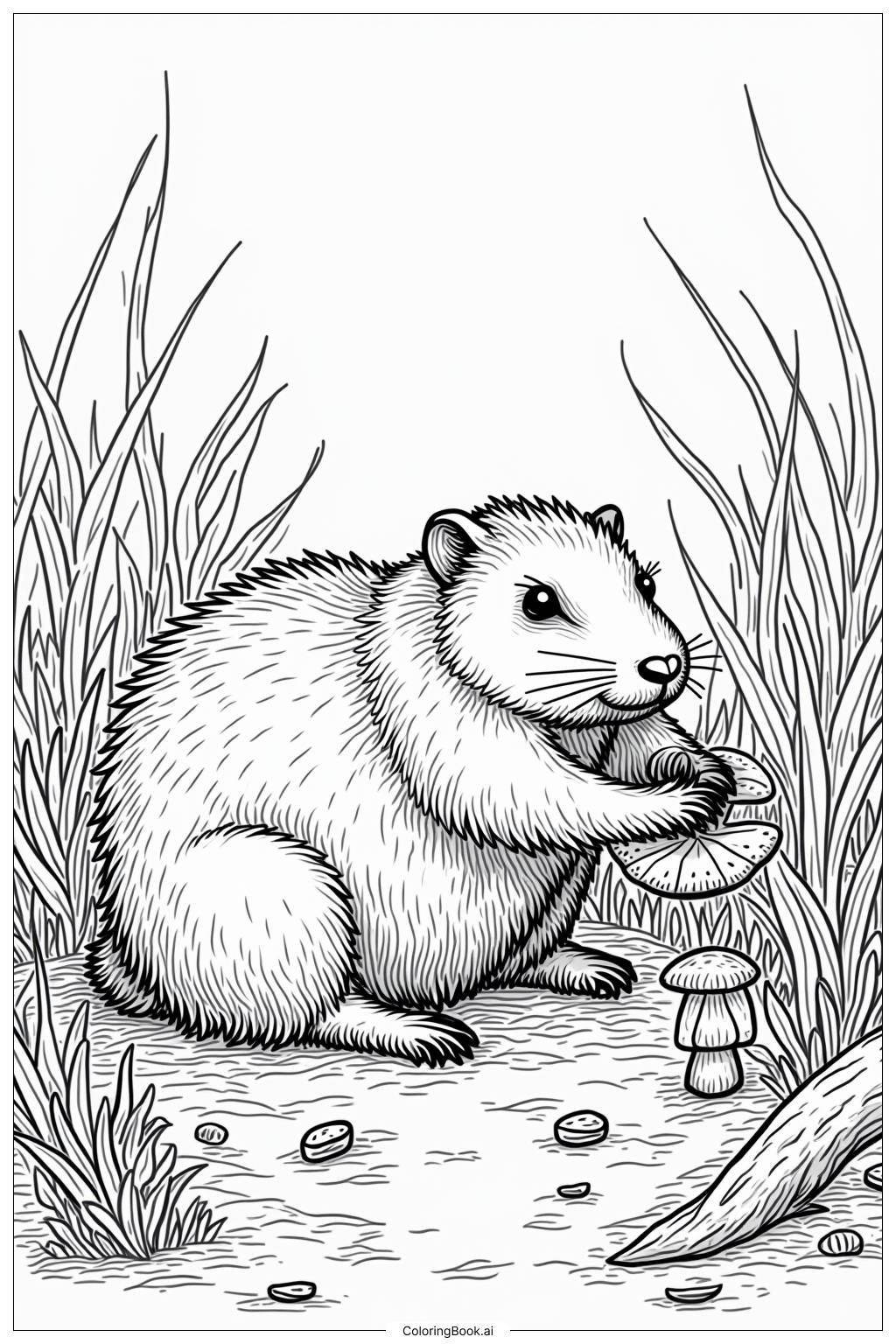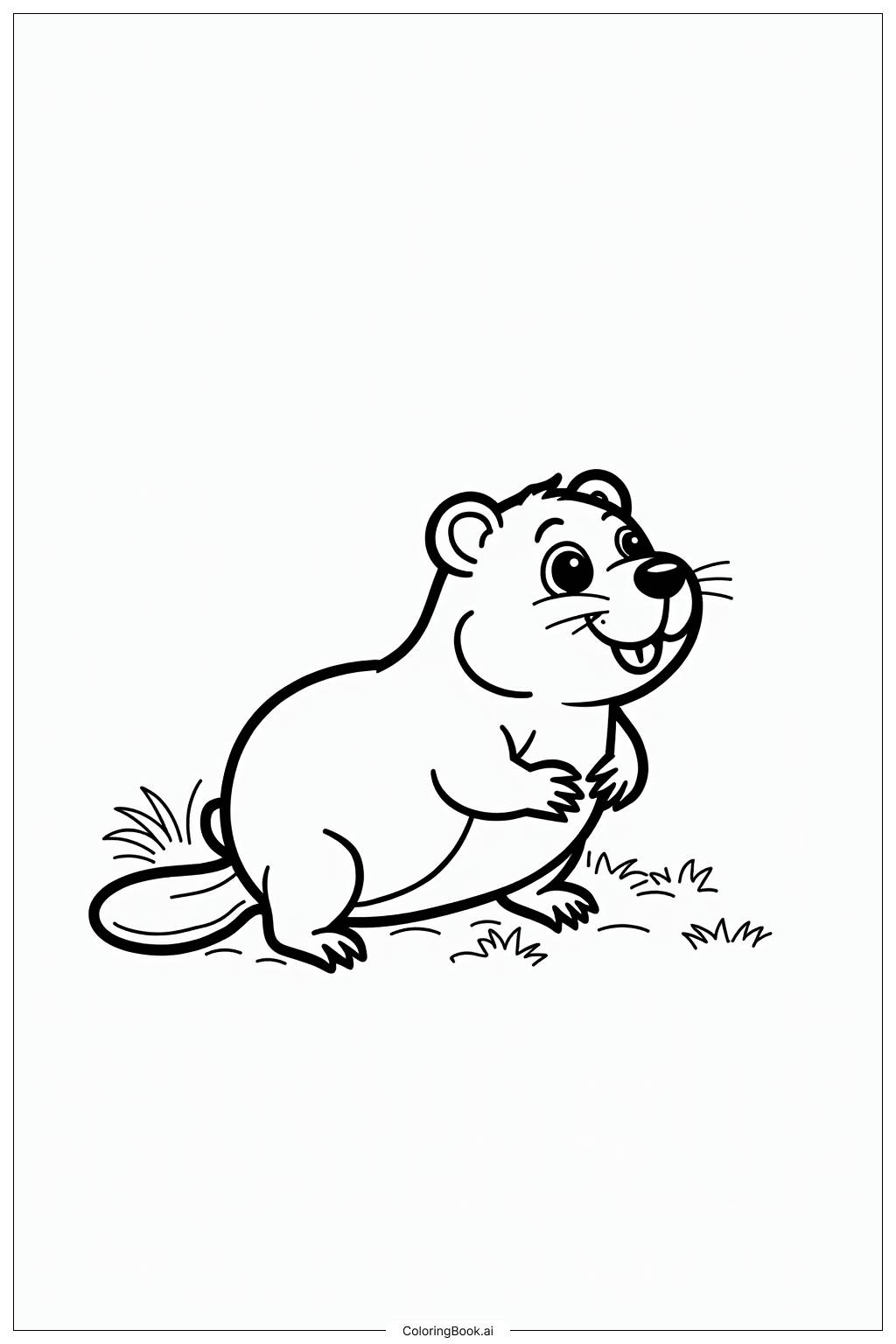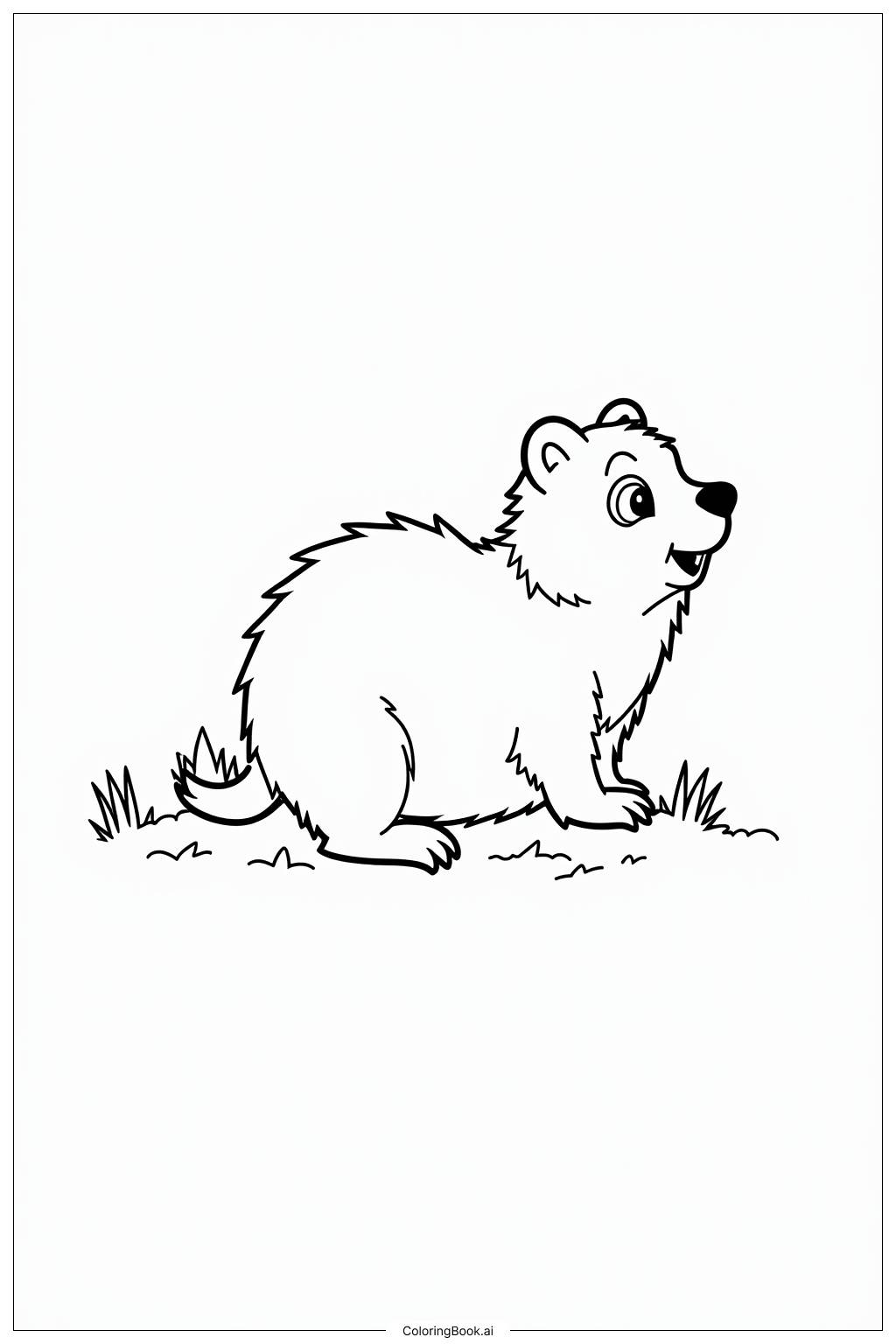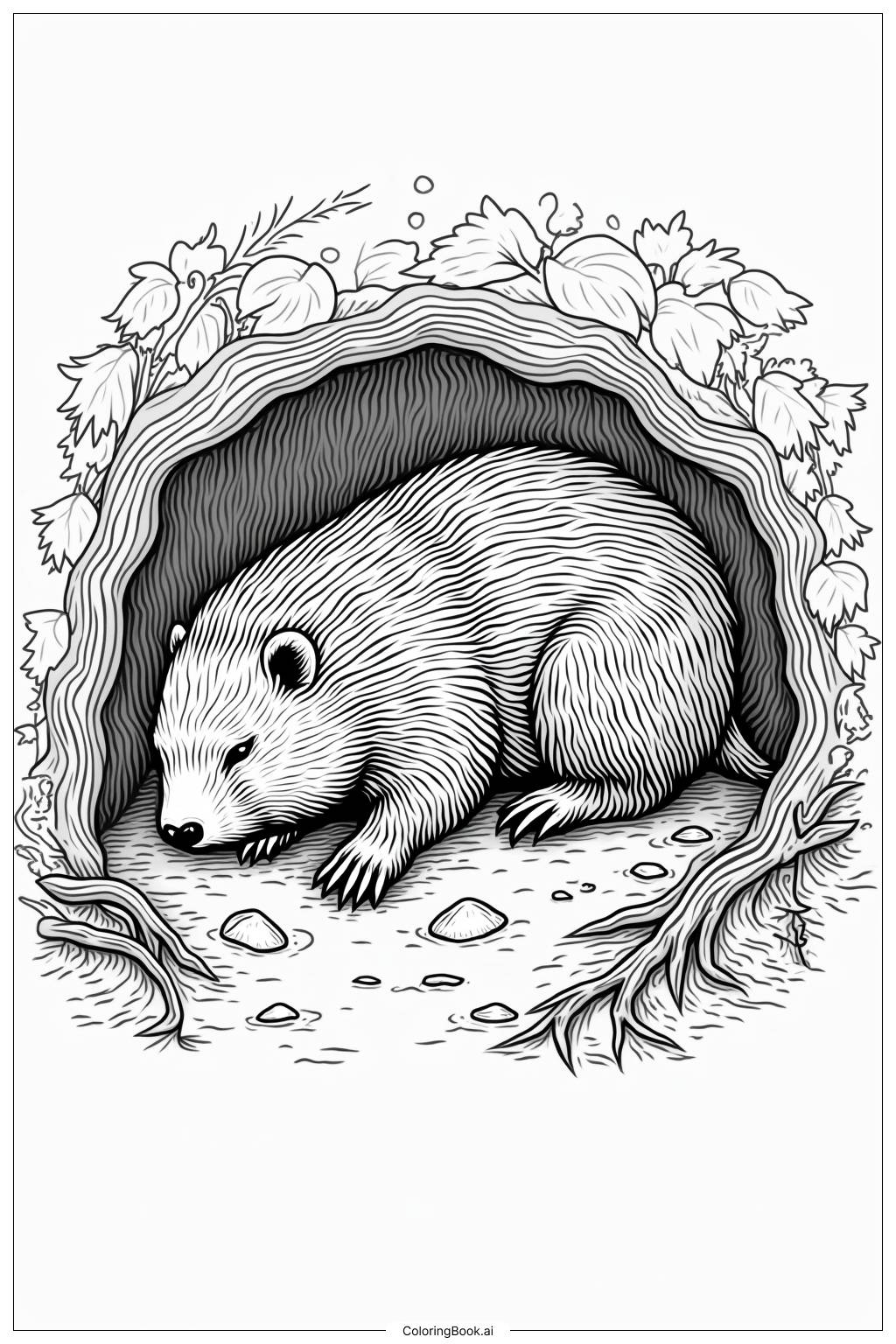
Coloring tips: How to color Ground Hog Sleeping Through Ground Hog Day coloring page well?
Start with the groundhog's fur using warm shades of brown, tan, or golden-brown. Use a slightly darker brown for the shadowed areas around its belly and paws to add depth. Color the cozy blanket in a fun pattern — try red and white stripes or a patchwork of cheerful colors. The underground burrow walls can be filled with rich earthy tones like dark brown, rust, and deep orange to show the soil layers. Use light yellow and pale gold for the sunbeams coming from above to create a warm, glowing effect. The roots and pebbles can be colored in gray, olive green, and dark tan. Add soft greens and yellows to any leaves or grass tucked around the sleeping groundhog. For the alarm clock, bright red or yellow will make it pop. Keep the overall palette warm and inviting to match the cozy, sleepy mood of the scene.
Coloring challenges: Which parts are difficult to color and need attention for Ground Hog Sleeping Through Ground Hog Day coloring page?
• Groundhog Fur Texture: The groundhog's fur has many fine lines and curves that show the direction of the hair. Staying within these small sections and blending light and dark brown tones smoothly takes patience. Using short, gentle strokes with colored pencils helps capture the soft, fluffy look of the fur without going outside the lines.
• Underground Burrow Layers: The burrow walls are filled with layered soil, pebbles, and roots all packed close together. Each element needs its own distinct color while still looking like part of the same earthy environment. Keeping browns, grays, and tans varied but harmonious can be tricky, especially where different textures meet.
• Sunbeam Lighting Effects: The rays of light coming from the surface need to feel bright and warm without overpowering the darker underground setting. Blending yellows and whites softly into the surrounding earth tones requires a careful, gradual approach so the contrast feels natural rather than harsh.
• Small Details Like the Alarm Clock: The alarm clock is a tiny but important detail in the scene. Its small size means the coloring space is very limited. Using fine-tipped markers or sharp colored pencils is necessary to fill in the clock face, numbers, and bells neatly without smudging nearby areas.
• Balancing the Overall Mood: The scene needs to feel both cozy and a little humorous. Choosing colors that feel warm and soft throughout — rather than bright and bold — helps maintain the sleepy, playful tone of the image without making any one area look out of place.
Benefits of coloring books: Advantages of drawing Ground Hog Sleeping Through Ground Hog Day coloring page
Coloring this fun groundhog scene offers a wonderful mix of creative and educational rewards for children. Filling in the groundhog's detailed fur with different shades of brown helps kids practice blending and develop a better sense of color gradation. Working on the many textures in the burrow — soil, roots, pebbles, and leaves — challenges young colorists to think about how colors change depending on the material they represent, building observational skills. The tiny alarm clock and other small details encourage fine motor control and careful hand movements, which support pencil grip and precision that carry over into writing. The cozy underground setting also sparks imagination and curiosity about how animals hibernate and what life underground might look like, making the coloring experience a gentle gateway to learning about nature. The humorous concept of a groundhog sleeping through its own special day brings joy and lightheartedness to the activity, which keeps kids engaged and smiling. Completing the full scene gives children a strong sense of accomplishment and pride in their finished artwork, boosting confidence and encouraging them to keep creating.