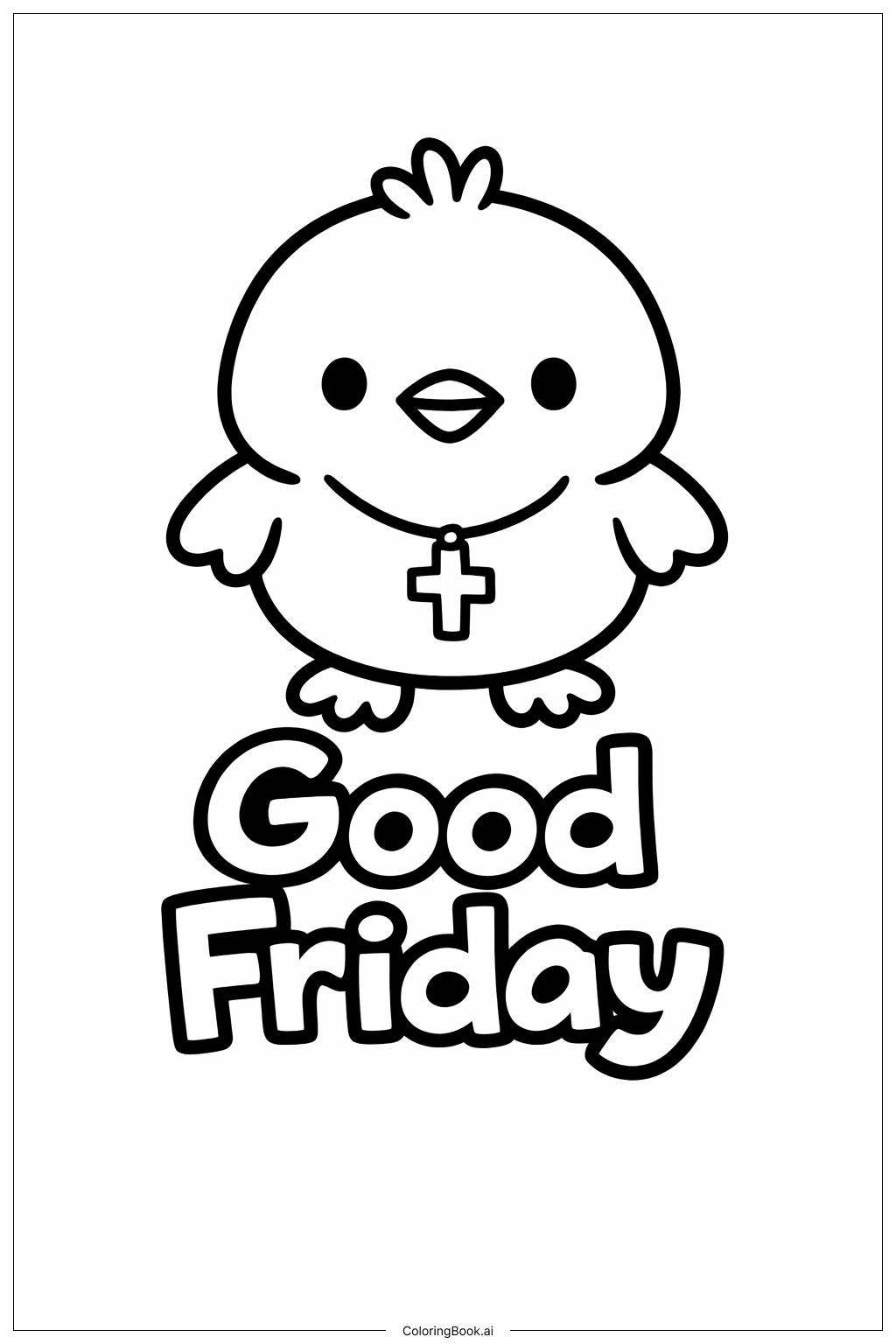
Coloring tips: How to color Good Friday Chick With Pendant coloring page well?
To bring this Good Friday Chick to life, use warm yellows and soft oranges for its feathers to capture the natural colors of a chick. The pendant can be colored gold or silver to make it look special and meaningful. You might add light shading with pale browns or creams to highlight the chick’s fluffiness. For the background, consider calm and simple colors like light blue or soft pastels to keep the focus on the chick. Try using different shades for the pendant’s cross to give it depth. Children can also experiment with bright colors for the decorations around the chick to create a cheerful yet respectful image.
Coloring challenges: Which parts are difficult to color and need attention for Good Friday Chick With Pendant coloring page?
• Feather Texture: The chick’s feathers have many small, delicate lines that require careful coloring to stay inside the outlines without smudging.
• Pendant Details: The cross pendant is small and detailed, demanding precise coloring or careful use of finer coloring tools to make it stand out nicely.
• Expression: Keeping the chick’s gentle face neat is important. Over-coloring the eyes or beak can change its friendly look.
• Layering Colors: Adding shading to show depth on the chick’s fluffy body needs blending of different yellows and light browns, which can be tricky for younger children.
• Background Simplicity: Choosing subtle background colors requires thought so they don’t overpower the main image but still add interest.
Benefits of coloring books: Advantages of drawing Good Friday Chick With Pendant coloring page
Coloring this Good Friday Chick encourages focus and fine motor skills as children work on the detailed feathers and pendant. It helps develop hand-eye coordination and patience, especially when working on small spaces. The theme fosters reflection and curiosity about Good Friday’s meaning, making coloring more thoughtful. Playing with soft warm colors also boosts creativity while learning about balance in art. For children aged 4–16, this image supports calmness and concentration, giving a relaxing and enjoyable activity that improves both artistic and emotional growth.