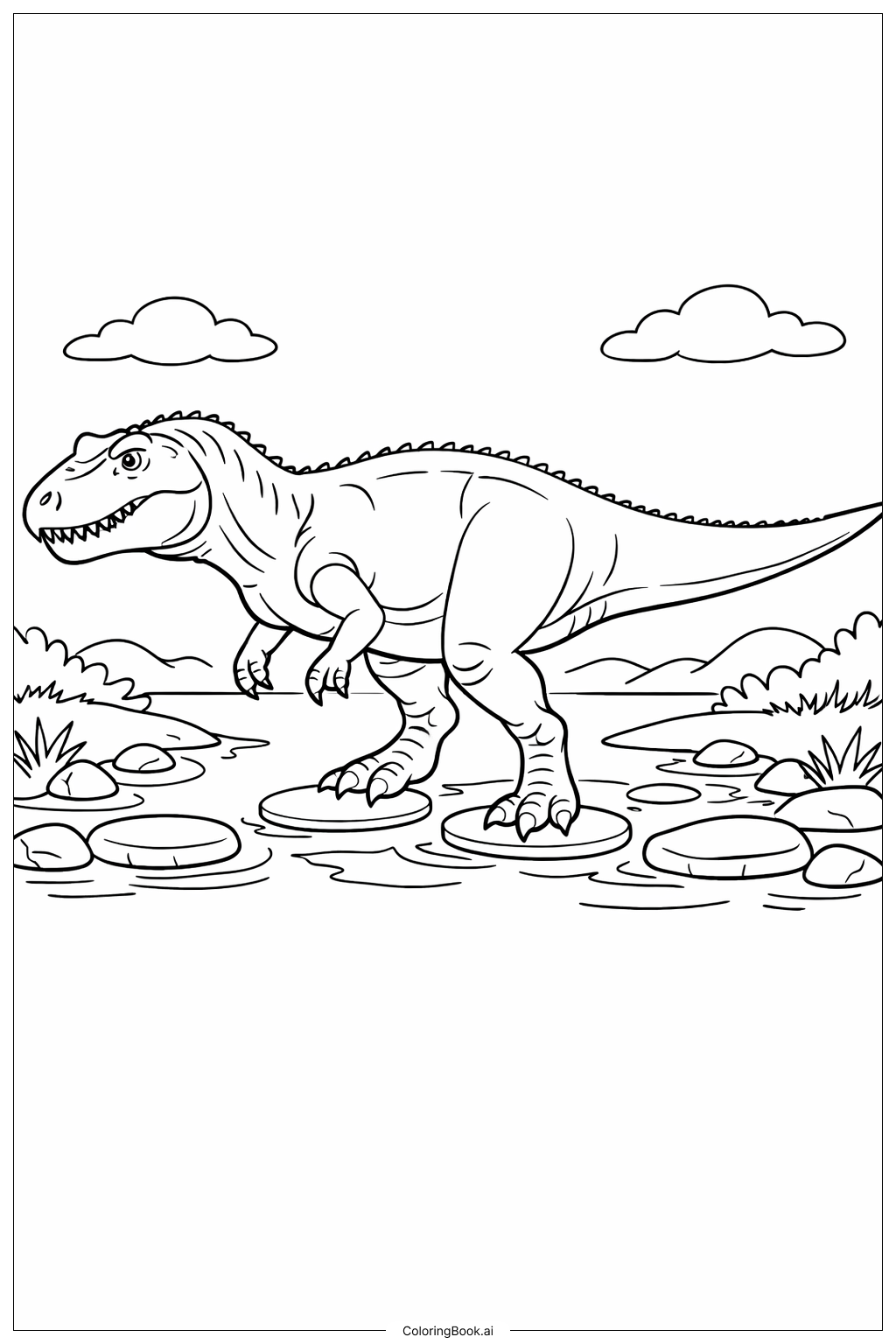
Coloring tips: How to color Giganotosaurus Crossing Stream coloring page well?
Use shades of green and brown for the dinosaur to make it look natural and fierce. For the stones, try gray or light brown to give them a realistic rock feel. The water can be colored in blues and light greens to show movement. Use soft greens for the plants and light blues for the sky, adding white or light gray to the clouds for depth. Don’t be afraid to mix colors to create shadows and highlights, especially on the dinosaur’s muscles and the stones.
Coloring challenges: Which parts are difficult to color and need attention for Giganotosaurus Crossing Stream coloring page?
1. Coloring the dinosaur's detailed body shape, including muscles and claws, can be challenging because it requires careful shading to show depth.
2. The stones have to look round and solid, which means blending colors to show light and shadow.
3. The stream water needs smooth coloring that suggests movement without making it too solid or flat.
4. The small plants and rocks around the stream need fine coloring to keep the scene realistic.
5. Adding natural shadows and highlights on the dinosaur and background details to make the picture lively can be tricky for beginners.
Benefits of coloring books: Advantages of drawing Giganotosaurus Crossing Stream coloring page
Coloring this page helps improve hand-eye coordination and attention to detail, especially when shading the dinosaur and stones. It encourages creativity by choosing colors for the dinosaur and natural elements. The scene inspires kids to learn more about dinosaurs and nature. Coloring the water and plants can improve blending skills and patience. Overall, this picture offers a fun way to practice coloring skills while learning about one of the largest dinosaurs ever.