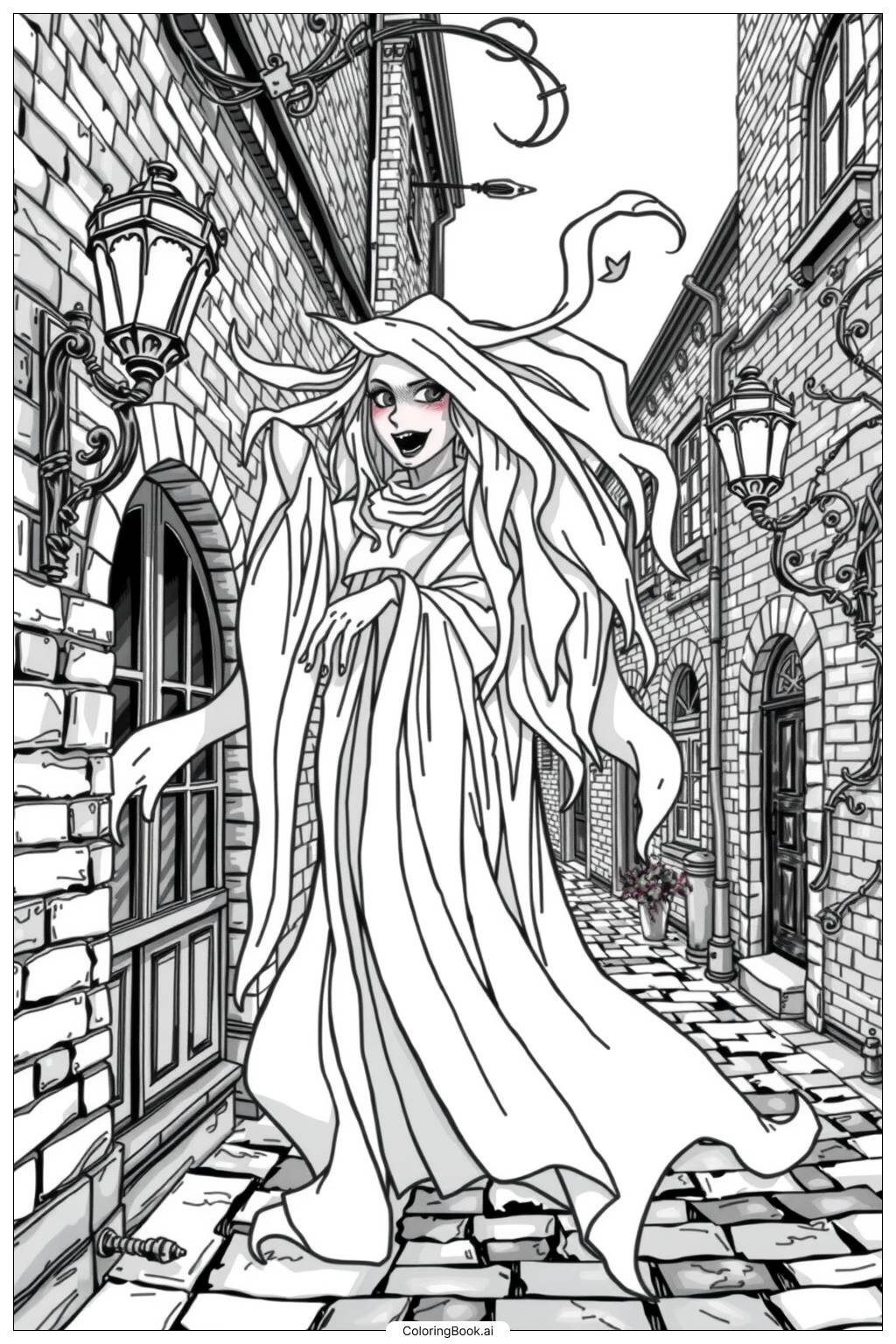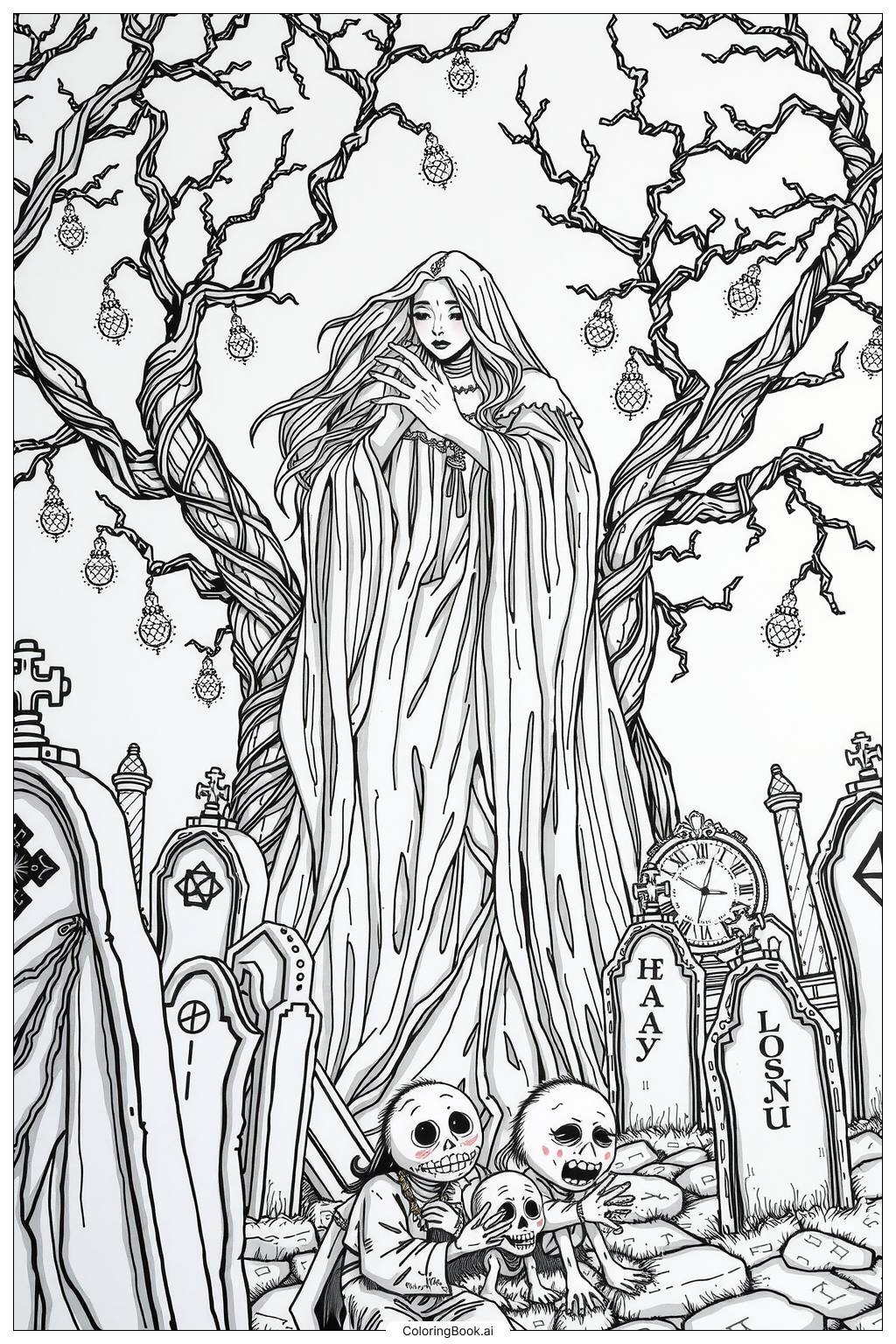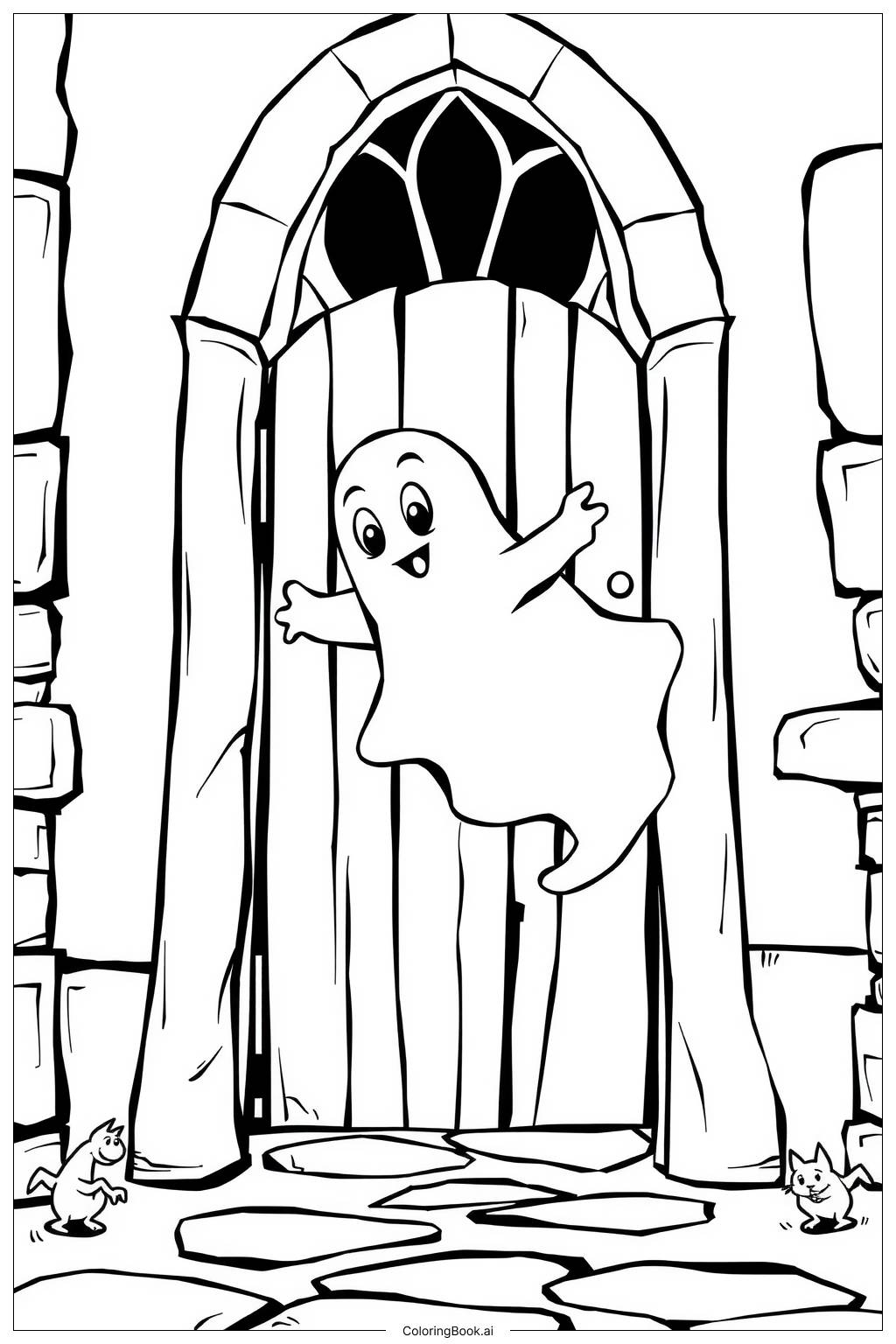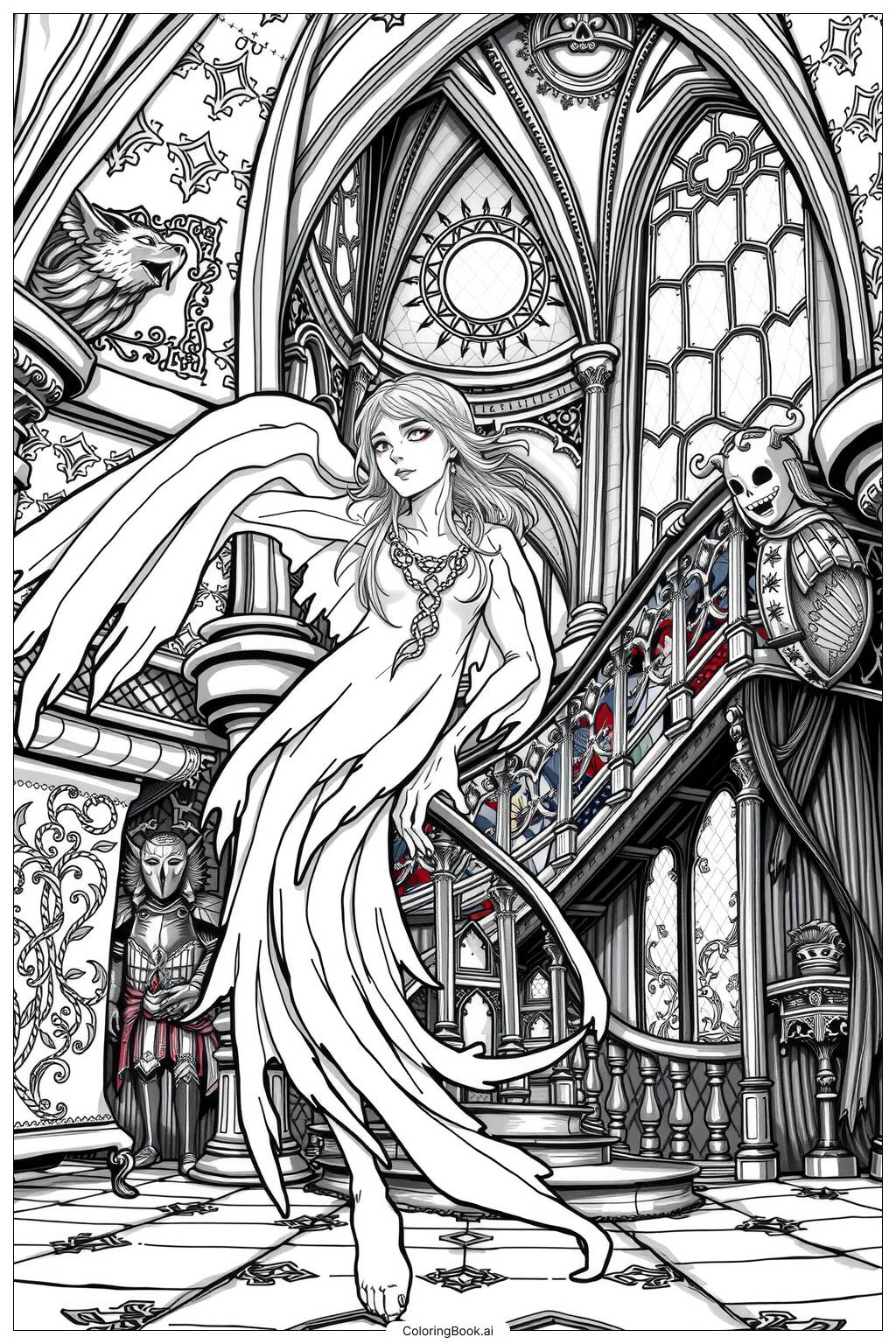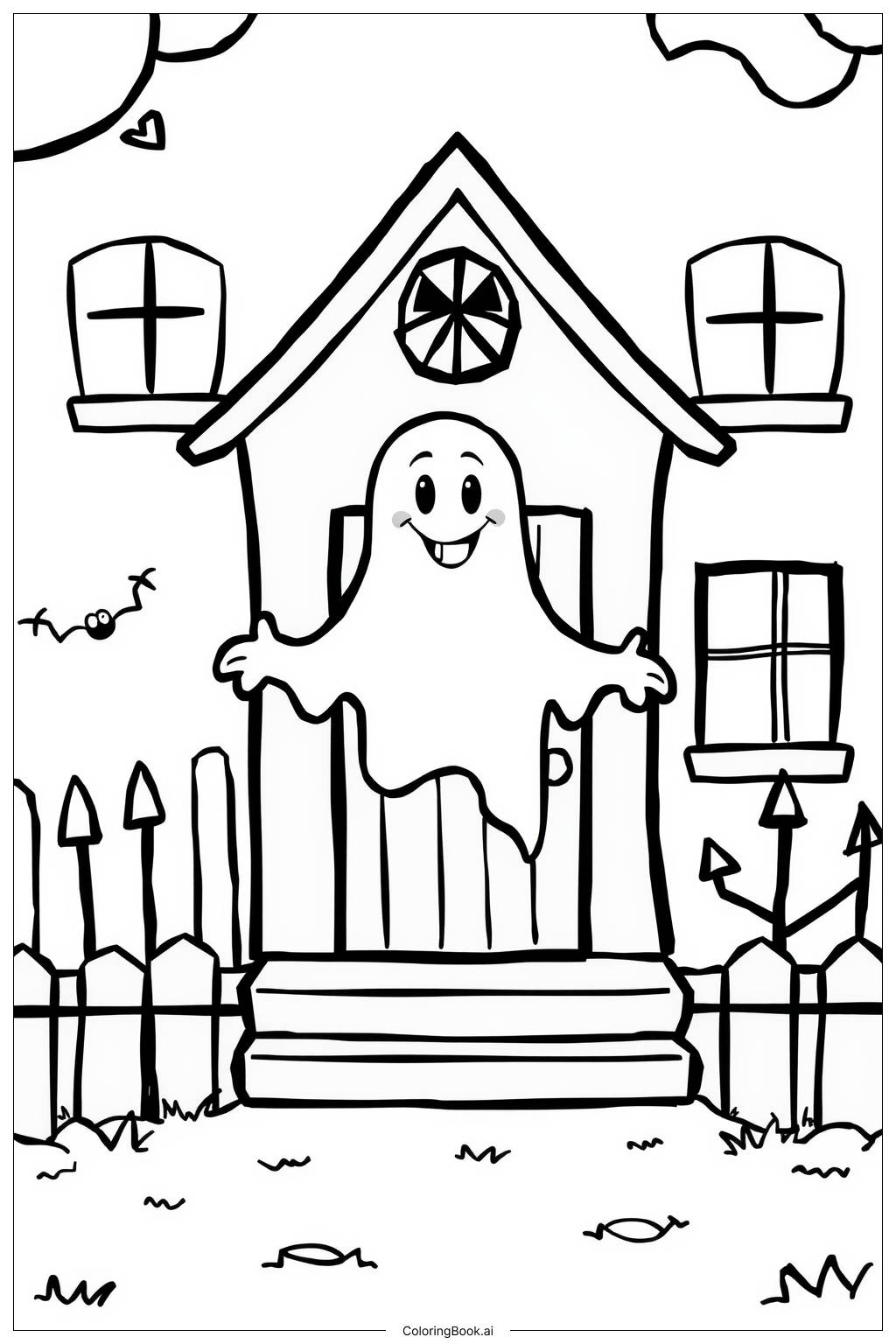
Coloring tips: How to color Friendly Ghost in a Haunted House coloring page well?
Start with the ghost itself. Use pale white, soft lavender, or light sky blue to keep it looking friendly and glowing. Add a faint yellow or warm peach tint on the belly to suggest a gentle light from within.
For the haunted house background, use deep purples, navy blues, and dark grays to create a moody atmosphere. The wooden staircase and floor can be colored in warm browns and tans.
Color the jack-o'-lantern in bright orange with a yellow glow around its eyes and mouth. Use soft orange and yellow tones for any candle flames to add warmth to the scene.
Cobwebs look great in light gray or silvery white. The tattered curtains can be done in dusty purple or faded green for an old, worn-out feel.
Bats can be dark gray or deep purple. Their small size makes them perfect for a quick pop of dark color.
Use contrasting light and dark colors to make the ghost stand out against the shadowy house. Keep the ghost bright so it remains the clear star of the scene.
Coloring challenges: Which parts are difficult to color and need attention for Friendly Ghost in a Haunted House coloring page?
• Ghost Shading and Glow Effect: The ghost's round, soft body looks best when it has a subtle glow, but creating that with colored pencils or markers can be tricky. You need to blend light colors carefully from the center outward, leaving the core lightest. Using too much pressure or a single flat color will make the ghost look flat instead of luminous. Young artists may find it helpful to use a light touch and layer colors slowly.
• Tiny Background Details: The haunted house is packed with small elements like cobwebs, candle flames, and bat silhouettes. These require a steady hand and fine-tipped tools to color neatly without going outside the lines. For younger children, using chunky crayons in this area may lead to smudging. Colored pencils with sharp tips work much better for these small sections.
• Contrast Between Ghost and Background: The ghost is light-colored while the haunted house is meant to be dark and moody. Balancing these two opposite color zones on the same page takes planning. If the background colors bleed toward the ghost or if the ghost is colored too darkly, the friendly character can get lost in the scene.
• Tattered Curtains and Textured Wood: The curtains and wooden staircase have irregular, rough edges that suggest worn texture. Coloring these areas to actually look old and tattered means using uneven strokes and mixing two or three shades — a challenge for beginners who tend to color in a single flat tone.
• Keeping the Mood Spooky but Fun: The whole image should feel playful, not scary. Choosing colors that are dark enough to feel haunted but bright enough to stay cheerful requires a good sense of color balance, which can be a fun creative challenge for older kids.
Benefits of coloring books: Advantages of drawing Friendly Ghost in a Haunted House coloring page
Coloring this friendly ghost scene offers a wonderful mix of fun and learning for kids of all ages.
For younger children, filling in the ghost's simple, round shape helps build basic motor skills and teaches color recognition. Choosing between light and dark shades for the ghost versus the haunted house introduces early lessons in contrast and visual balance.
For older kids, the detailed background — with cobwebs, candles, curtains, and bats — offers a real challenge that builds patience and concentration. Planning which colors to use across a complex scene encourages creative thinking and decision-making.
The Halloween theme makes this image especially exciting. It lets children explore a playful version of something that might otherwise feel scary, helping them process emotions in a safe and imaginative way. The friendly ghost turns fear into fun.
Coloring also gives kids a quiet, screen-free activity that encourages focus and calm. Completing the full image builds a real sense of pride and accomplishment.
For families, this can be a shared activity — parents and children picking colors together and talking about the story behind the ghost and the haunted house. It sparks imagination and storytelling, which supports language development alongside artistic growth. Overall, this image is a joyful, rewarding coloring experience.