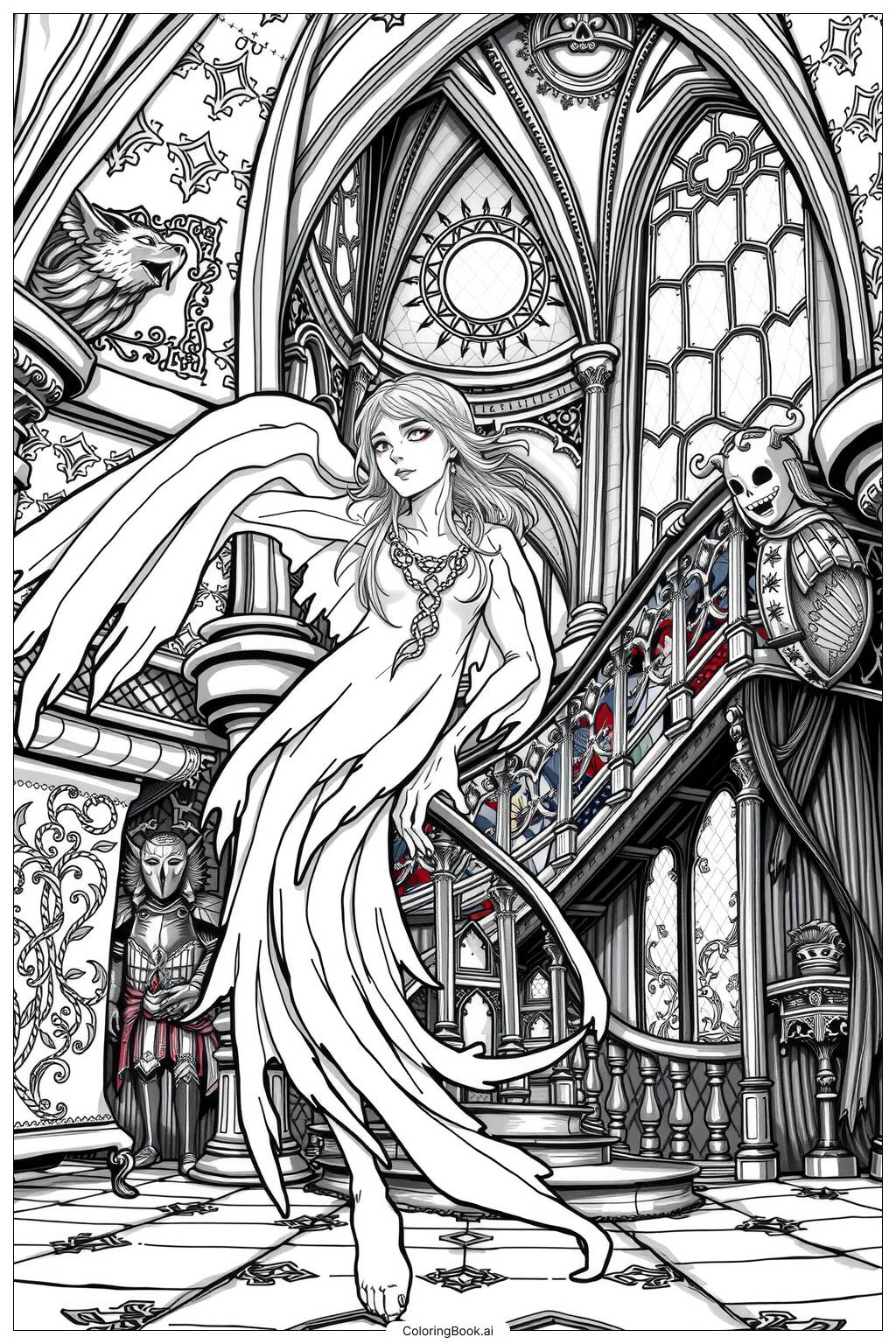
Coloring tips: How to color A Curious Ghost Exploring a Castle coloring page well?
Start with the ghost itself. Use a very light color like pale blue, soft lavender, or creamy white to keep it looking ghostly and translucent. You can add a faint glow effect by shading the edges slightly darker.
For the castle walls, gray or tan stone tones work well. Try adding darker shading in the cracks between stones to make them look old and textured.
Color the wooden door in warm brown tones. Use a darker brown for the shadows to give it depth.
The candles can be yellow or orange, with a warm glow spreading out around the flames. The candleholders look great in dark gray or black.
Give the cobwebs a silver or light gray color. The bats can be dark purple or black.
For the full moon seen through the window, use bright yellow or golden tones. Color the sky behind it deep blue or dark purple to make the moon stand out.
Feel free to mix spooky dark tones with fun, bright pops of color to make the image feel playful rather than scary.
Coloring challenges: Which parts are difficult to color and need attention for A Curious Ghost Exploring a Castle coloring page?
• Ghost Shading and Transparency: The ghost's body should look soft and see-through, which can be tricky to achieve. Blending a very light base color with slightly darker edges requires a gentle hand. Using colored pencils in circular motions or watercolor in thin layers works best. Avoid pressing too hard or using colors that are too dark, or the ghost will lose its wispy, floating feel.
• Stone Wall Texture: The castle walls are made up of many individual stone blocks, each with its own outline. Coloring each stone consistently while also adding light and shadow takes patience. Try using two shades of gray or brown — a lighter one for the main surface and a darker one for the gaps and shadowed edges. This creates a realistic and dimensional look.
• Small Details Like Cobwebs and Candle Flames: The cobwebs have very thin, delicate lines that are easy to color outside of. Using a fine-tipped coloring tool like a thin marker or a sharpened pencil helps here. The candle flames are also small and require careful attention to blend yellow into orange without muddying the colors.
• Creating Depth in a Dark Scene: This image has a naturally dark, nighttime atmosphere. Balancing light areas (like the ghost and the moon) against dark areas (like the walls and bats) takes planning. It helps to decide where your light sources are — the candles and the moon — before you start, so shadows and highlights feel consistent throughout the scene.
• Bat Details Near the Ceiling: The bats are small figures with wing details that need careful coloring to avoid losing their shape. Using a dark base color and then adding slightly lighter highlights on the wing edges can help them stand out against the darker ceiling.
Benefits of coloring books: Advantages of drawing A Curious Ghost Exploring a Castle coloring page
Coloring this ghost and castle scene offers a wonderful mix of fun and learning for kids and beginners alike.
It builds focus and patience. The many small details — stone blocks, cobwebs, candles, and the ghost's flowing shape — encourage children to slow down and pay close attention to what they are doing.
It sparks creativity. There is no single right way to color this image. Kids can make the ghost any pale shade they like, or experiment with dramatic moonlit colors for the sky. This freedom builds confidence and encourages self-expression.
It develops fine motor skills. Staying inside the thin lines of cobwebs and small bat wings requires careful hand control. Practicing this kind of precision helps younger children strengthen the hand muscles they need for writing.
It introduces the idea of light and shadow in art. The candles and moon act as natural light sources, giving children a chance to think about where light comes from and how it changes the colors around it.
It also makes learning about castles and folklore fun. The image naturally sparks curiosity about ghosts, history, and storytelling, making it a great conversation starter between kids and parents or teachers.
Most of all, it is simply a joyful and imaginative activity that brings a spooky little adventure to life one color at a time.