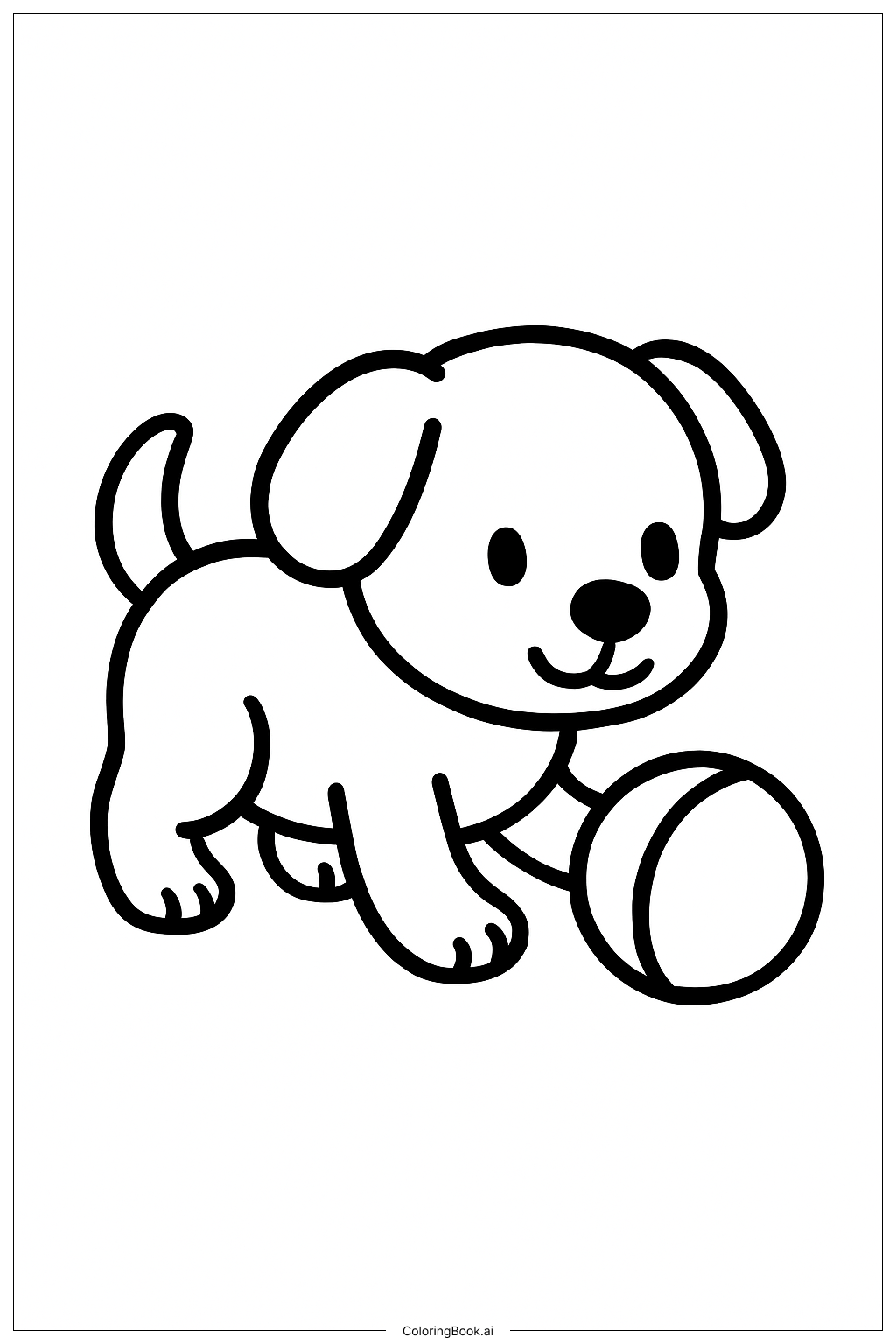
Coloring tips: How to color Fun Puppy Playtime coloring page well?
For the puppy, consider using warm colors like yellow, light brown, or golden. These colors can give the puppy a soft, fluffy appearance. The ball can be colored in vibrant shades like red and blue to create a lively contrast. Don't forget to add some shading to give depth to the puppy; light gray could work well for shadows. Young artists can also decorate the background with grass or a sunny sky to make the scene more dynamic and cheerful.
Coloring challenges: Which parts are difficult to color and need attention for Fun Puppy Playtime coloring page?
1. **Shading the Puppy**: Achieving a furry texture while coloring requires practice. Kids might find it challenging to blend colors smoothly to create shadows and highlights. Using too dark a color can make it look flat. 2. **Coloring the Ball**: Getting the round shape of the ball right can cause issues. Kids may need guidance to color in a way that makes it appear three-dimensional. 3. **Staying Inside the Lines**: Younger children might struggle with coloring neatly. Staying within the lines while coloring the puppy and ball will be important for a neat finish. 4. **Choosing Colors**: Deciding which colors to use can be a bit overwhelming for some kids. They might need suggestions on color combinations that will look appealing together. 5. **Background Details**: If children choose to add details like grass or a sky, they might face difficulty in making it look balanced with the main image of the puppy.
Benefits of coloring books: Advantages of drawing Fun Puppy Playtime coloring page
Coloring this image can have several benefits for children. It helps improve their fine motor skills as they practice holding crayons and controlling their strokes. Additionally, coloring encourages creativity, allowing children to choose colors and create unique designs for the puppy and the ball. It can also be a soothing activity that helps focus their attention and reduce stress. Kids can express their emotions through color choices, making it a form of self-expression. Finally, coloring helps develop patience and attention to detail, as they learn to complete their artwork.