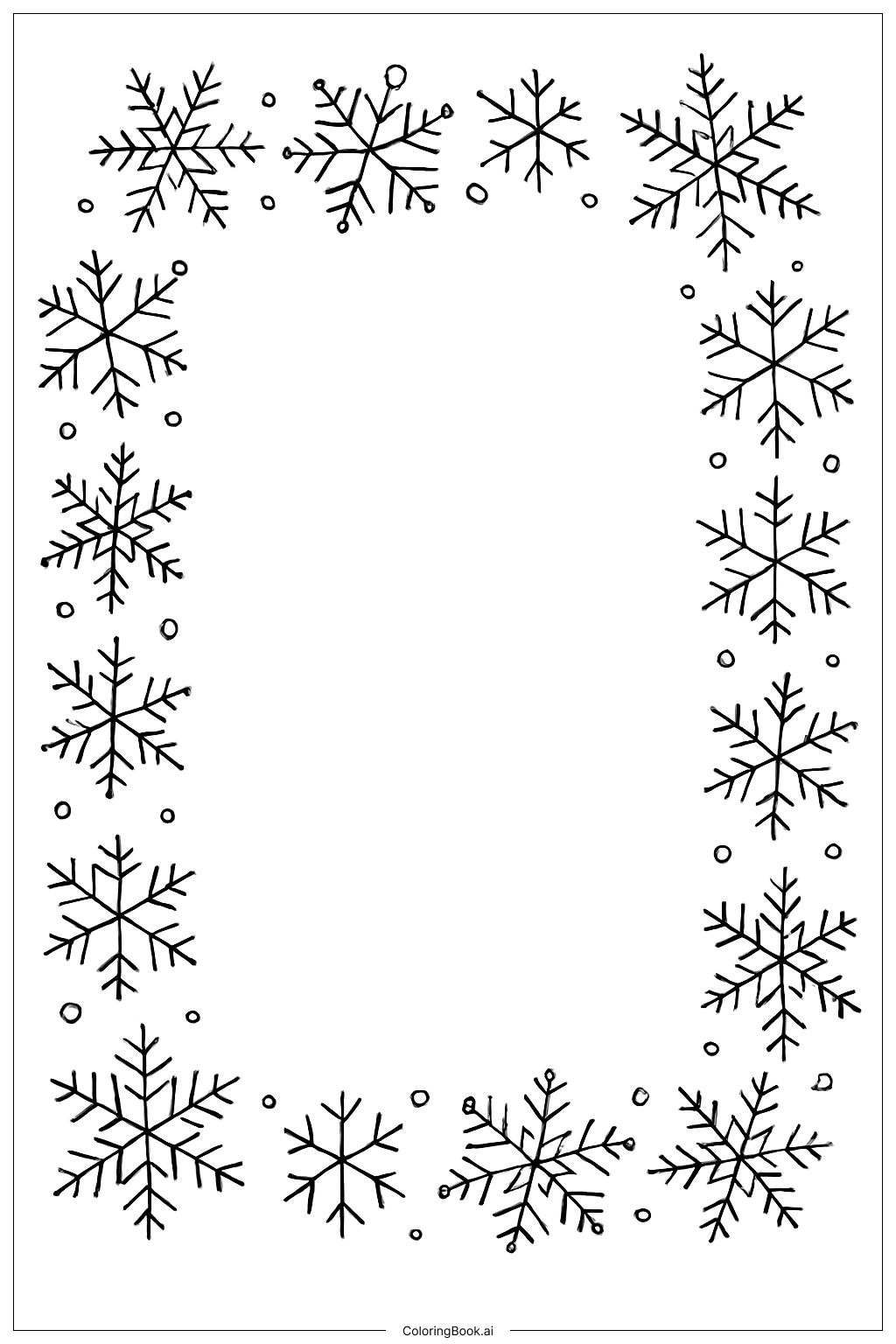
Coloring tips: How to color Frozen Snowflake Border coloring page well?
When coloring the snowflakes, consider using shades of blue, white, and silver for a frosty effect. You can also mix in some sparkly glitter for added fun! Pastel colors can give a soft look, while brighter colors can make the snowflakes pop. Don't forget to color the small circles, too; use light colors to make them look like sparkling snow. Feel free to experiment with color blends and gradients for a magical finish.
Coloring challenges: Which parts are difficult to color and need attention for Frozen Snowflake Border coloring page?
1. **Intricate Patterns**: The snowflakes have many detailed lines and shapes. Coloring inside these lines can be tricky for younger children. They may need practice to stay within the boundaries without going over. 2. **Color Blending**: Mixing colors for a unique look can be difficult. Kids may need guidance on how to blend colors smoothly for a professional finish. 3. **Choosing Color Schemes**: Deciding on which colors to use can be overwhelming. Children may struggle to pick complementary colors that fit well together. 4. **Small Details**: The small circles scattered around may require precision, which can be challenging. Kids need to develop fine motor skills to color these spots neatly. 5. **Even Coverage**: Achieving an even coloring without streaks can be difficult for beginners. They may need tips on applying consistent pressure when coloring.
Benefits of coloring books: Advantages of drawing Frozen Snowflake Border coloring page
Coloring this snowflake border helps develop fine motor skills as children practice holding crayons or colored pencils. It encourages creativity, allowing kids to express their unique ideas through color choices. Coloring can also be a calming activity, helping to reduce stress and anxiety. Furthermore, it promotes focus and concentration as children work on completing their project. Sharing their finished artwork can boost confidence and a sense of achievement.