Coloring tips: How to color Food Watermelon Slice coloring page well?
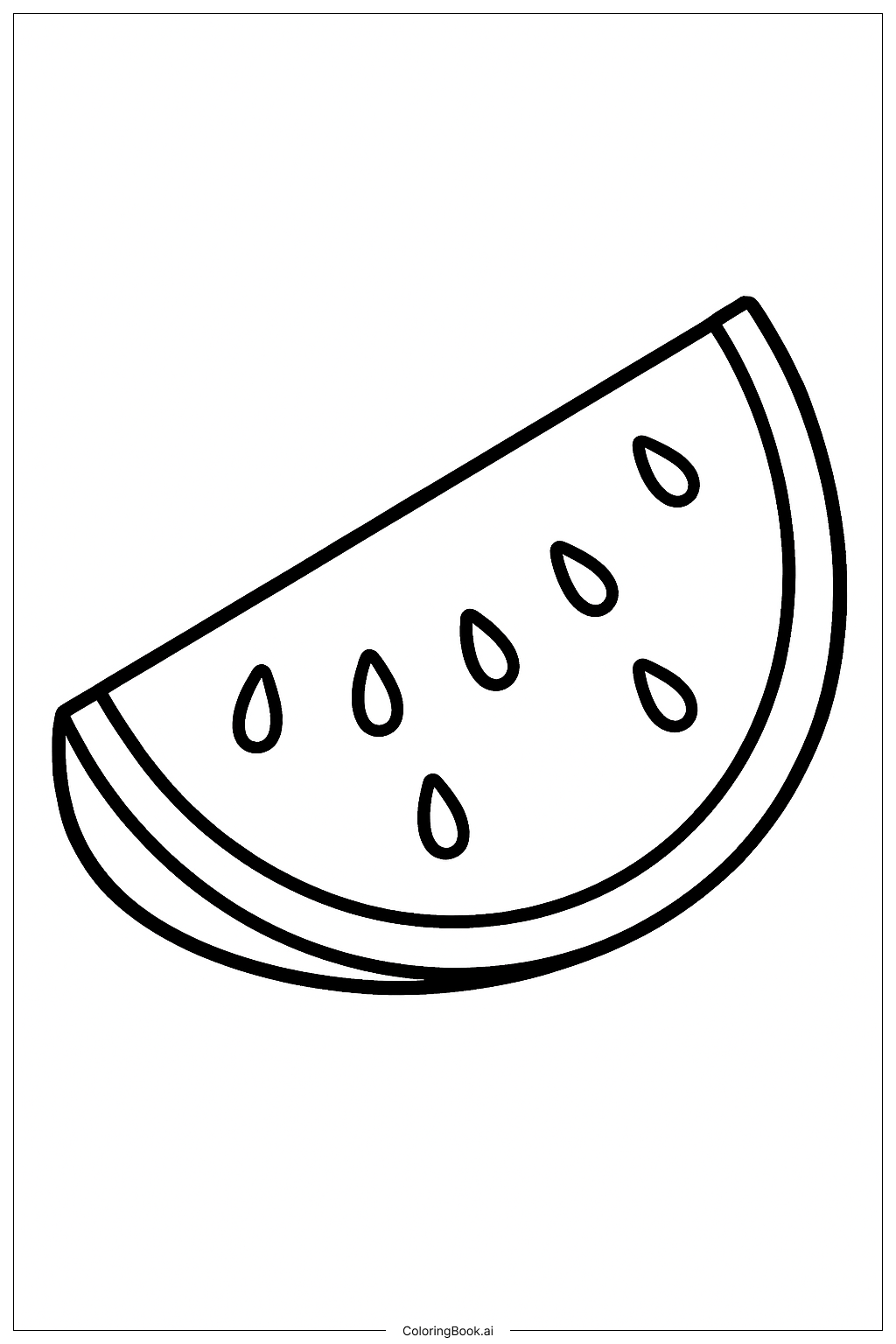
For coloring this Food Watermelon Slice, start with a bright red or pink color for the juicy flesh part. You can blend some lighter pink or white near the rind to show freshness and texture. The seeds should be colored black or very dark brown to stand out against the red flesh. The rind is best colored green with alternating light and dark green stripes to mimic how watermelons look in real life. You can also add a small touch of white to separate the flesh from the rind. Using colored pencils or markers with fine tips will help keep the lines neat, especially around the seeds. This coloring page works well for experimenting with blending shades of green and red to bring the watermelon slice to life.
Coloring challenges: Which parts are difficult to color and need attention for Food Watermelon Slice coloring page?
• Seed Placement: The many small seeds are spread throughout the red flesh. Coloring inside the tiny seed shapes without coloring over the surrounding red flesh requires good control and patience.
• Smooth Curves: The rind curves smoothly around the slice's bottom edge. Keeping the green rind color inside the curved line without coloring outside is a challenge for younger children.
• Layer Definition: The slice has clear layers where the rind meets the flesh and where the flesh changes color near the rind. Coloring these transitions naturally can be tricky.
• Small Details: The fine details of seeds and rind stripes demand steady hands and focus, which may be difficult for very young kids.
• Color Blending: Creating a realistic watermelon look means blending greens on the rind and reds on the flesh. This shading challenge tests advanced coloring skills.
Benefits of coloring books: Advantages of drawing Food Watermelon Slice coloring page
Coloring this Food Watermelon Slice helps children develop hand-eye coordination as they carefully color inside the seeds and curved lines. It encourages focus and patience because of the small details such as the many seeds and striped rind. Choosing colors and blending different shades also supports creativity and an understanding of natural textures and colors. This image is simple enough for beginners but still offers challenges for older children to improve fine motor skills. Overall, coloring this watermelon slice is a fun way to learn about healthy fruits while practicing essential artistic skills.