Coloring tips: How to color Food Vegetable Garden coloring page well?
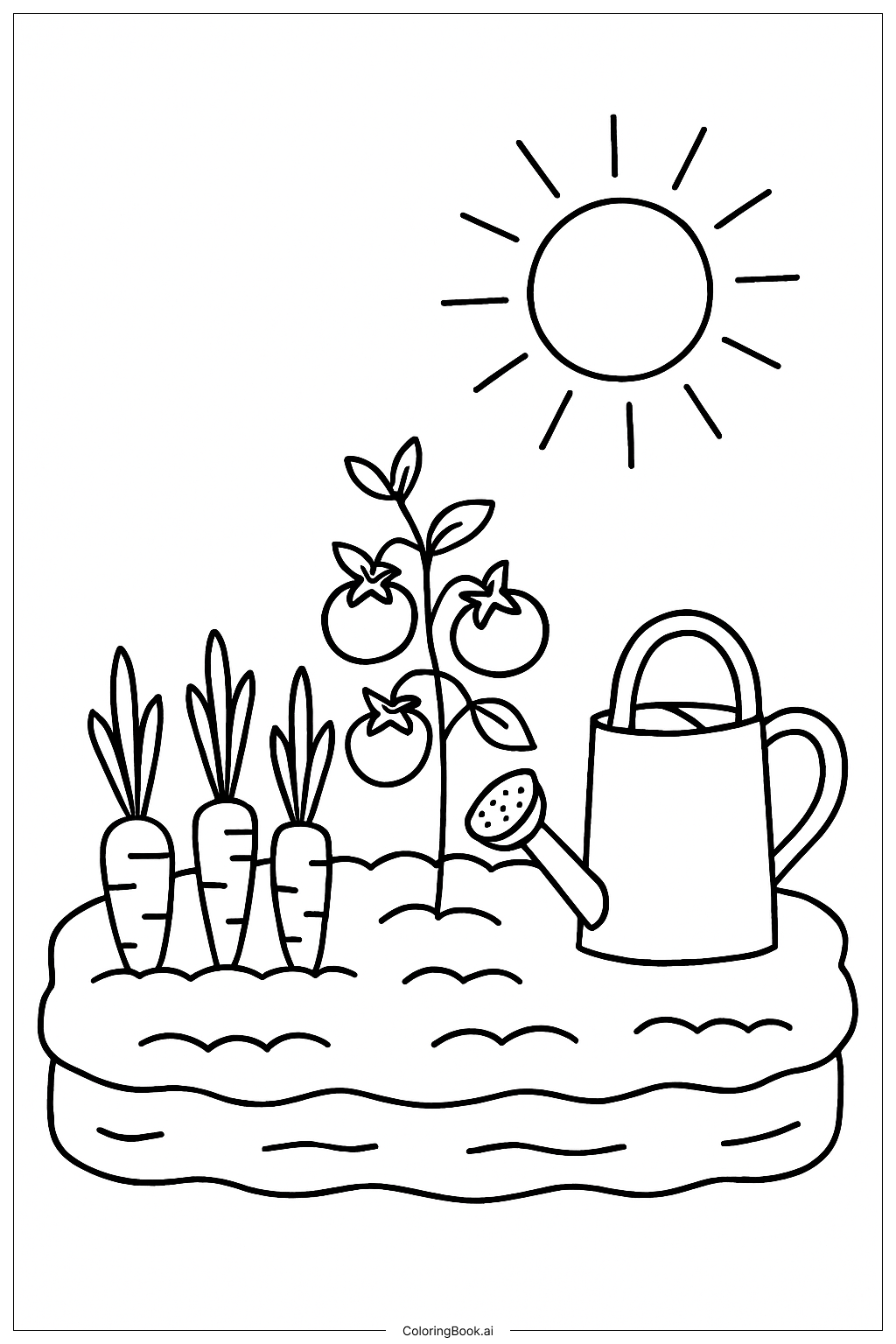
Use bright green shades for the different leafy vegetables to bring the garden to life. Try a mix of light and dark greens to show the textures of lettuce, cabbage, and carrot leaves. Color the tomatoes red or orange to make them stand out among the green. Carrot tops can be a fresh, bright green while the carrots themselves can be colored orange or yellow. For the pumpkins, use warm colors like orange or yellow to give them a friendly look. Brown tones work well for the soil and wooden fence. The farmer’s clothes can be colored with blues, reds, or browns to add variety. Use light blue or gray for the sky, and don’t forget to color the birds with soft greys or browns. Feel free to blend colors to create a natural and lively vegetable garden.
Coloring challenges: Which parts are difficult to color and need attention for Food Vegetable Garden coloring page?
• Leaf Details: The many small leaves on different vegetables require careful coloring to keep them distinct and realistic without blending all the greens into one area. Staying inside the lines on tiny leaves can be tricky for younger children. • Tomato Clusters: The bunches of tomatoes are close together, making it challenging to color each fruit individually without overlapping. Paying attention to shadows and highlights could enhance the 3D effect. • Textures of Vegetables: Differentiating between the smooth pumpkins, crinkled cabbage leaves, and feathery carrot tops needs varied shading techniques to show texture convincingly. • Background Elements: The fence, soil, and gardening tools contain smaller patterns and fine lines that can be difficult to color evenly and require patience. • Farmer’s Clothing: Coloring the folds and creases in the farmer’s clothing to add depth is a challenge, especially with limited color shades. It takes time to show fabric shapes naturally.
Benefits of coloring books: Advantages of drawing Food Vegetable Garden coloring page
Coloring this Food Vegetable Garden image helps children learn about nature and where food comes from. It improves hand-eye coordination as kids fill small leaves and detailed vegetable shapes with color. This activity also encourages careful observation because different vegetables require different color choices and techniques. The garden theme inspires creativity and an appreciation for healthy eating. Coloring the farmer and tools can introduce ideas about gardening and working outdoors. Overall, this coloring page supports fine motor skill development, concentration, and a sense of accomplishment when the project is complete, making it an engaging and educational pastime for children aged 4 to 16.