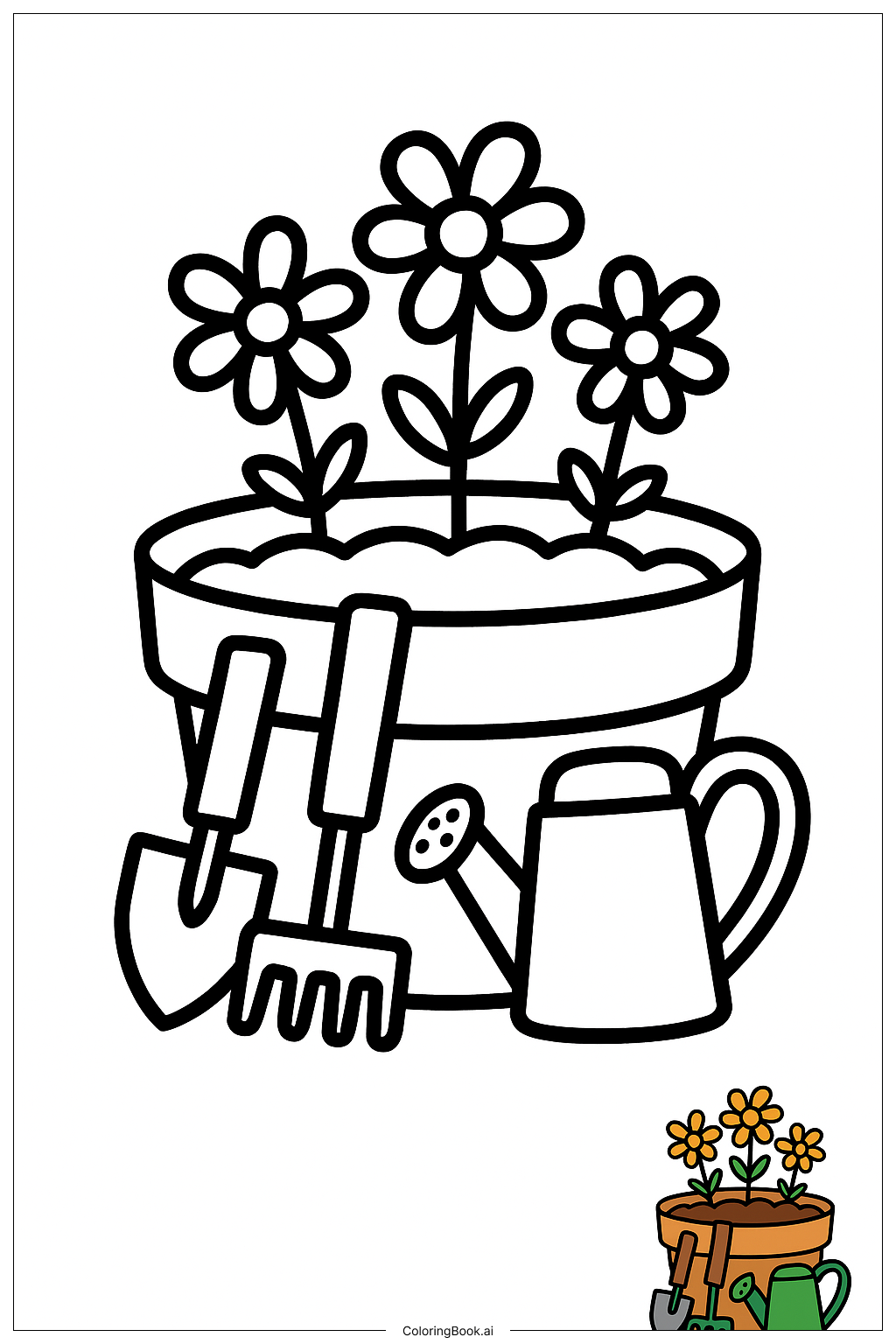
Coloring tips: How to color Pot With Soil And Tools coloring page well?
Start with the terracotta pot using warm shades of orange, rust, or clay brown to give it that classic earthy look. For the soil, use dark brown or chocolate tones. Add lighter brown highlights on the soil surface to show texture. Color the trowel and garden fork with metallic silver or light gray for the metal parts, and warm brown or tan for the wooden handles. Use bright green or yellow-green for the gardening gloves to make them pop. The watering can looks great in blue, green, or red. Scatter pale gray or beige tones on the pebbles. For the seeds, try tiny dots of cream or tan. Feel free to add your own background, maybe a sunny yellow sky or a soft green garden setting, to bring the whole scene to life. Have fun mixing and blending colors!
Coloring challenges: Which parts are difficult to color and need attention for Pot With Soil And Tools coloring page?
• Terracotta Pot Shading: The rounded shape of the pot requires careful shading to look three-dimensional. You need to apply darker tones on one side and lighter tones on the opposite side to show where light hits. Blending smoothly without streaks can be tricky, especially for younger colorists who are still learning gradient techniques.
• Soil Texture Detail: The soil inside and around the pot has an uneven, bumpy texture with many small lines and clumps. Coloring this area realistically means layering multiple shades of brown and avoiding a flat, single-color fill. Getting the depth and roughness of soil to look natural takes patience and a light hand.
• Small Tool Details: The gardening tools have thin handles, small bolts, and narrow metal edges that are difficult to color neatly without going outside the lines. The trowel and fork require careful control of a fine pencil or thin marker tip, which can challenge younger children or beginners still developing their hand coordination.
• Overlapping Objects: Several items in the scene overlap, such as the gloves near the pot and tools leaning against each other. Keeping each object visually separate by choosing distinct but harmonious colors is a design challenge that requires some planning before you start coloring.
• Tiny Scattered Elements: The small seeds and pebbles scattered around the base of the pot are very tiny shapes. Filling them in neatly without smudging neighboring areas requires a sharp pencil or a fine-tip coloring tool and a steady, controlled hand.
Benefits of coloring books: Advantages of drawing Pot With Soil And Tools coloring page
Coloring this garden-themed page offers a wonderful range of benefits for kids and beginners alike. Working through the different textures of soil, tools, and a terracotta pot builds fine motor skills and improves hand-eye coordination as colorists carefully stay within detailed lines. Choosing colors for each object encourages creative thinking and helps develop a personal sense of color harmony and artistic expression. The earthy, natural theme also gently introduces children to the world of gardening and nature, sparking curiosity about plants, tools, and how things grow. Focusing on a detailed scene like this promotes patience and concentration, which are valuable skills both in art and everyday life. Completing the page gives a strong sense of accomplishment and boosts self-confidence. For older kids and adults, the layering and shading challenges provide a satisfying, meditative activity that helps reduce stress and bring a sense of calm. Overall, this page turns a simple coloring activity into a meaningful learning and creative experience.