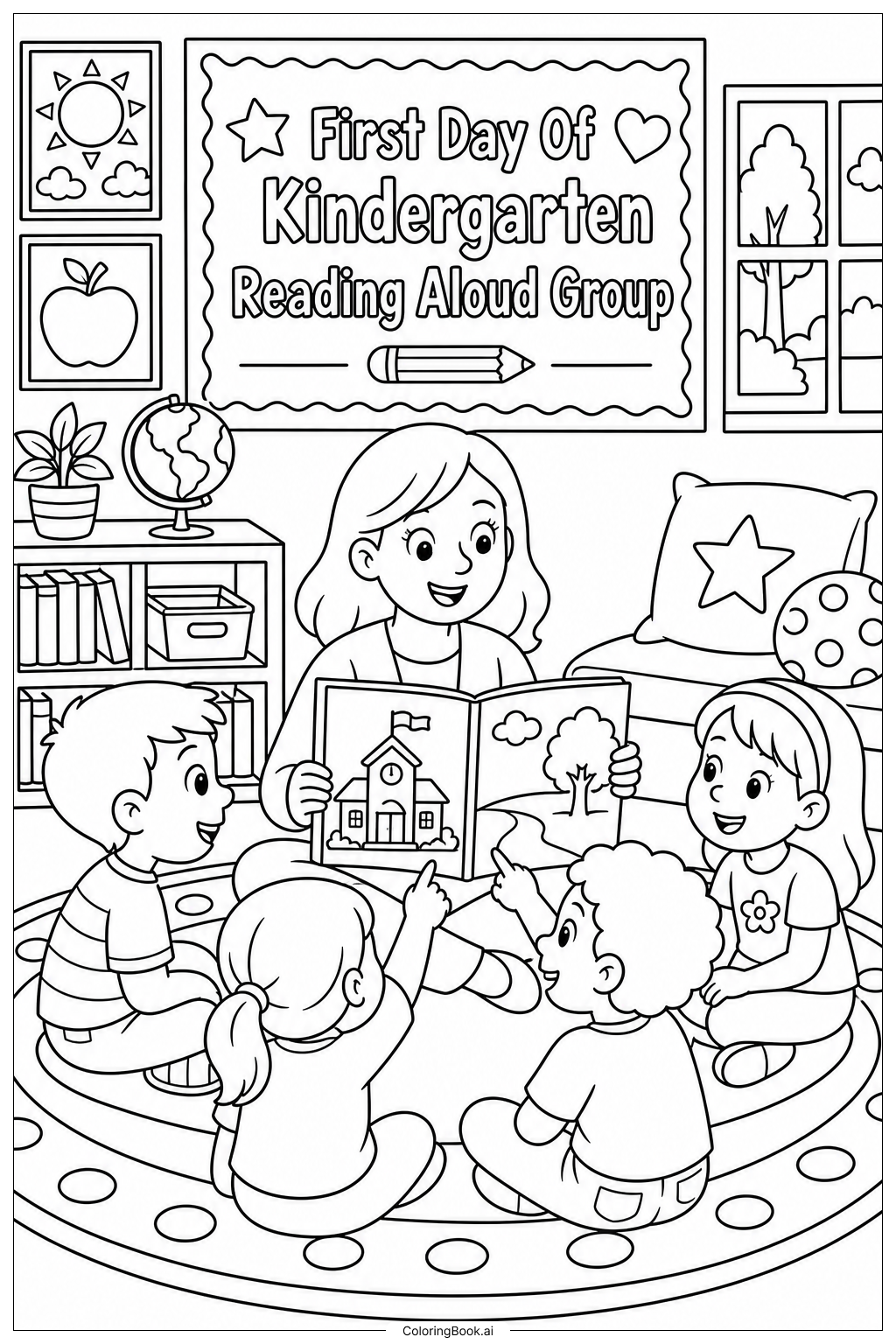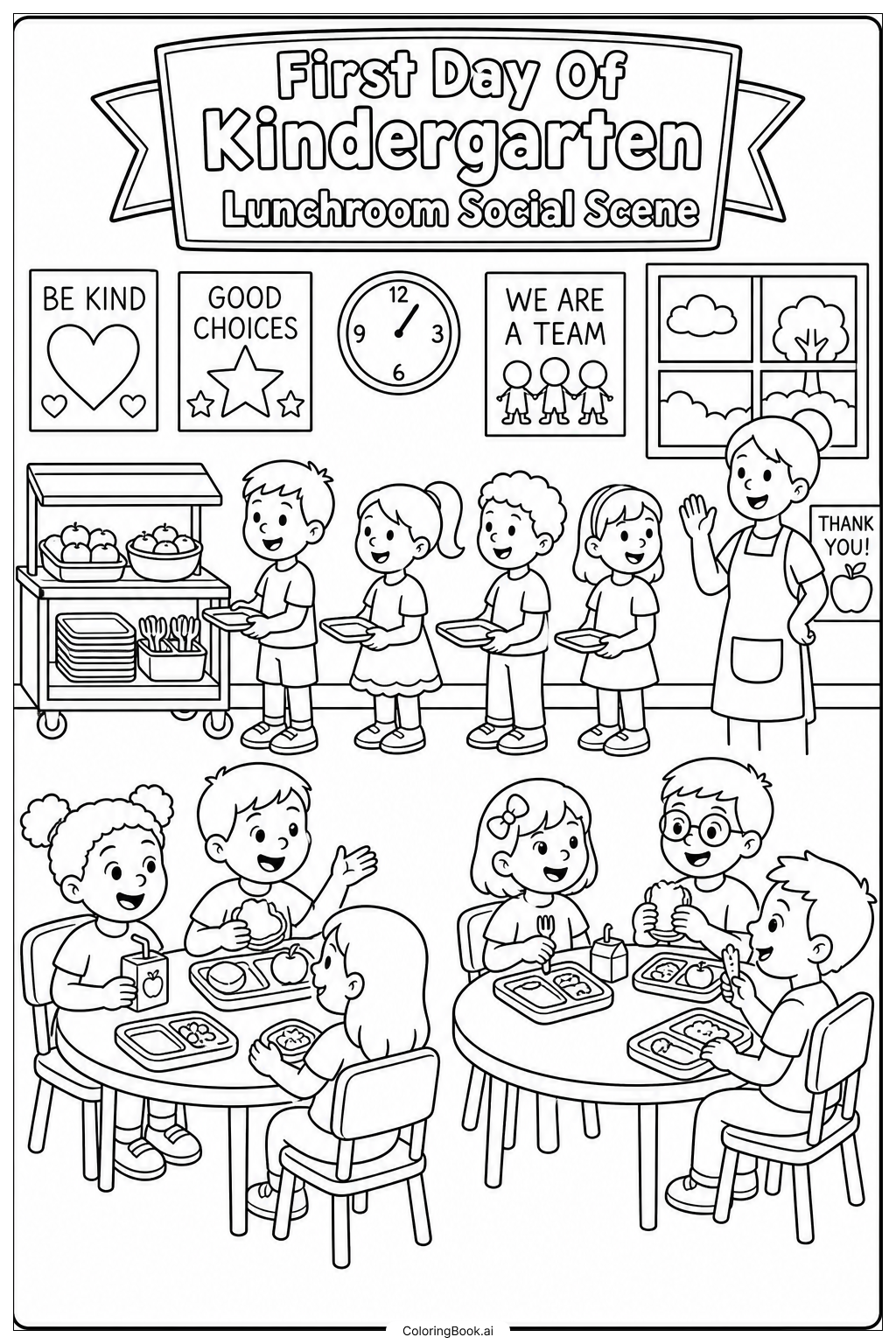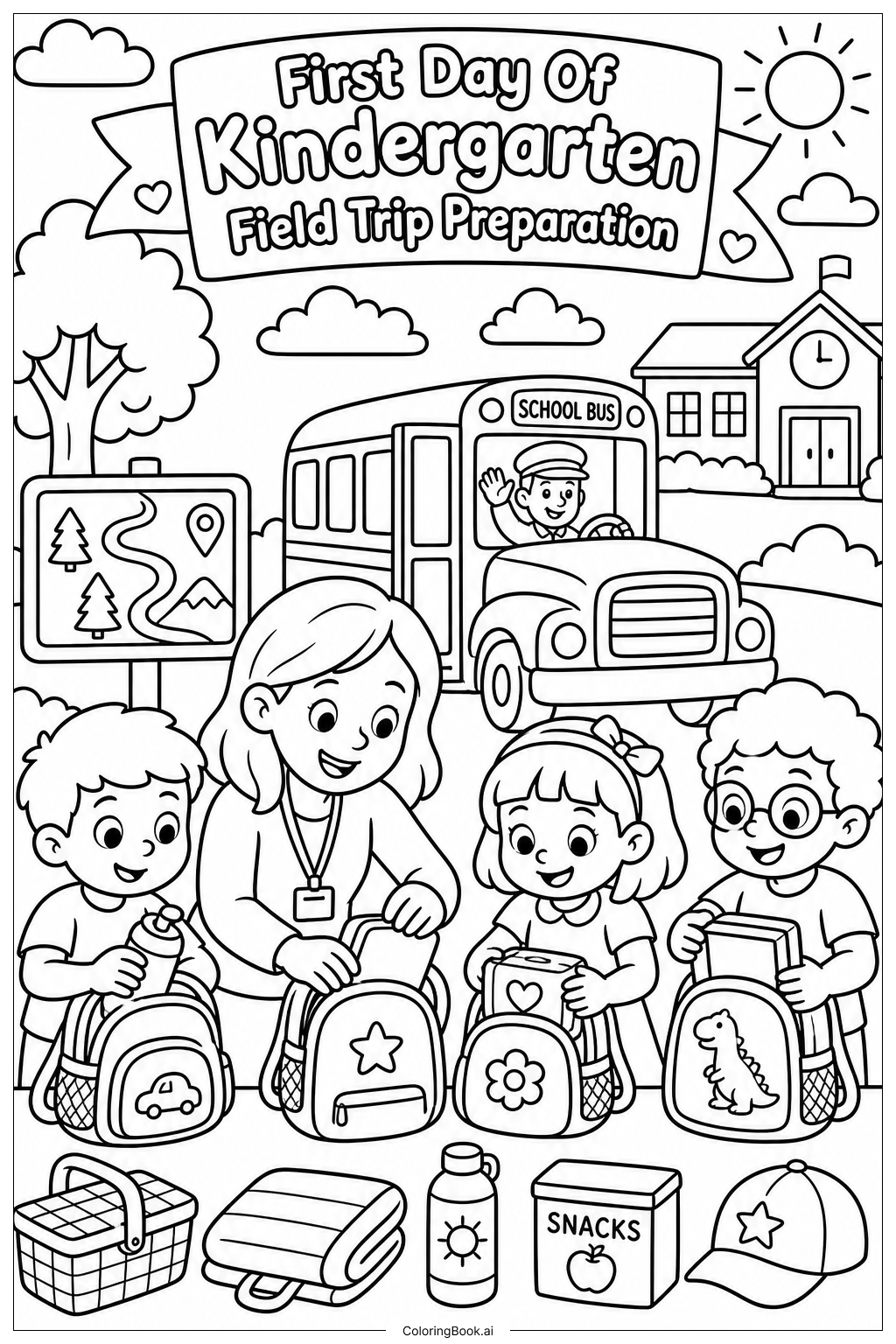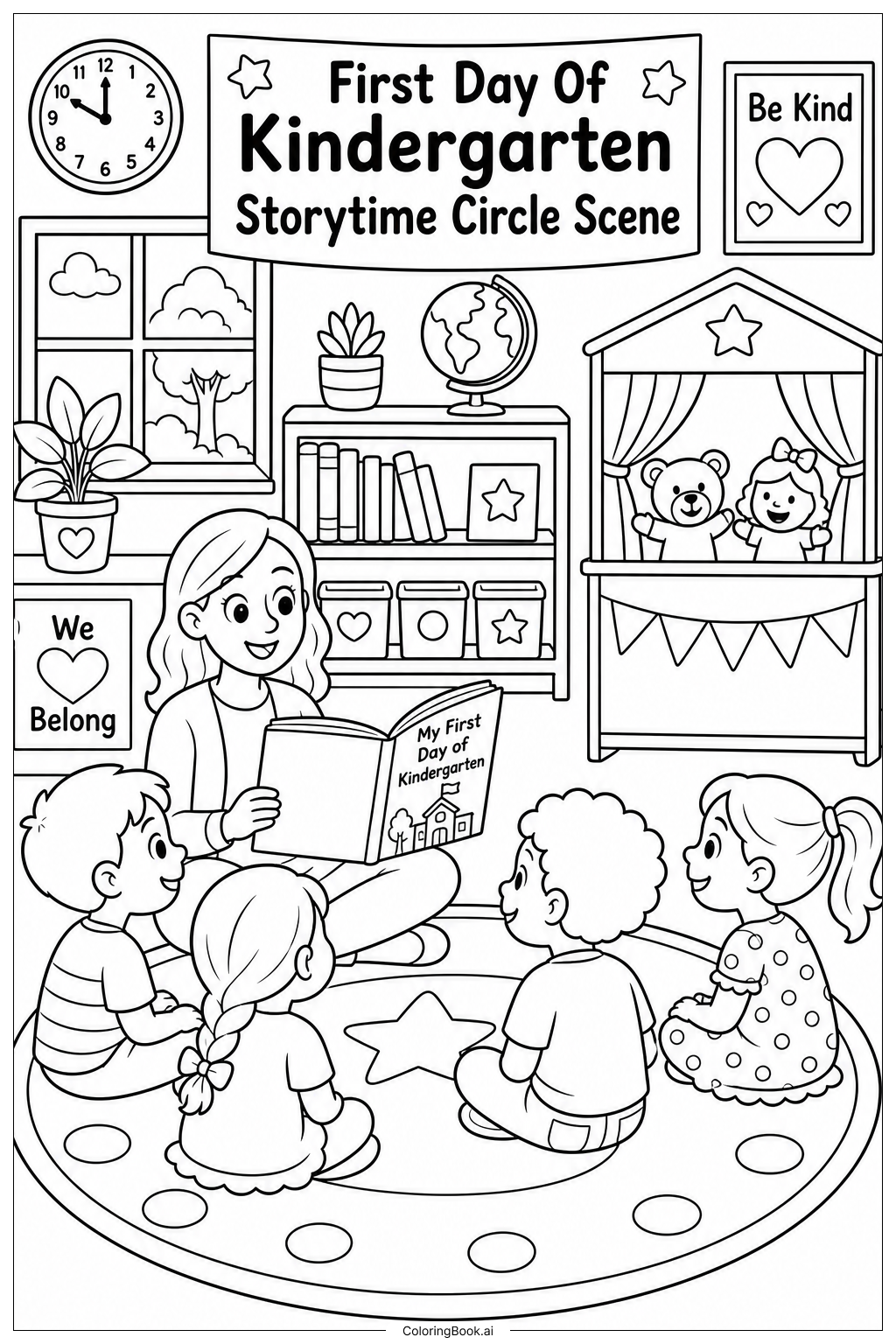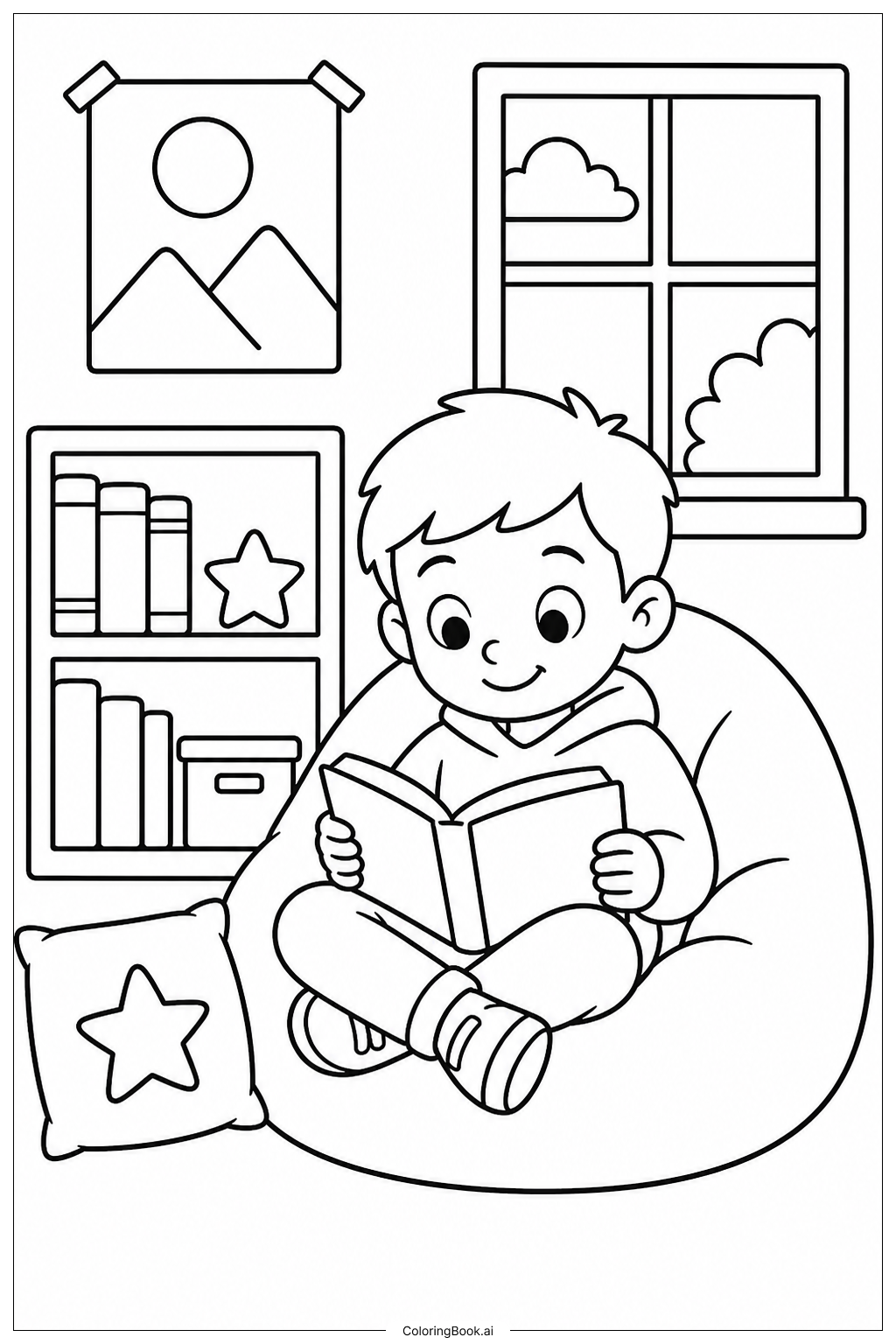
Coloring tips: How to color First Day Of Kindergarten Reading Corner coloring page well?
Start with the child's clothing using bright, cheerful colors like red, blue, or yellow to show excitement for the first day. Color the book pages with light cream or pale yellow, and add colorful images on the book covers. Use warm brown tones for the wooden bookshelves and varied colors for the book spines to create a rainbow effect. The pillows and cushions can be decorated with different patterns using purple, pink, green, and orange. Make the teddy bear a classic brown or tan color. Color the rug with geometric patterns in multiple colors. Use soft blue for the window and bright yellow for sunshine streaming through. The alphabet letters on the wall can be rainbow-colored, with each letter in a different shade. Add green to any plants in the corner, and use skin tones appropriate for the child's complexion.
Coloring challenges: Which parts are difficult to color and need attention for First Day Of Kindergarten Reading Corner coloring page?
• Small Details and Text: The alphabet letters on the wall and the text on book spines require careful coloring within tiny spaces. Young children may find it challenging to stay within these small boundaries without the colors bleeding together. Using fine-tipped markers or sharp colored pencils can help achieve cleaner results in these detailed areas.
• Multiple Textures and Patterns: The image contains various textures including the softness of pillows, the weave of fabric on cushions, wooden grain on shelves, and patterns on the rug. Representing these different textures through coloring techniques like crosshatching, stippling, or color gradients can be difficult, especially for beginners who may not yet have developed these advanced skills.
• Layered Composition: The reading corner has depth with foreground elements like the child and teddy bear, middle-ground items like shelves and books, and background features like the window and wall decorations. Creating visual depth through color choices, shading, and maintaining proper color intensity across these layers requires planning and understanding of spatial relationships.
• Book Collection Variety: The numerous books on shelves and in baskets present a challenge in creating variety while maintaining harmony. Each book spine needs a different color to look realistic, but the overall collection should still look cohesive. Deciding on a pleasing color scheme across dozens of small rectangular shapes requires patience and color sense.
Benefits of coloring books: Advantages of drawing First Day Of Kindergarten Reading Corner coloring page
Coloring this First Day Of Kindergarten Reading Corner scene helps children process their own school experiences and emotions about starting kindergarten. It reduces anxiety about new environments by making the classroom setting familiar and friendly. The detailed image improves fine motor skills and hand-eye coordination through careful coloring of small elements like books and letters. Children practice color recognition and decision-making by choosing appropriate colors for different objects. The reading theme promotes literacy awareness and positive associations with books and learning. Working on the various patterns and textures develops attention to detail and concentration. This coloring page also encourages conversations between parents and children about school, reading, and learning, strengthening emotional connections. Completing this detailed scene builds confidence and provides a sense of accomplishment, preparing young learners emotionally for their own educational journey.