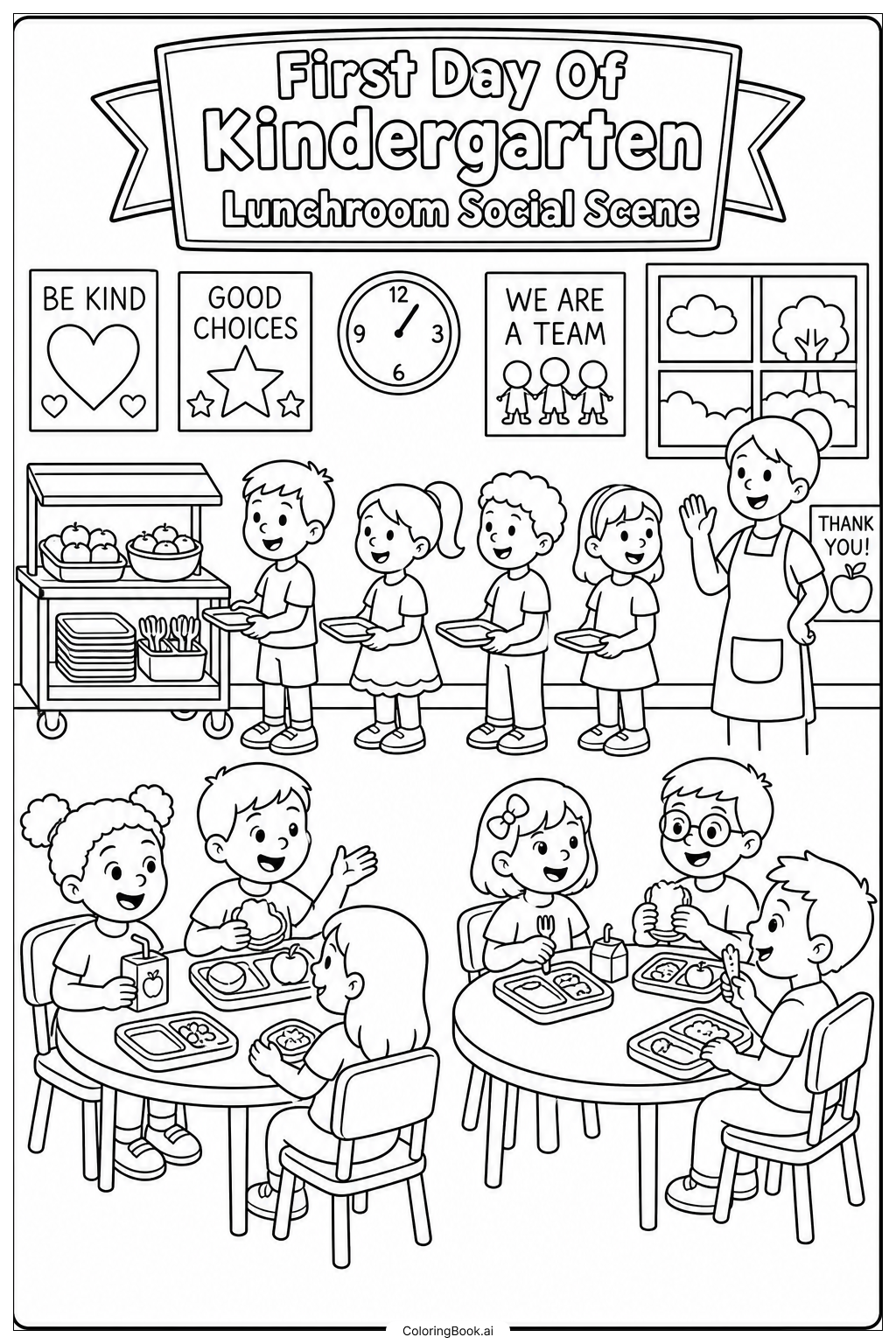
Coloring tips: How to color First Day Of Kindergarten Lunchroom Social Scene coloring page well?
Start with the children's skin tones using peach, tan, or brown shades. Color their clothing in bright, cheerful colors like red, blue, yellow, and green to reflect the excitement of the first day. Hair can be brown, black, blonde, or red. For the lunch items, use realistic colors: brown for sandwiches, white for milk cartons with perhaps a colored label, red for apples, and orange for carrots. The tables can be light wood tones or bright primary colors often found in schools. Color the floor in neutral grays or beiges with perhaps some colorful tiles. Windows can have blue skies visible outside, and wall decorations might include alphabet posters in rainbow colors. Consider using softer pastels for background elements to make the children stand out as the focal point of this warm, inviting scene.
Coloring challenges: Which parts are difficult to color and need attention for First Day Of Kindergarten Lunchroom Social Scene coloring page?
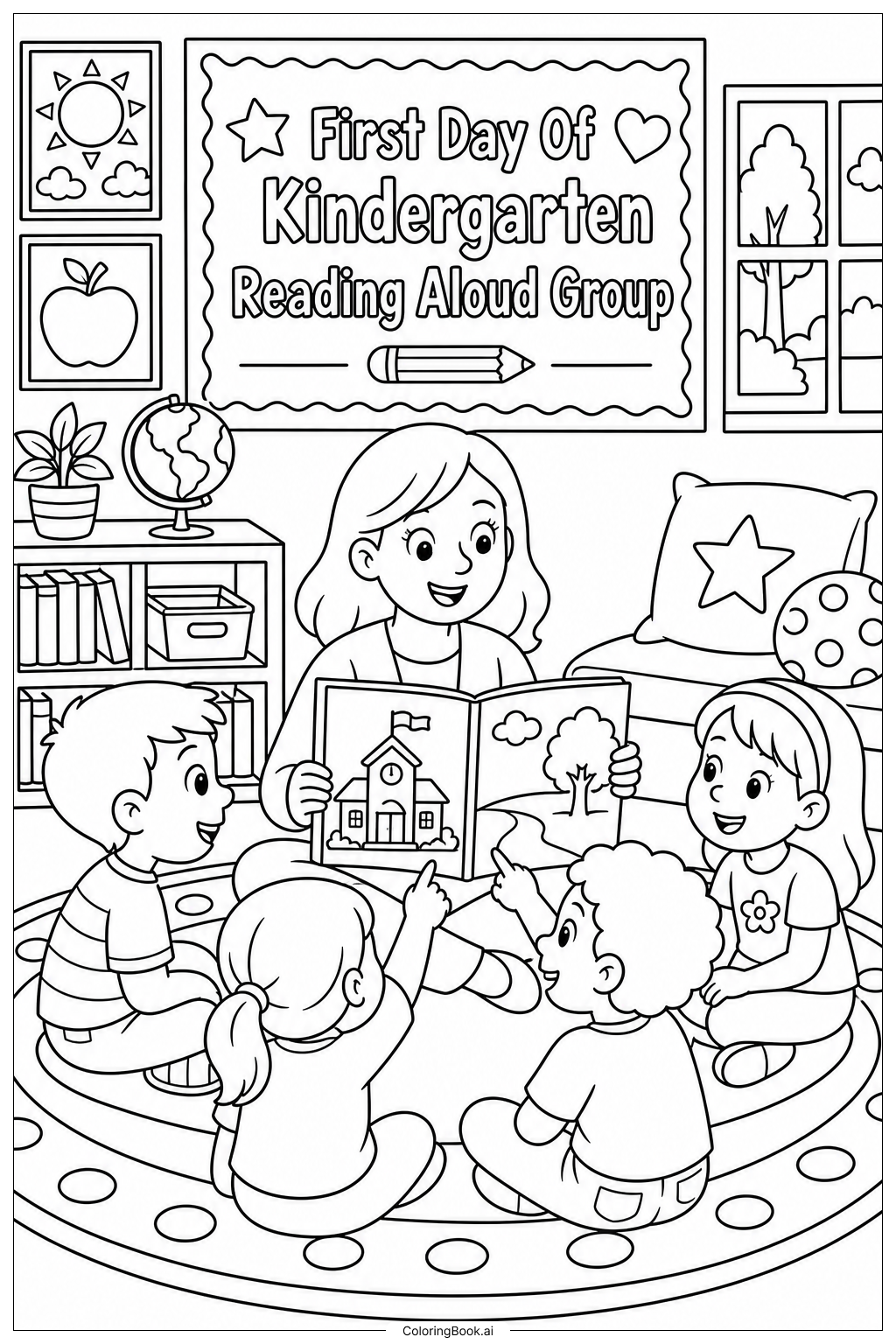
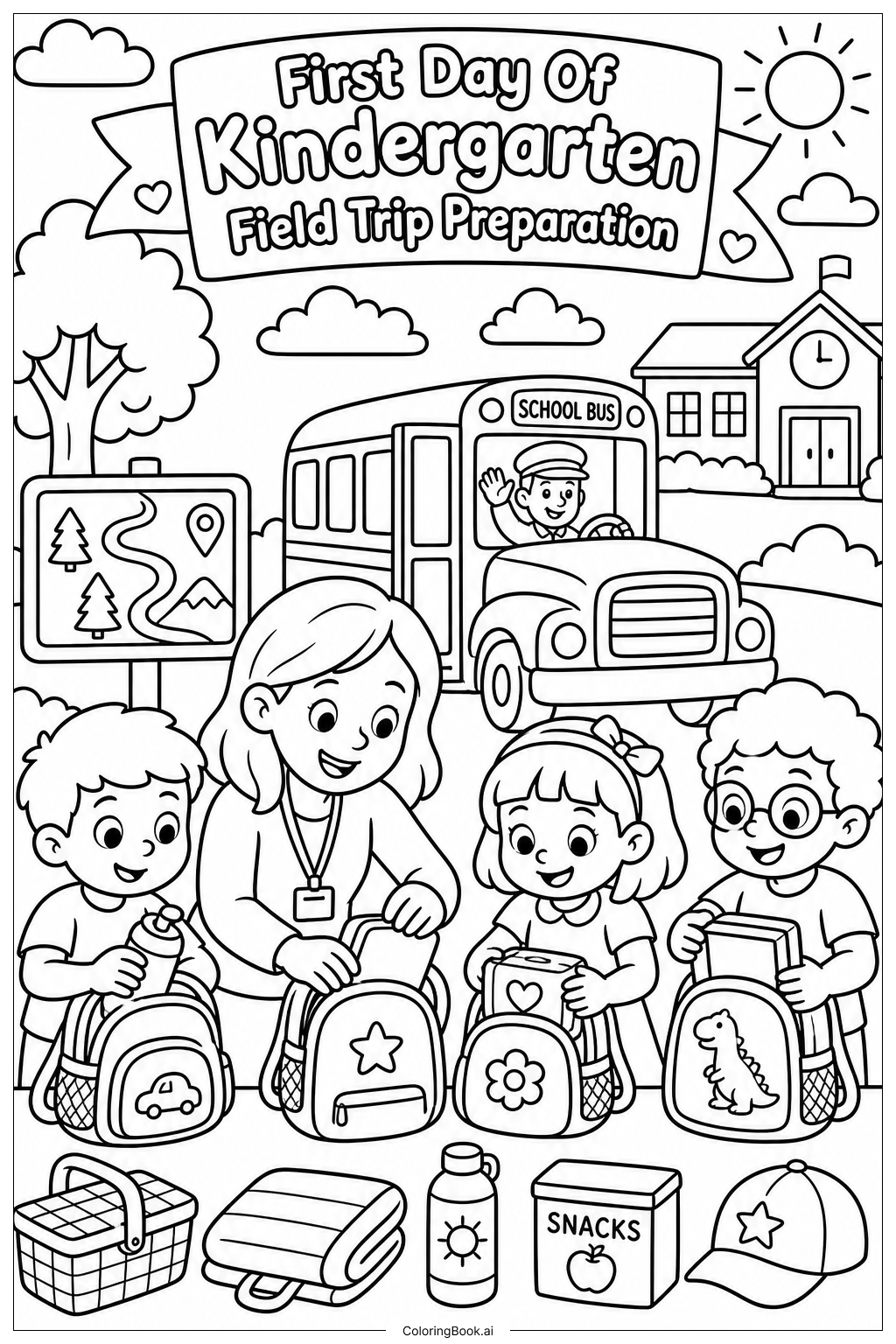
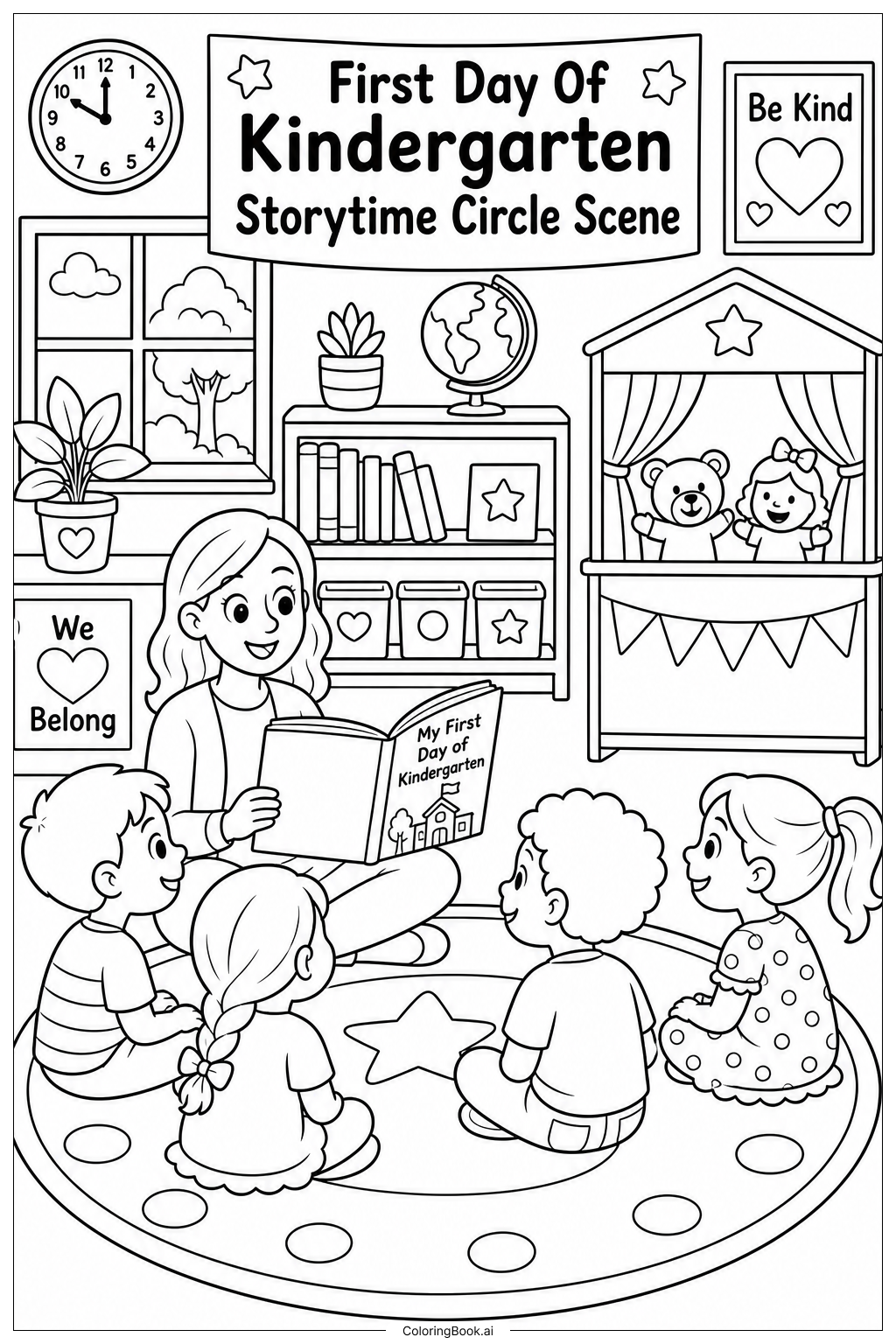
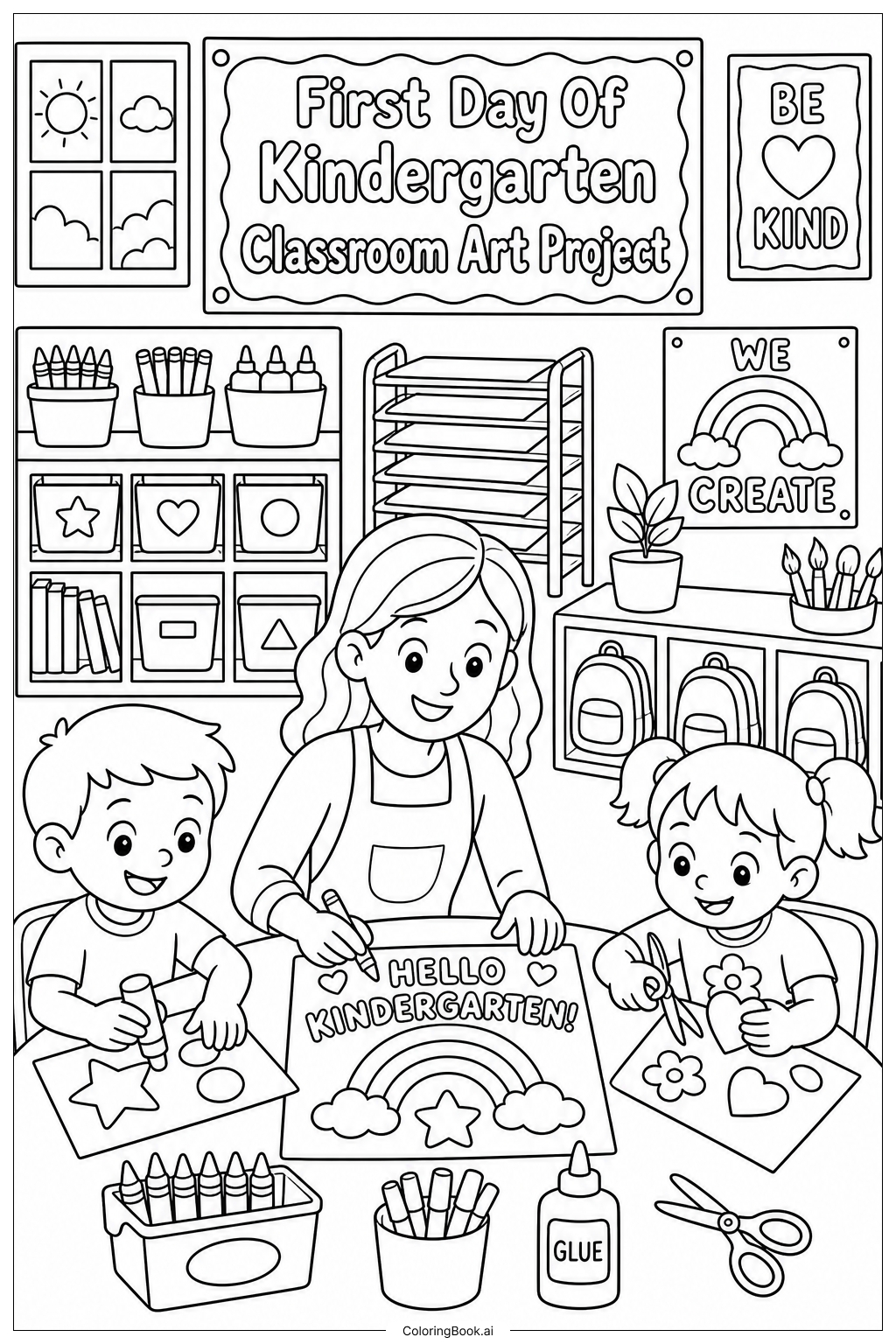
• Multiple Children Characters: This image contains several children, each with distinct facial features, hair, and clothing. Keeping each character's color scheme consistent throughout while making them individually unique requires careful planning and attention to detail. Young colorists may find it challenging to track which colors they assigned to which child, especially when characters overlap or appear close together.
• Small Facial Details: The children's faces include small features such as eyes, mouths, noses, and expressions that convey emotions. Coloring these tiny areas neatly without going outside the lines can be difficult for younger children with developing fine motor skills. The various expressions of happiness, nervousness, and excitement require precision to bring out the emotional qualities of the scene.
• Complex Background Elements: The lunchroom setting includes multiple overlapping objects like tables, chairs, lunch trays, food items, windows, and wall decorations. These layered elements create depth but also make it challenging to distinguish boundaries between objects. Colorists must carefully identify where one item ends and another begins, particularly when objects are positioned behind or in front of each other.
• Clothing Patterns and Textures: Some children may be wearing patterned clothing such as stripes, polka dots, or graphic prints. Coloring these patterns consistently while maintaining neatness requires patience and steady hand control. Additionally, suggesting texture differences between fabrics through color choices and shading techniques can be advanced for beginning colorists.
• Spatial Awareness and Composition: With multiple focal points throughout the scene, colorists must make strategic decisions about color distribution to create visual balance. Choosing complementary colors that make the scene harmonious while keeping it interesting requires understanding of basic color theory and compositional awareness that develops with practice.
Benefits of coloring books: Advantages of drawing First Day Of Kindergarten Lunchroom Social Scene coloring page
Coloring this First Day Of Kindergarten lunchroom scene offers wonderful developmental benefits for children. It helps them process their own school experiences and emotions about social situations, providing a therapeutic outlet for any first-day anxieties. The multiple characters encourage storytelling and imaginative play as children create narratives about friendships forming. The detailed setting with many small objects enhances fine motor skills and hand-eye coordination through precise coloring. Children practice decision-making by choosing colors for clothing, food, and room elements. The social scene depicted encourages emotional intelligence as kids identify and relate to the different expressions shown. This activity also builds focus and concentration as children work through the complex composition. Additionally, coloring realistic scenes like lunchrooms helps children understand their environment better and develops observational skills. Completing such a detailed picture boosts confidence and provides a sense of accomplishment, especially for children who may be navigating similar real-life situations.