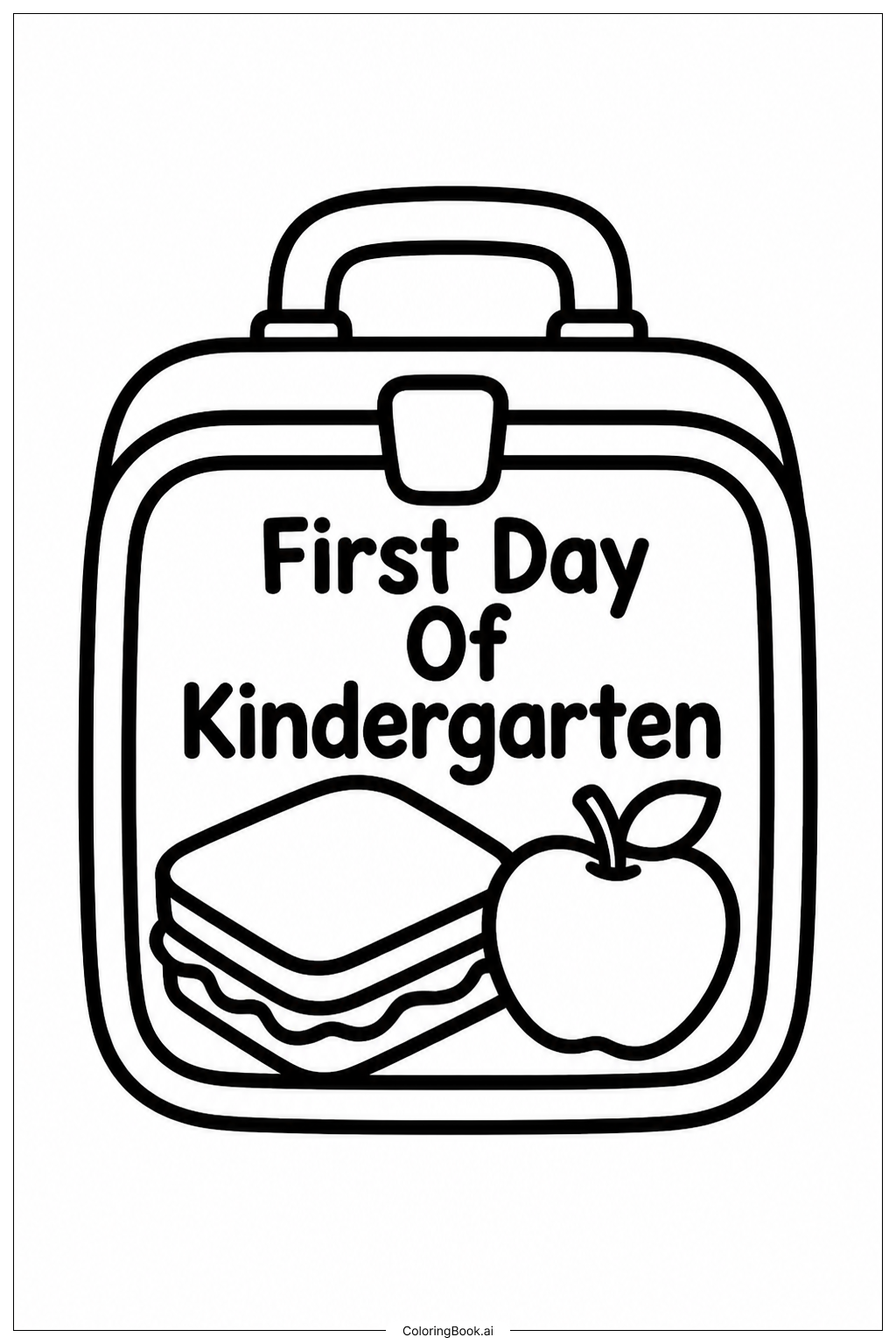
Coloring tips: How to color First Day Of Kindergarten Lunchbox coloring page well?
Start with the lunchbox body using bright, cheerful colors like red, blue, pink, or yellow to make it exciting and fun. Color the handle a contrasting shade for visual interest. Use vibrant colors for the decorative stars and hearts - try purple, orange, or green. For the food items inside, choose realistic colors: golden brown or beige for bread, red for apple slices, yellow for banana, orange for carrots, and green for grapes or vegetables. The juice box can be colored with your favorite flavor - purple for grape, orange for orange juice, or red for fruit punch. Add shading with darker tones along the edges of the lunchbox to create depth. Consider using patterns or stripes on the lunchbox exterior to make it uniquely yours. Keep the colors bright and happy to capture the excitement of the first day of school.
Coloring challenges: Which parts are difficult to color and need attention for First Day Of Kindergarten Lunchbox coloring page?
• Small Decorative Details: The stars, hearts, and pattern elements on the lunchbox exterior require careful coloring within small spaces. Young children may find it challenging to stay within these tiny boundaries without colors bleeding into adjacent areas. Using fine-tipped coloring tools like thin markers or sharp colored pencils can help, but requires steady hand control and patience.
• Multiple Food Items: The interior compartments contain various lunch items with different shapes and sizes positioned close together. Distinguishing between a sandwich, fruit slices, and snacks while keeping each item's colors separate demands focus and precision. Children need to identify where one food item ends and another begins, which can be tricky in tightly packed arrangements.
• Lunchbox Depth and Dimension: Creating the illusion that the lunchbox is three-dimensional, with an open lid and visible interior compartments, requires understanding of shading and highlighting. Deciding where to place darker tones to show shadows and lighter tones to show raised surfaces challenges spatial reasoning skills. The handle's curved shape also needs careful color gradation to appear rounded rather than flat.
• Color Coordination: Selecting a pleasing color scheme that balances the lunchbox exterior, decorative elements, food items, and beverage container requires planning and color theory knowledge. Children must consider which colors complement each other and avoid color combinations that clash or make the image look chaotic.
Benefits of coloring books: Advantages of drawing First Day Of Kindergarten Lunchbox coloring page
Coloring this First Day Of Kindergarten Lunchbox helps children prepare emotionally for school by familiarizing them with everyday school objects in a fun, creative way. It reduces anxiety about new experiences by making school items feel friendly and approachable. The activity develops fine motor skills as children practice controlled hand movements within defined spaces, strengthening the small muscles needed for writing. Working with multiple food items teaches nutrition awareness and healthy eating habits as children think about what makes a good lunch. The variety of shapes - from the rectangular lunchbox to round fruit and star decorations - reinforces shape recognition skills. Color selection encourages decision-making and personal expression as each child creates their unique version. Completing the entire page builds patience, concentration, and the satisfaction of finishing a task, which boosts confidence for tackling school assignments.