Coloring tips: How to color First Day Of Kindergarten Circle Time coloring page well?
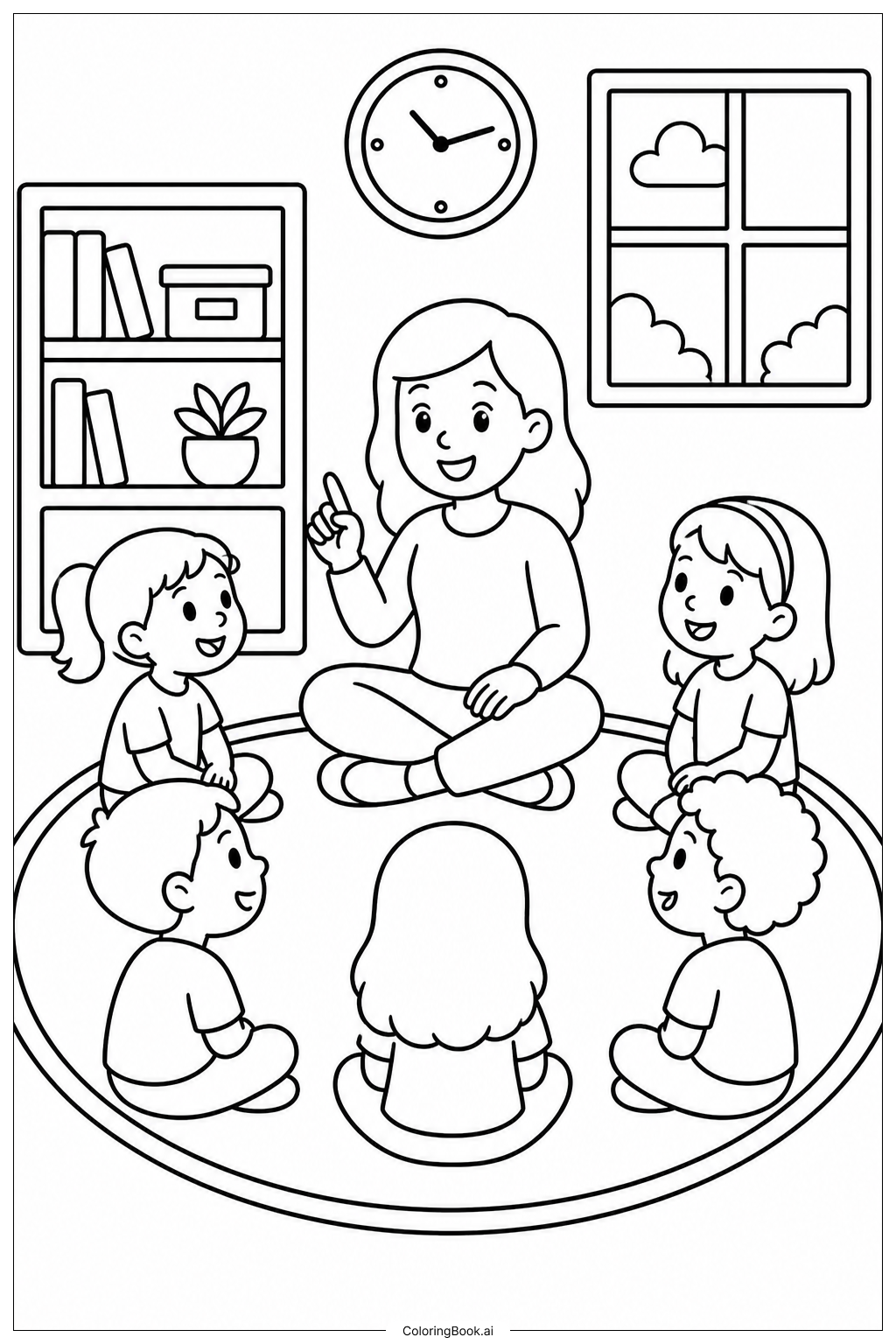
Start with the teacher's clothing using warm colors like soft pink, blue, or yellow to create a welcoming feel. Give each child different outfit colors to show their individual personalities—use a rainbow of hues like red, green, purple, and orange. Color the reading rug in a bright, cheerful pattern or solid color like blue or green. The classroom walls can be light yellow or cream to create a sunny atmosphere. Make the alphabet letters colorful using primary colors. Color the book pages white or light yellow with colorful illustrations. Add natural skin tones for faces and hands. Use brown or blonde shades for different hair colors. The floor can be light tan or gray. Don't forget to color small details like the clock, posters, and storage bins in contrasting bright colors to make the classroom feel lively and inviting.
Coloring challenges: Which parts are difficult to color and need attention for First Day Of Kindergarten Circle Time coloring page?
• Multiple Small Faces: The image contains several children's faces, each requiring careful attention to stay within the lines. Young colorists may find it challenging to color the small facial features like eyes, noses, and mouths without going outside the boundaries. Each face needs consistent skin tones, which requires steady hand control and patience.
• Overlapping Figures: The children are seated close together in a group, creating overlapping body parts and clothing. Distinguishing where one child ends and another begins can be tricky. Colorists need to carefully identify each separate figure and choose contrasting colors to make each child stand out from their neighbors.
• Background Details: The classroom setting includes numerous small elements like alphabet letters, posters, clock hands, storage cubbies, and books. These tiny details require precision coloring with fine-tipped markers or colored pencils. Children may struggle to color these small spaces neatly without smudging or crossing lines.
• Clothing Patterns and Folds: Each child wears different clothing with potential fabric folds and wrinkles shown through line work. Deciding how to handle these details—whether to color them differently or maintain uniform colors—presents a creative challenge. Young artists must think about light and shadow to make the clothing look realistic.
• Maintaining Consistency: With so many elements to color, keeping track of color choices throughout the entire page can be difficult. Children need to remember which colors they used for similar items to maintain visual harmony across the whole scene.
Benefits of coloring books: Advantages of drawing First Day Of Kindergarten Circle Time coloring page
Coloring this kindergarten scene helps children develop fine motor skills through careful line work and detailed coloring. The multiple figures and small classroom elements provide excellent practice for hand-eye coordination and pencil control. This image also encourages emotional preparation for school experiences, helping children visualize positive classroom interactions and reducing first-day anxiety. As they color each student differently, children practice decision-making and color recognition skills. The scene promotes social awareness by depicting group learning and respectful listening. Young artists can express creativity through their color choices while the structured elements teach them to work within boundaries. The detailed background elements build concentration skills and patience. Coloring this friendly classroom environment can spark conversations between parents and children about school expectations, making it both an artistic activity and a gentle introduction to educational settings.