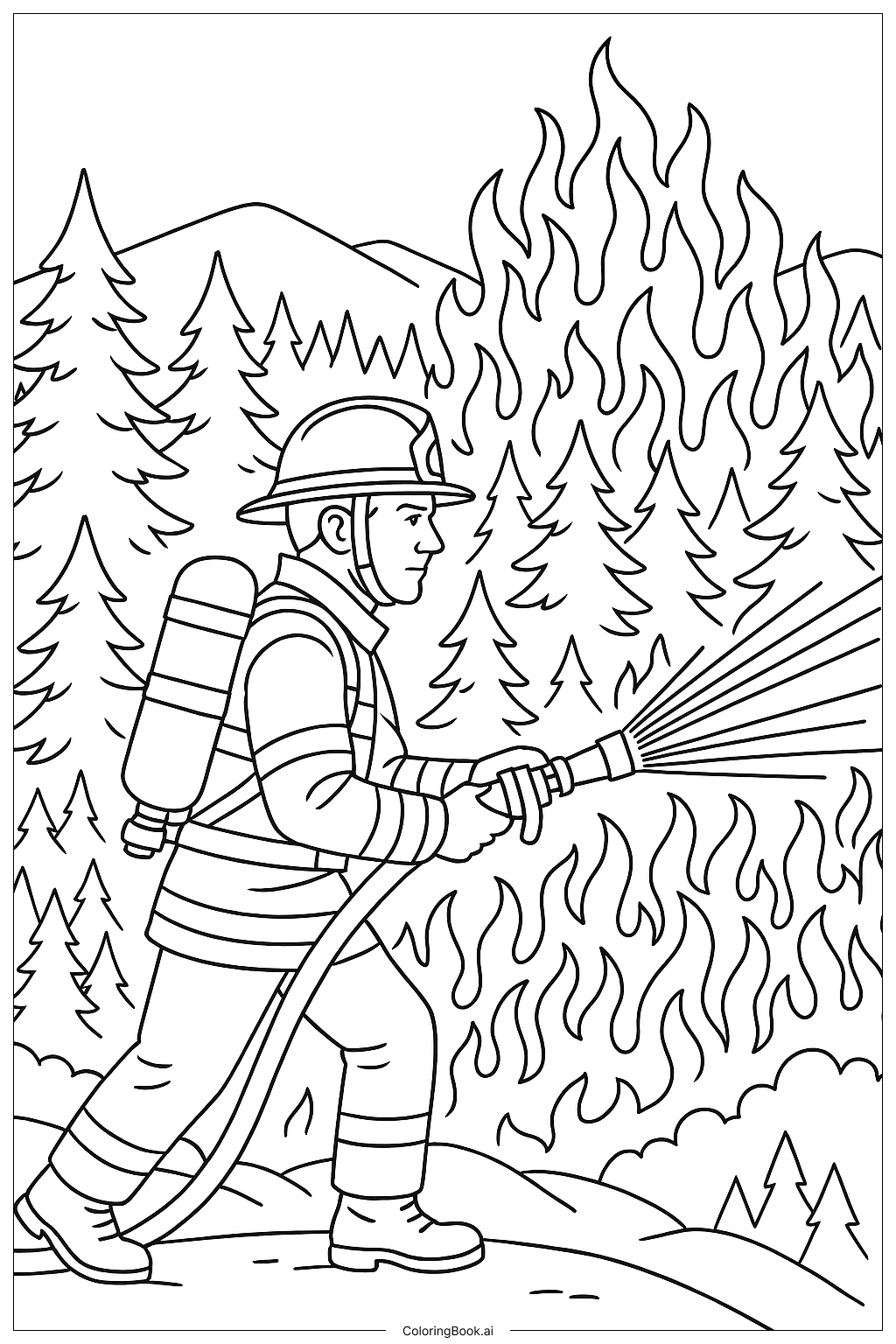
Coloring tips: How to color Fireman Battling Wildfire Ridge coloring page well?
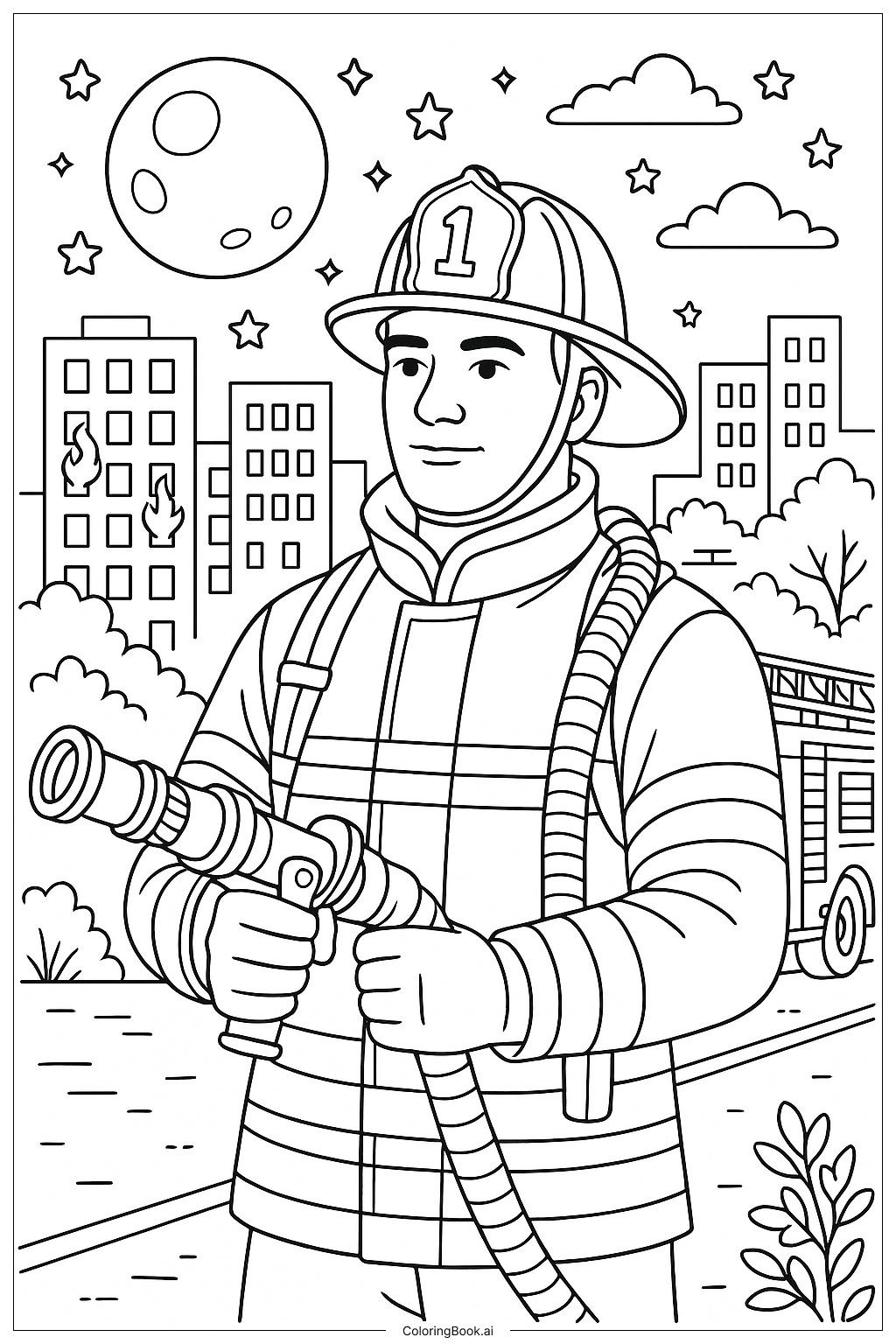
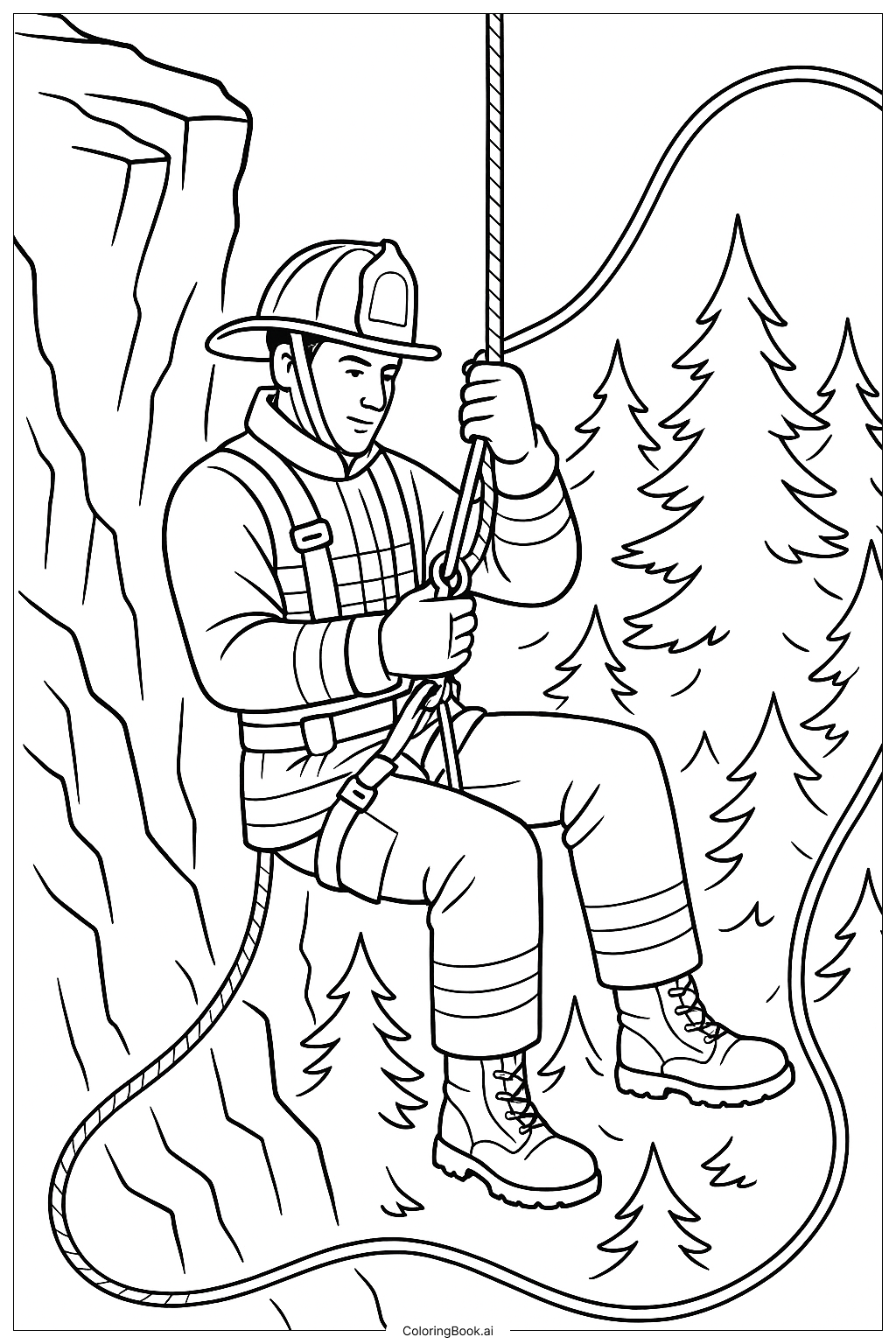
Start with the fireman's gear. Use bright yellow or orange for his protective suit to make him stand out. Color his helmet a bold red or yellow. Add dark gray or black details to his gloves and boots. For the fire, use layers of red, orange, and yellow to create a glowing, dynamic effect. Add white near the center of the flames for extra heat. The smoke can be soft gray or light purple. Color the trees dark green, then add brown and black at the base where they are burned. Use tan or brown for the rocky ridge and scorched ground. Dark brown works well for fallen branches. Try blending warm and cool colors to show the contrast between the fierce fire and the rugged landscape. Take your time with the flames — layering colors makes them look more alive.
Coloring challenges: Which parts are difficult to color and need attention for Fireman Battling Wildfire Ridge coloring page?
• Fireman's Protective Suit Details: The fireman's gear includes many small details like seams, reflective strips, buckles, and folds in the fabric. Staying inside these fine lines takes steady hands and a sharp colored pencil or fine-tip marker. Rushing through this area can make the suit look flat, so take it slow and add shading along the edges for depth.
• Flame Gradients and Layering: Fire is one of the hardest things to color because it uses multiple shades blending together. Moving smoothly from white at the core to yellow, orange, and deep red at the edges requires careful layering. If you apply colors too heavily at once, the blending becomes muddy. Work in light layers and build up gradually.
• Smoke Texture and Depth: The billowing smoke rising into the sky needs soft, flowing strokes to look natural. Using only one shade of gray makes it look flat. Try mixing light gray, medium gray, and hints of blue or lavender to give the smoke volume and movement. Keeping edges soft is key.
• Rocky Terrain and Scorched Ground: The ridge and ground feature uneven surfaces, cracks, and burn marks. This area has many small shapes that can be tricky to fill neatly. Using different shades of brown, tan, and charcoal gray helps separate the rocks from the dirt and ash.
• Background Fire and Trees: The burning trees in the background need to look distinct from the foreground flames without competing for attention. Using slightly muted versions of the same fire colors, or adding more dark brown and black, helps push the background further away and gives the whole scene a stronger sense of depth.
Benefits of coloring books: Advantages of drawing Fireman Battling Wildfire Ridge coloring page
Coloring this exciting scene offers a wonderful range of benefits for children and young artists. Working through the fireman's detailed gear builds fine motor skills and hand control, especially when carefully filling in small areas like reflective strips and equipment. Choosing colors for the blazing fire and smoky sky encourages creative thinking and helps kids learn how colors can work together to show light, heat, and movement. Layering warm reds, oranges, and yellows to create realistic-looking flames is a gentle introduction to color theory and shading. The image also sparks imagination and curiosity about the real world — children naturally start asking questions about how wildfires happen and what firefighters do to stay safe. This makes coloring a quiet gateway into learning. Beyond skills and knowledge, the focused, repetitive act of coloring is calming. It helps reduce stress and builds patience and concentration. Completing a detailed scene like this also gives kids a real sense of accomplishment and pride. Most importantly, this image celebrates bravery and service, helping young colorists appreciate the courage of real-life heroes who protect communities every day.