Coloring tips: How to color February Groundhog Peek coloring page well?
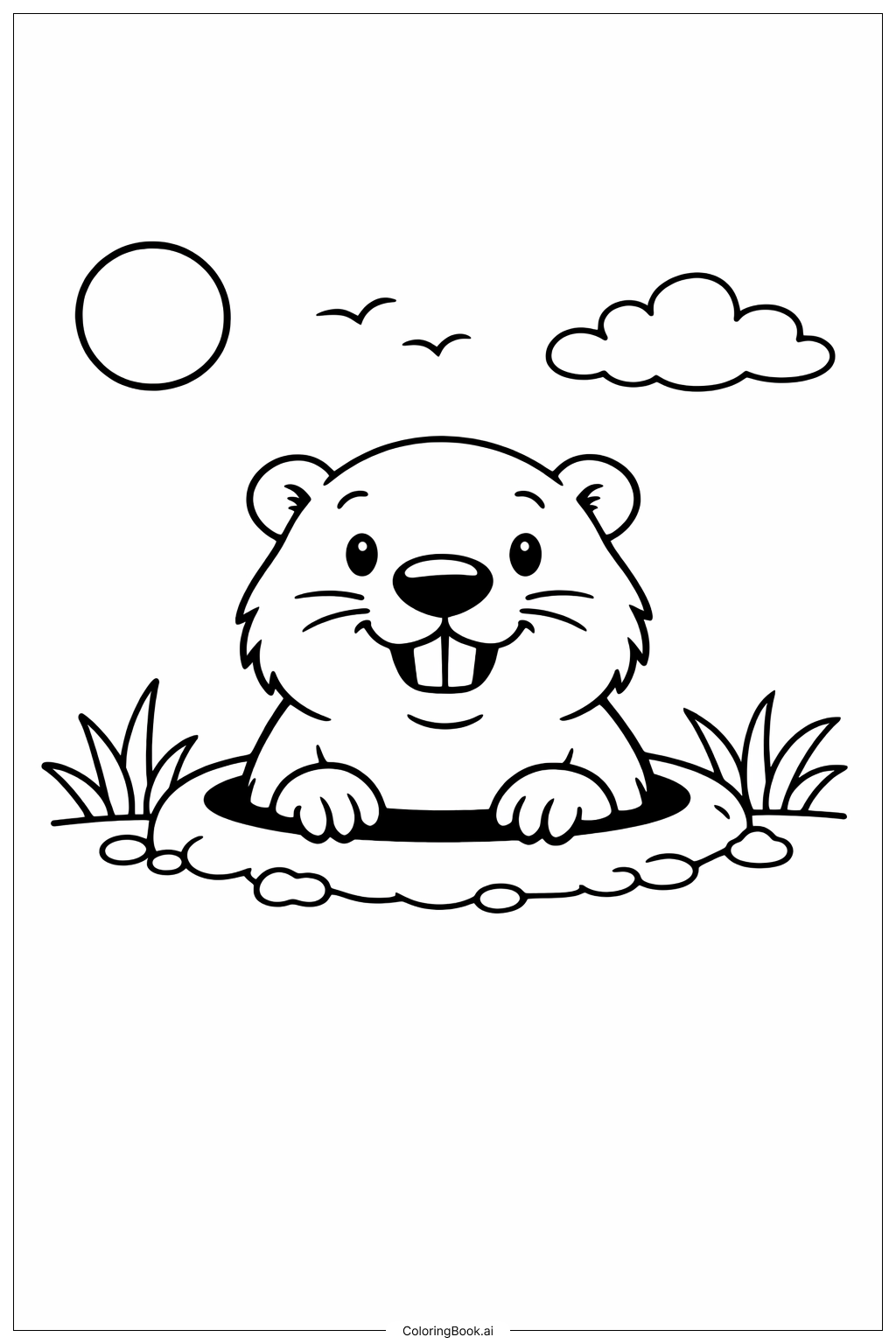
Use brown or gray colors for the groundhog's fur. Color its nose and eyes black with a little white shine to make them lively. The grass can be green with different shades to show depth. Use yellow or orange for the sun and light blue for the sky. For the cloud, use soft white or light gray. You can also color the dirt around the hole in shades of brown or dark yellow. Adding some shadows under the groundhog and grass can make the picture more realistic.
Coloring challenges: Which parts are difficult to color and need attention for February Groundhog Peek coloring page?
1. The small details on the groundhog’s face, like the nose and teeth, require careful coloring to make them stand out. 2. Coloring the grassy patches with different shades of green to give a natural look might be tricky for beginners. 3. Blending the sky with the sun and clouds smoothly to look realistic can be challenging. 4. Making the hole look like it has depth with shadows needs more attention and skill. 5. Keeping the outline clean without coloring outside the lines might be hard for younger kids.
Benefits of coloring books: Advantages of drawing February Groundhog Peek coloring page
Coloring this picture helps children practice fine motor skills by carefully filling in small spaces like the groundhog’s face and grass. It also encourages creativity by choosing different colors for natural elements like the sun, sky, and earth. The act of coloring this friendly animal can increase focus and patience, and learning about Groundhog Day through this image can make children more curious about nature and seasons. It’s a fun way to combine art and learning.