Coloring tips: How to color February Cozy Fireplace Scene coloring page well?
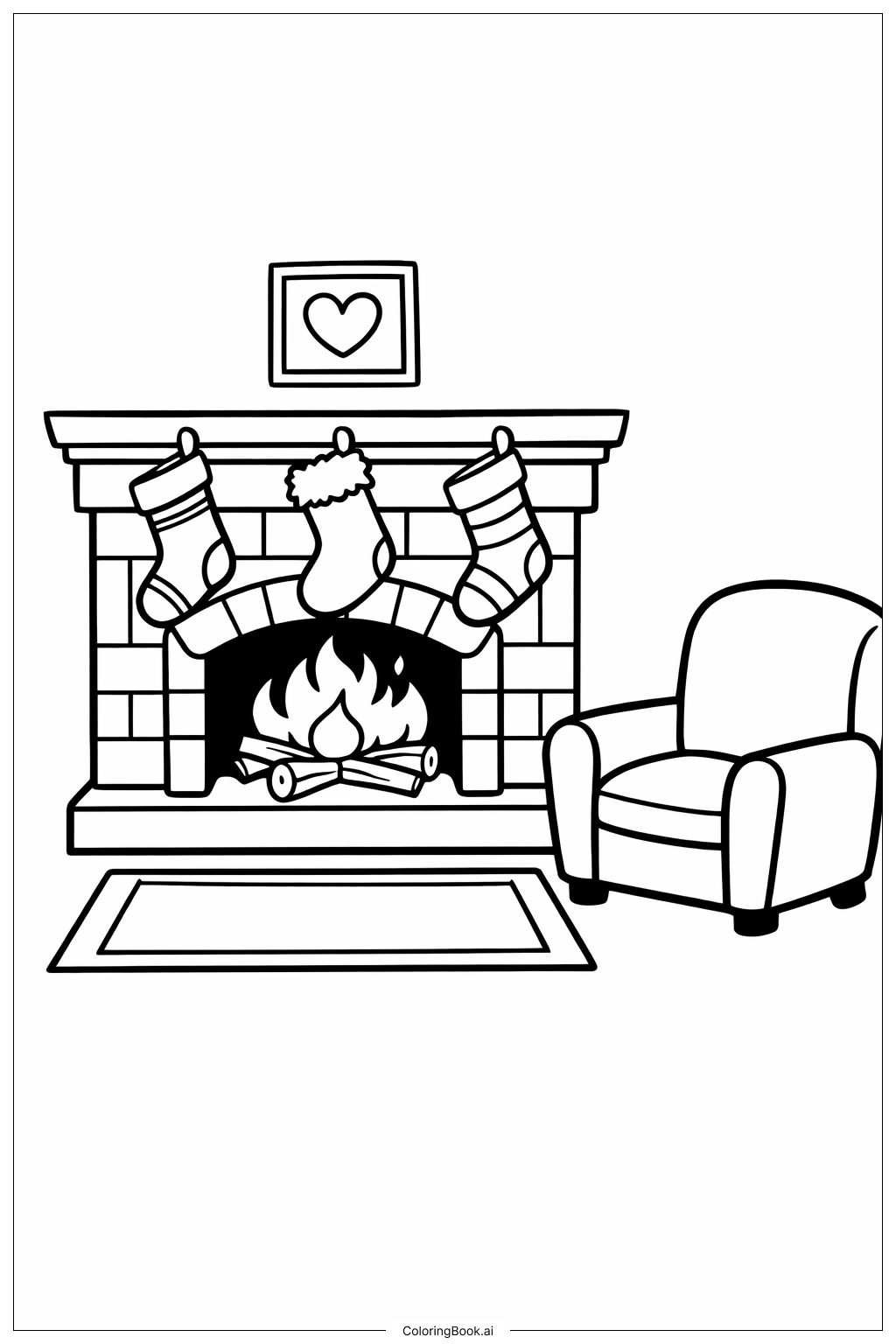
For this February Cozy Fireplace Scene, use warm colors for the fire such as bright reds, oranges, and yellows to make the flames look lively and warm. The stones around the fireplace can be shaded with grays and tans for a natural look. Use deep reds or browns for the armchair and soft pastel colors for the blanket to add softness. The wooden table and floor look great with brown and beige tones. For the snow outside the window, try light blues or soft white with touches of silver to capture the cold winter feel. You can also add color to the books and clock to give small but interesting details some life. Try blending colors inside to create the cozy, calm feeling of a February evening by the fire.
Coloring challenges: Which parts are difficult to color and need attention for February Cozy Fireplace Scene coloring page?
• Flame Details: Coloring the flames realistically can be a challenge, as you need to blend reds, oranges, and yellows smoothly to give a natural glowing effect without making the fire look flat. • Stone Texture: The fireplace stones have many small shapes that require varied shades of gray and brown to show depth and texture, which can be tricky for younger artists. • Soft Textiles: The blanket on the chair and the cushion both demand careful shading to portray softness and wrinkles, which may need more advanced coloring techniques. • Snow Outside: Capturing the subtle look of snow through the window can be difficult, as it involves light colors and gentle gradients to represent frostiness without overpowering the rest of the scene. • Small Details: The clock on the mantle, the cup on the table, and books need precision and patience due to their small size, making them a fine motor challenge especially for young children.
Benefits of coloring books: Advantages of drawing February Cozy Fireplace Scene coloring page
Coloring this February Cozy Fireplace Scene helps build focus and fine motor skills through working on detailed areas like the flames and small objects. Choosing warm and cool colors encourages understanding of color contrast and blending, helping develop artistic technique. It also stimulates creative thinking by allowing the colorist to imagine the comforting warmth of the fire and the peaceful winter setting. This scene invites concentration on texture and shading, improving hand-eye coordination. Finally, coloring this cozy scene can inspire relaxation and a sense of calm, making it a comforting activity during cold winter days.