Coloring tips: How to color Eye With Window Frame coloring page well?
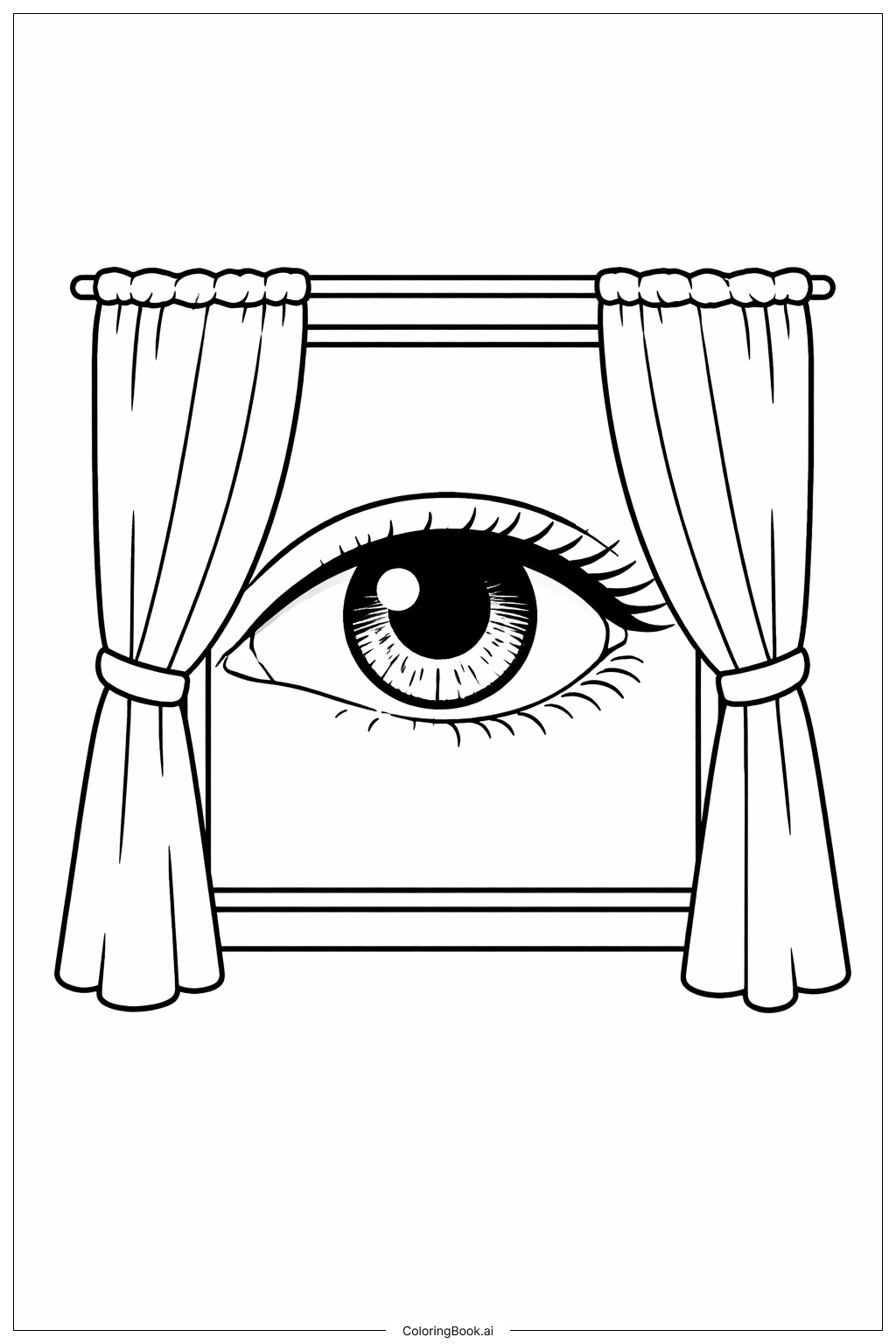
Start by choosing colors for the Eye to make it stand out. The pupil can be black or a deep brown. The iris offers many options like blue, green, or hazel with lighter highlights to create a realistic effect. Use softer colors for the whites of the Eye, such as light gray or pale blue. For the window frame, select contrasting colors, like wood tones or bright stained glass-style colors to bring the frame to life. You can use different colors for each pane of the window, mixing warm and cool tones to give variety. Try blending pencils or crayons gently inside the iris for smooth shading. Don’t forget the eyelashes and the outer edges—these can be shaded with darker colors to add depth.
Coloring challenges: Which parts are difficult to color and need attention for Eye With Window Frame coloring page?
• Fine Details in the Eye: The iris and eyelashes contain many small lines and require careful coloring to avoid mixing colors outside the lines.
• Multiple Window Panes: The frame is divided into several small sections, which requires careful attention to color each pane distinctly without overlapping adjacent areas.
• Smooth Gradient in the Iris: Achieving a natural look in the iris involves blending different shades well, which may be challenging for beginners.
• Balancing Contrast: Choosing colors that make the Eye pop while also highlighting the geometric nature of the window frame needs thoughtful color selection.
• Symmetry and Precision: Because the window frame has straight lines and sharp corners, it demands steady hands and focus to keep colors inside the borders cleanly.
Benefits of coloring books: Advantages of drawing Eye With Window Frame coloring page
Coloring this image helps improve fine motor skills because of the detailed and precise areas in the Eye and window frame. It encourages concentration and patience as you work carefully on small shapes and lines. The variety of sections provides a great chance to practice color blending and shading techniques, especially within the iris. It also boosts creativity by allowing color choices that can range from realistic to imaginative. Engaging with this image helps develop hand-eye coordination and teaches the importance of staying within lines, which are important skills for young artists. Plus, the image’s unique combination of organic (the Eye) and geometric (the window) shapes expands visual awareness and artistic versatility.