Coloring tips: How to color Eye With Sun And Clouds coloring page well?
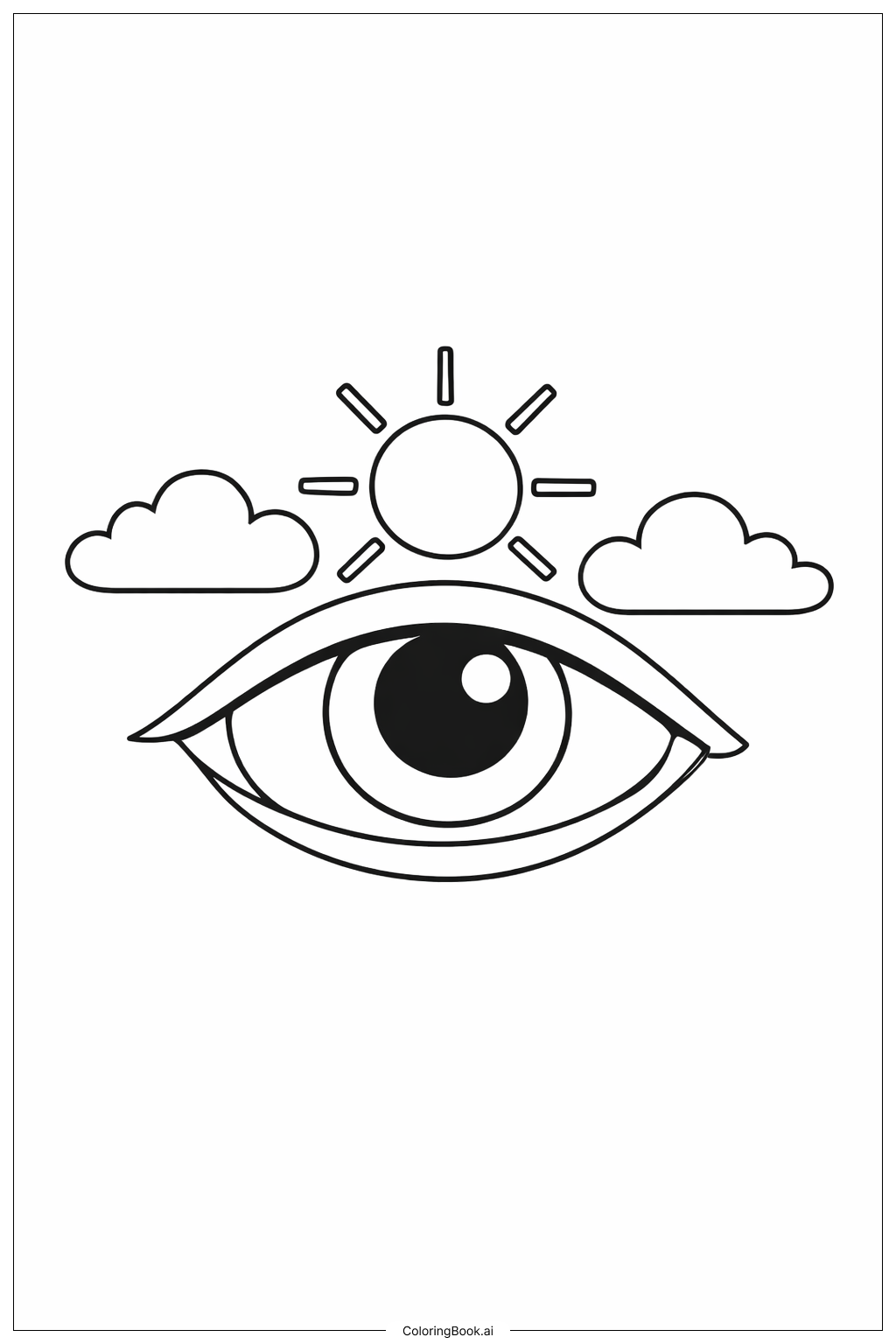
For the eye, use soft skin tones like peach or light brown for the eyelid and surrounding area. The sun at the center can be colored with bright yellows, oranges, or even golden hues to make it radiant and warm. Consider adding red or orange gradient tips to the sun rays for extra dimension. The clouds can be traditional white with light gray or blue shadows to create a three-dimensional fluffy appearance. You might also experiment with sunset-inspired clouds using soft pinks, purples, or lavenders. The eyelashes work beautifully in dark brown or black for contrast. For a more creative approach, try using unconventional colors like turquoise for the clouds or a rainbow gradient for the sun rays. The background, if any, could be a light sky blue or left white to keep focus on the main elements.
Coloring challenges: Which parts are difficult to color and need attention for Eye With Sun And Clouds coloring page?
• Sun Ray Precision: The sun's rays extend in multiple directions with varying lengths and require steady hand control to color within the lines. Children may find it challenging to keep each ray separate and distinct, especially where they meet the circular sun center. Using different shades for alternating rays can help, but requires careful planning and patience.
• Cloud Shading and Depth: Creating realistic, three-dimensional clouds requires understanding of light and shadow. Younger colorists may struggle with where to place darker shading to make clouds appear fluffy and rounded rather than flat. The overlapping clouds add complexity, as each needs its own shading pattern while maintaining visual harmony with neighboring elements.
• Eye Detail Work: The eye contains numerous fine details including individual eyelashes, delicate eyelid creases, and subtle texture lines. Coloring these small areas without going outside the lines demands concentration and fine motor control. The curved nature of the eye shape makes it particularly challenging for those still developing their coloring skills.
• Blending and Transitions: Achieving smooth color transitions, especially in the sun's rays or when creating gradient effects in the clouds, requires blending techniques that may be advanced for younger children. The challenge increases when trying to make the colors flow naturally from one element to another while maintaining clear boundaries between different features.
Benefits of coloring books: Advantages of drawing Eye With Sun And Clouds coloring page
Coloring this Eye With Sun And Clouds design offers wonderful developmental benefits for children. The intricate details of the eyelashes and eye structure help improve fine motor skills and hand-eye coordination. The combination of large areas like clouds and small detailed sections provides varied practice for different skill levels. This image encourages creativity by allowing children to choose between realistic coloring or imaginative color schemes for the surreal elements. The sun rays offer excellent practice in staying within boundaries and developing patience. Working with the shading possibilities in the clouds helps children understand light, shadow, and three-dimensional thinking. The whimsical nature of the design stimulates imagination and artistic expression while providing a calming, meditative coloring experience that can reduce stress and improve focus and concentration skills.