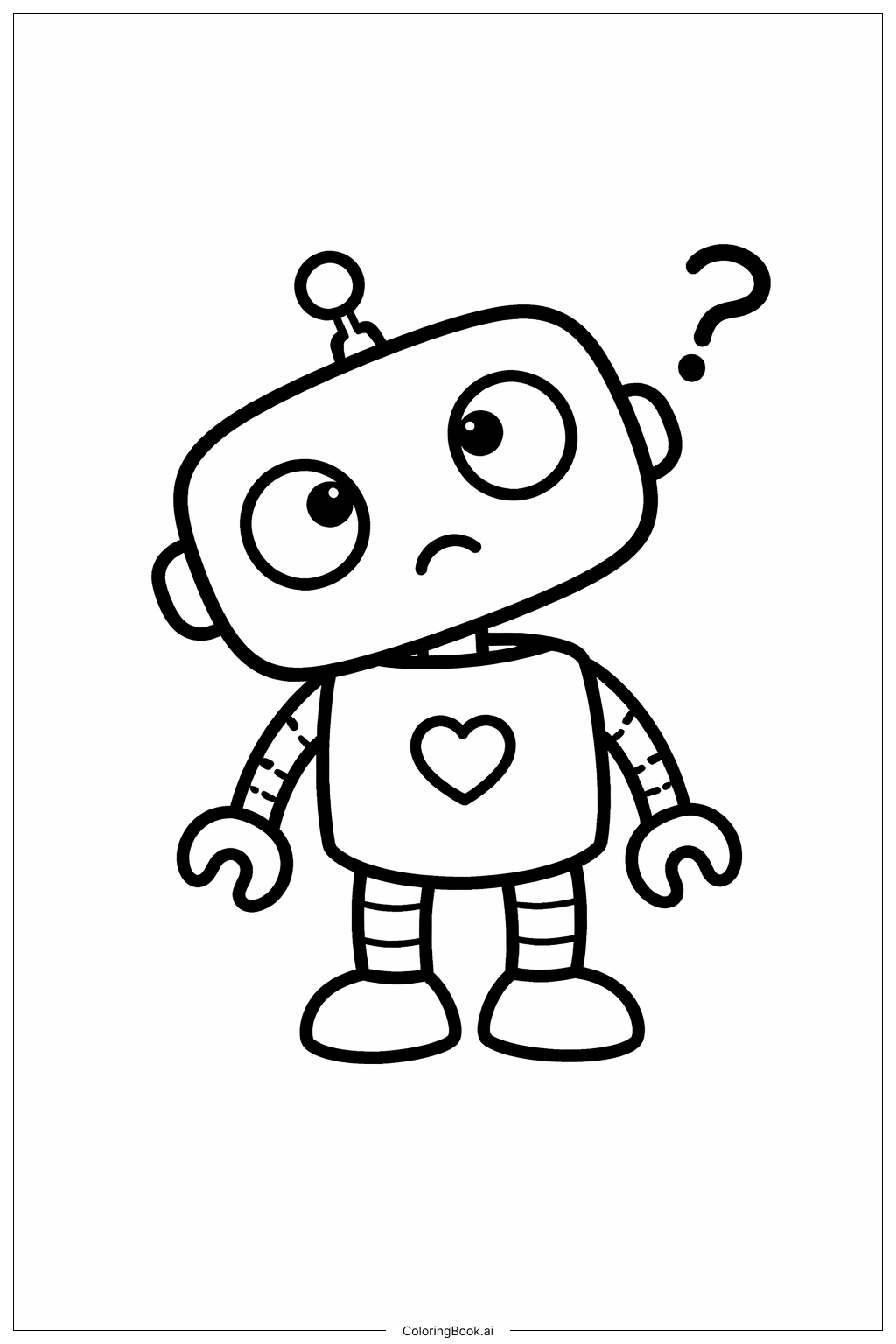
Coloring tips: How to color Confused Robot coloring page well?
Start with the robot's body using cool metallic shades like silver, gray, or light blue to give it a futuristic look. Use darker shades of the same color to add depth and shading to the panels and joints. For the robot's eyes, try bright yellow or glowing green to make them pop with energy. Color the question marks and swirling confusion symbols in bold, playful colors like orange, purple, or red to show the robot's mixed-up feelings. Add small highlights with white or light yellow on the robot's rounded edges to create a shiny metal effect. If you want, use a soft background color like pale blue or lavender to make the robot stand out. Have fun mixing colors to show the emotion of confusion — there are no wrong choices here!
Coloring challenges: Which parts are difficult to color and need attention for Confused Robot coloring page?
• Mechanical Body Details: The robot's body is covered with panels, bolts, rivets, and seams. Staying inside all these small, geometric shapes requires careful control of your coloring tool. Using fine-tipped markers or colored pencils will help you fill each section neatly without bleeding into neighboring areas.
• Expressive Facial Features: The robot's face carries the full weight of the confused emotion through its eyes and mouth. These features are small but important. Coloring them with steady, precise strokes is tricky, especially around the curved lines of the eyes. Take your time and use a sharp pencil tip for the finest details.
• Confusion Symbols and Floating Elements: The question marks, spirals, and swirling symbols around the robot's head are scattered and varied in size. Each one may need a different color to look lively and dynamic. Keeping track of which symbol gets which color while avoiding overlap with the robot's body can be challenging, especially for younger colorists.
• Creating a Metallic Effect: Making the robot look shiny and metallic is one of the most rewarding but difficult parts of this image. It requires layering light and dark tones of the same color and leaving small white highlights to simulate a reflective metal surface. This technique takes patience and practice to pull off convincingly.
• Balancing Colors Across the Scene: With so many different elements — the body, face, symbols, and background — choosing colors that work well together without clashing is a real challenge. Planning your color scheme before you start can help everything feel visually balanced and cohesive.
Benefits of coloring books: Advantages of drawing Confused Robot coloring page
Coloring this Confused Robot page offers a wonderful mix of fun and learning for kids and adults alike. The image introduces the concept of emotions in a lighthearted, relatable way — helping younger children recognize and talk about the feeling of confusion in a safe, creative setting. Working through the robot's many mechanical details builds fine motor skills and hand-eye coordination, especially as colorists practice staying within small, precise lines. Choosing colors for the body, face, and floating symbols encourages creative thinking and decision-making. Kids learn to think about color relationships and how different shades can create mood and depth. The challenge of making the robot look metallic also introduces basic shading and layering techniques, giving older children and adults a chance to develop more advanced coloring skills. Beyond skill-building, coloring this page is simply relaxing and enjoyable. Focusing on a fun, expressive character helps reduce stress and encourages a calm, focused mindset. It is a great activity for building confidence, as there is truly no wrong way to color a confused robot.