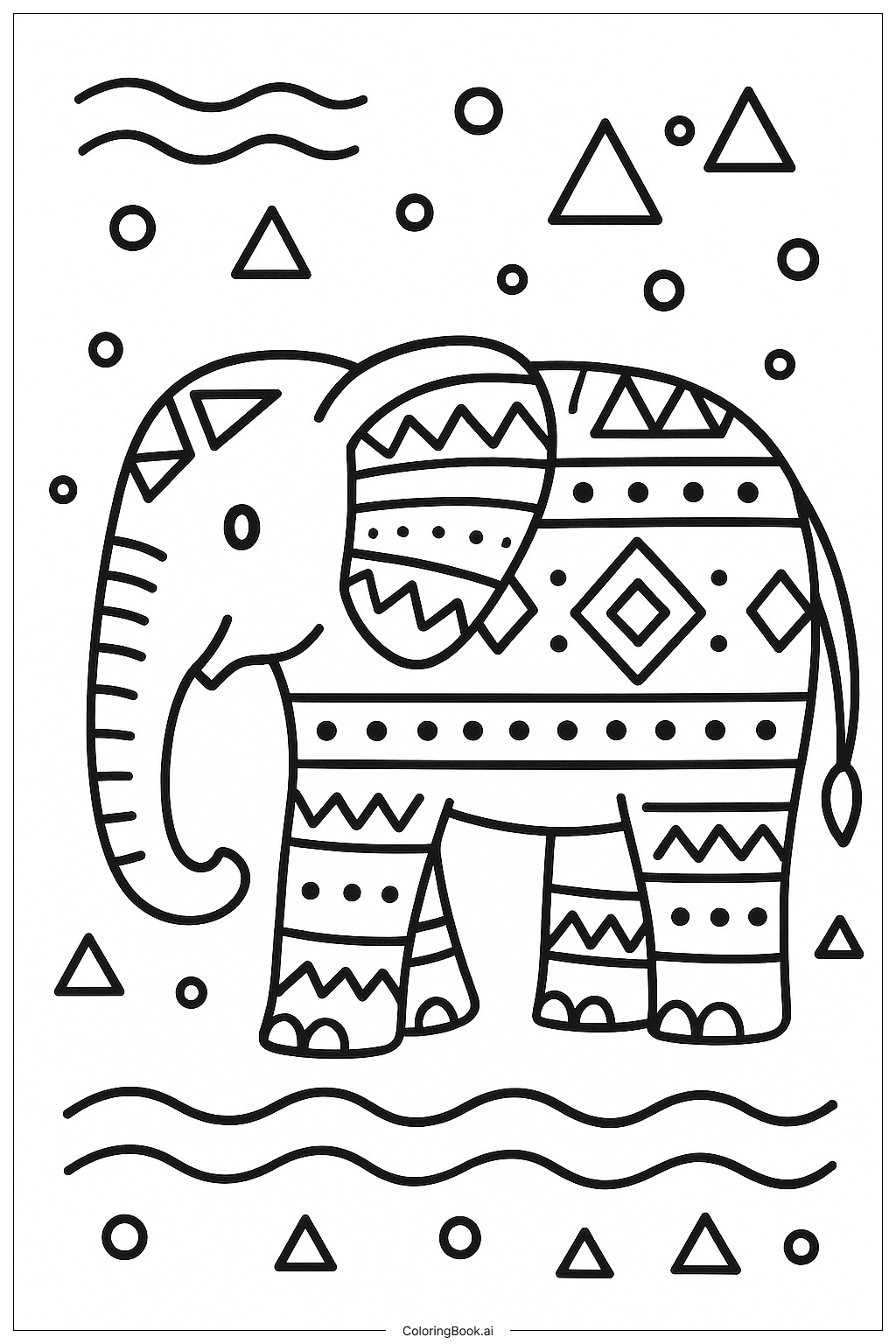
Coloring tips: How to color Elephant with Tribal Art coloring page well?
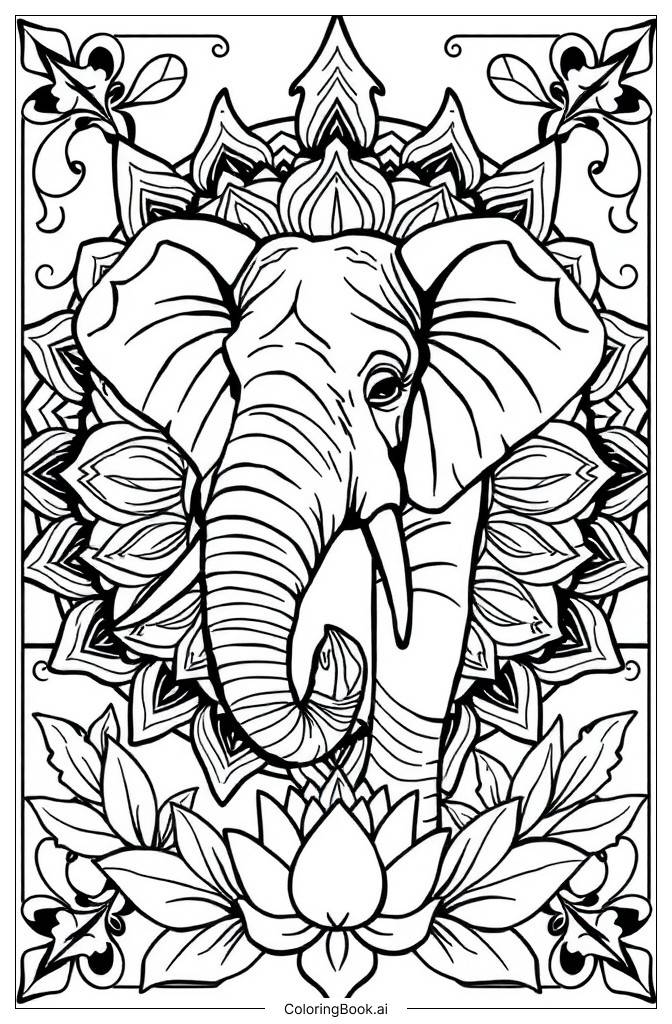
Try using bright and bold colors like deep reds, oranges, and yellows to make the tribal patterns stand out. You can also use earth tones like browns and greens for the elephant’s skin to give it a natural look. For the small patterns, consider using contrasting colors to highlight each design element clearly. If you enjoy blending colors, shading around some parts of the elephant can add depth and dimension. Feel free to mix warm colors with cool blues or purples to make the art lively and unique. Remember to color slowly and carefully to keep inside the detailed lines.
Coloring challenges: Which parts are difficult to color and need attention for Elephant with Tribal Art coloring page?
• Detailed Patterns: The tribal art covers many tiny shapes and lines which require precise coloring to avoid making it look messy. Staying inside these small spaces can be challenging, especially for younger children.
• Consistent Coloring: Since the elephant’s body has many repeating patterns, it can be hard to keep the colors uniform across similar shapes without mixing shades unintentionally.
• Fine Motor Skills: Coloring the thin lines and dots needs concentration and steady hand control. This can be difficult for children who are still developing their fine motor skills.
• Pattern Complexity: Some areas combine several overlapping designs, making it tricky to distinguish where one pattern ends and another begins, requiring more attention to detail.
• Balancing Colors: Choosing colors that complement one another while ensuring each design remains visible can be difficult because the image has many different sections close together.
Benefits of coloring books: Advantages of drawing Elephant with Tribal Art coloring page
Coloring this image helps improve focus and patience because of its detailed tribal art. It encourages creativity as you explore different color combinations to bring out the beauty of the patterns. Working with fine lines and small shapes supports hand-eye coordination and fine motor skills development in children. Coloring such cultural designs also expands cultural awareness by introducing tribal art styles. Finally, completing the image can give a great sense of accomplishment and boost confidence in artistic abilities.