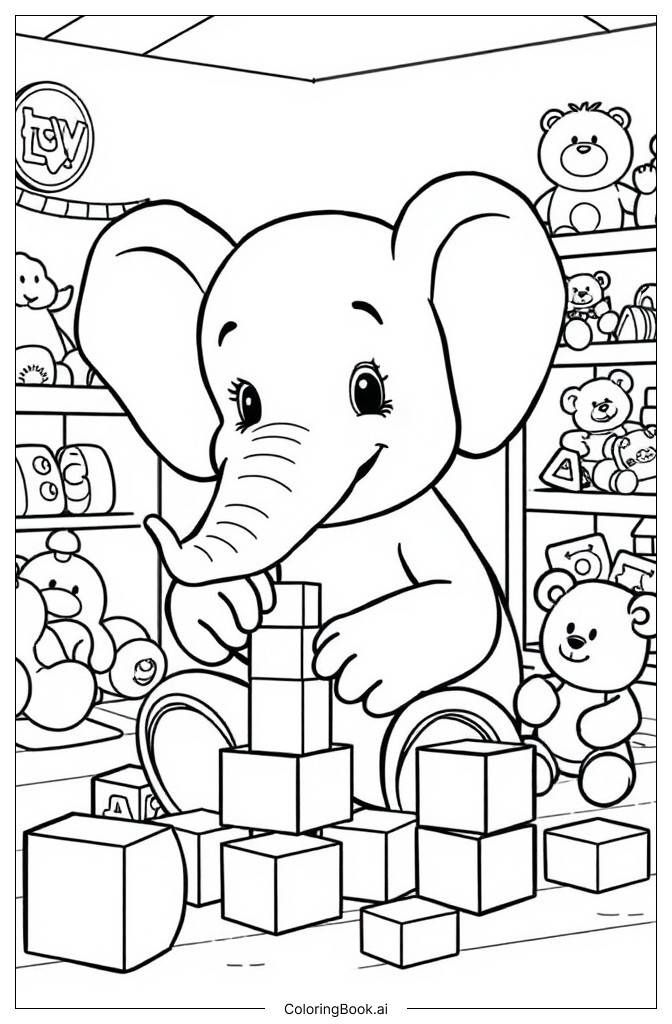
Coloring tips: How to color Emily Elephant coloring page well?
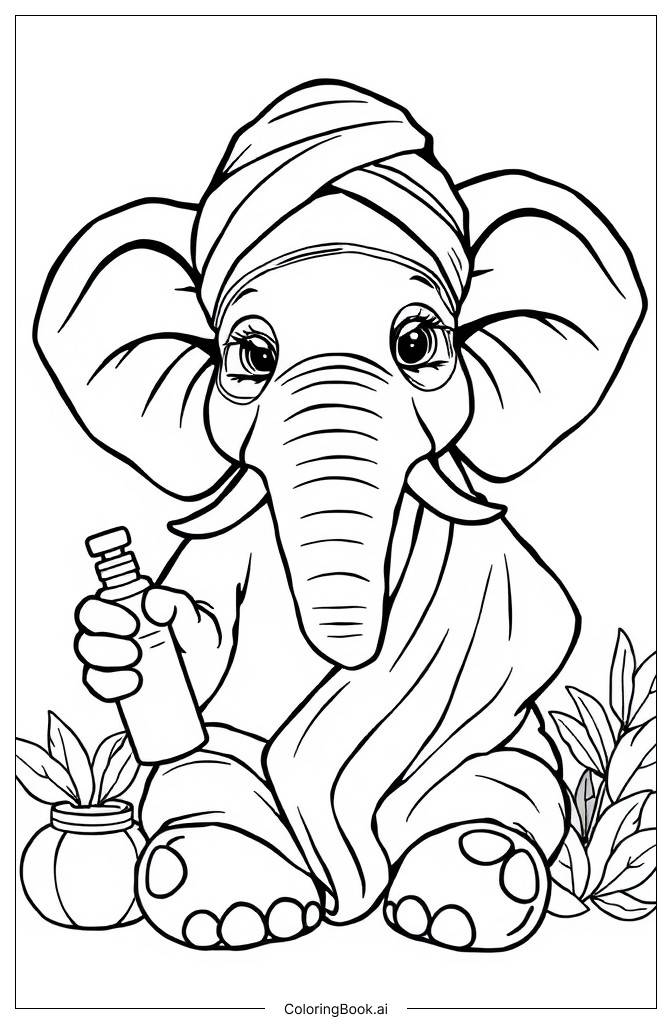
To color Emily Elephant, you can start with shades of gray or light blue for her skin to make her look realistic or fun. Use pink or purple for her bow to make it stand out nicely. The flowers and leaves around her can be colored with bright greens, reds, yellows, or any colors you like to add vibrancy. You might want to use soft colors on Emily’s big ears and cheeks to give her a warm and friendly feeling. Feel free to use crayons, colored pencils, or markers. Try blending colors gently to create shadows and highlights on her trunk and legs, which will make her look more three-dimensional and lively.
Coloring challenges: Which parts are difficult to color and need attention for Emily Elephant coloring page?
• Trunk Curves: The trunk has smooth curves which may be tricky to color evenly, requiring care to stay within the lines and maintain consistent shading.
• Ear Details: Emily’s large ears have inner lines that need attention to show depth, challenging younger children to carefully color smaller areas.
• Facial Features: The eyes and mouth are small and detailed, so precise coloring is needed to keep Emily’s friendly expression clear and neat.
• Background Elements: The flowers and leaves around Emily have fine lines and small parts that need careful coloring to avoid making the image look messy.
• Consistent Shading: Adding shadows on the legs and body to make Emily look more realistic can be difficult for beginners, as it requires gradual color transitions and blending skills.
Benefits of coloring books: Advantages of drawing Emily Elephant coloring page
Coloring this image of Emily Elephant helps improve hand-eye coordination and fine motor skills, especially when coloring the detailed parts like the ears and facial features. It encourages creativity by allowing children to choose their own colors and experiment with shading effects. Engaging with this page can boost focus and patience while working carefully within the outlines. Additionally, coloring animals like Emily Elephant fosters an appreciation for nature and wildlife. For younger children, it supports color recognition and for older children, it provides an opportunity to practice artistic techniques like blending and layering colors.