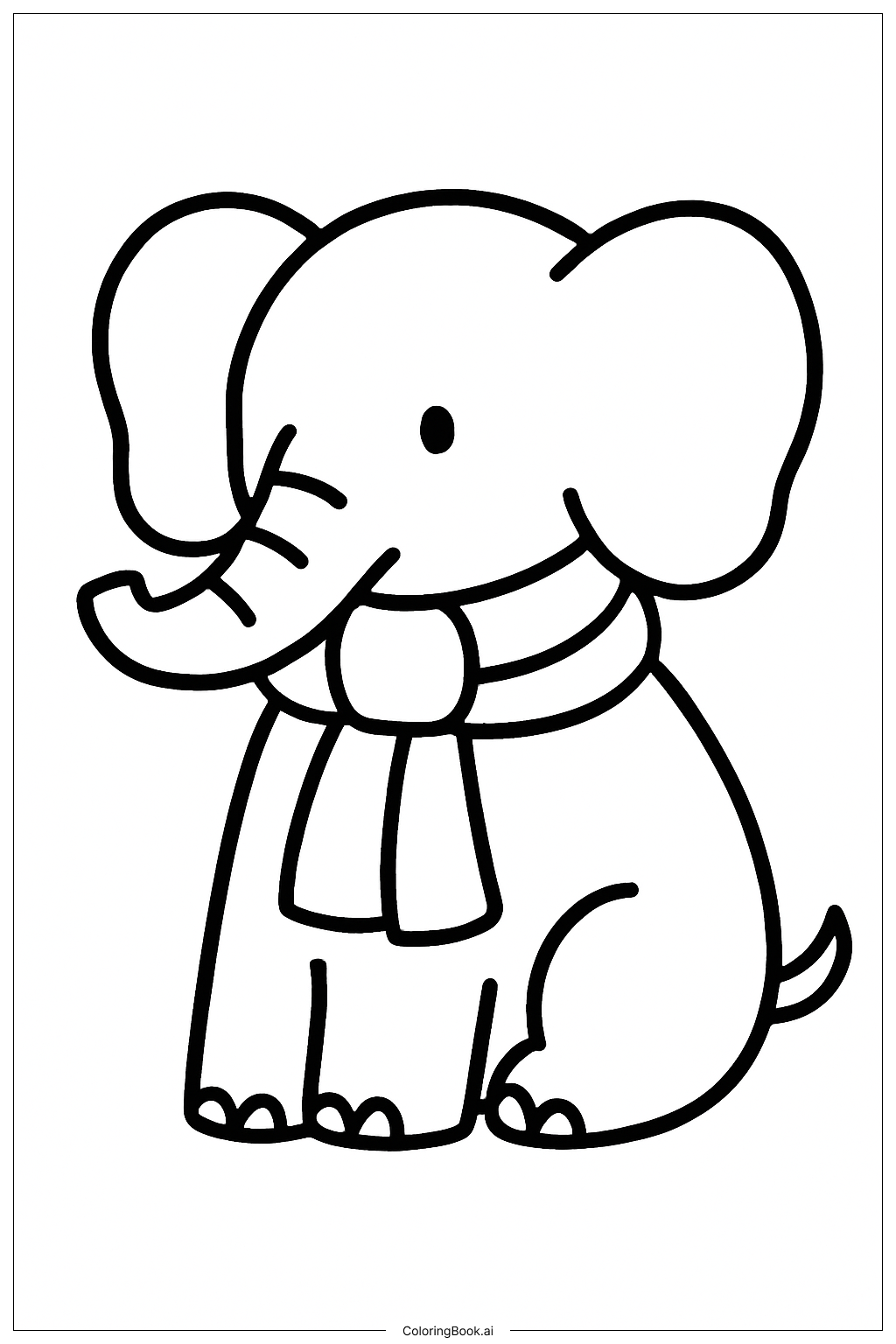
Coloring tips: How to color Elephant Wearing Scarf coloring page well?
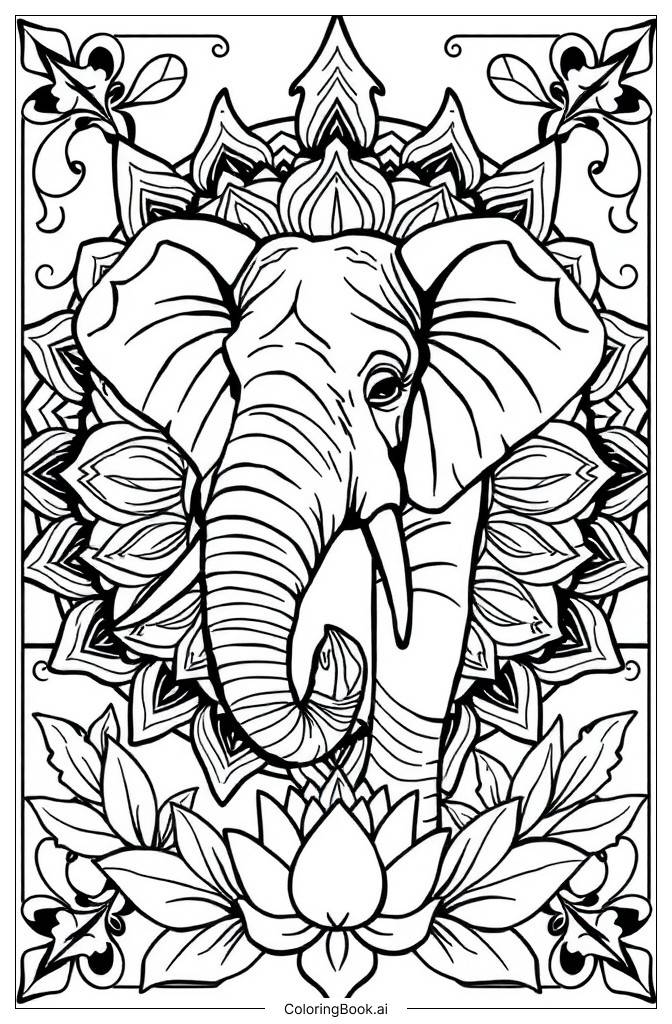
Try using soft gray or light blue shades for the elephant’s skin to make it look gentle and friendly. The scarf can be colored in bright, warm colors like red, orange, or yellow to create a nice contrast with the elephant’s skin. You might want to add stripes or patterns in different shades on the scarf to make it lively. For the background leaves and flowers, greens and pinks can bring a fresh and cheerful feeling. Don’t forget to color the elephant’s eyes black with a little white spot to make them sparkle. Feel free to experiment with different color combinations to make your picture unique and fun.
Coloring challenges: Which parts are difficult to color and need attention for Elephant Wearing Scarf coloring page?
• Scarf Patterns: The scarf features stripes that may require careful coloring to keep lines neat and even, especially for younger children learning to color inside boundaries. • Elephant’s Details: The elephant’s large ears and trunk have curved shapes that can be tricky to shade smoothly without overlapping or going outside the edges. • Small Background Elements: The leaves and flowers are small and detailed, which might challenge concentration and fine motor skills when coloring them individually. • Color Contrast: Choosing colors that stand out from each other without clashing can be hard, especially for beginners who are still learning about color harmony. • Maintaining Clean Lines: Because the image includes both broad and fine lines, it may be difficult to fill larger areas without smudging or blurring the smaller details nearby.
Benefits of coloring books: Advantages of drawing Elephant Wearing Scarf coloring page
Coloring this image helps children develop their fine motor skills by practicing control and precision when filling different shapes like the elephant’s body and the scarf’s stripes. It encourages creativity by allowing them to choose colors and combine shades in new ways. Working on this detailed image also improves focus and patience, as some parts need careful attention. Besides skill development, coloring this cheerful elephant can boost mood and reduce stress by providing a calming and enjoyable activity. It is a great way for children to express themselves and build confidence as they complete their beautiful artwork.