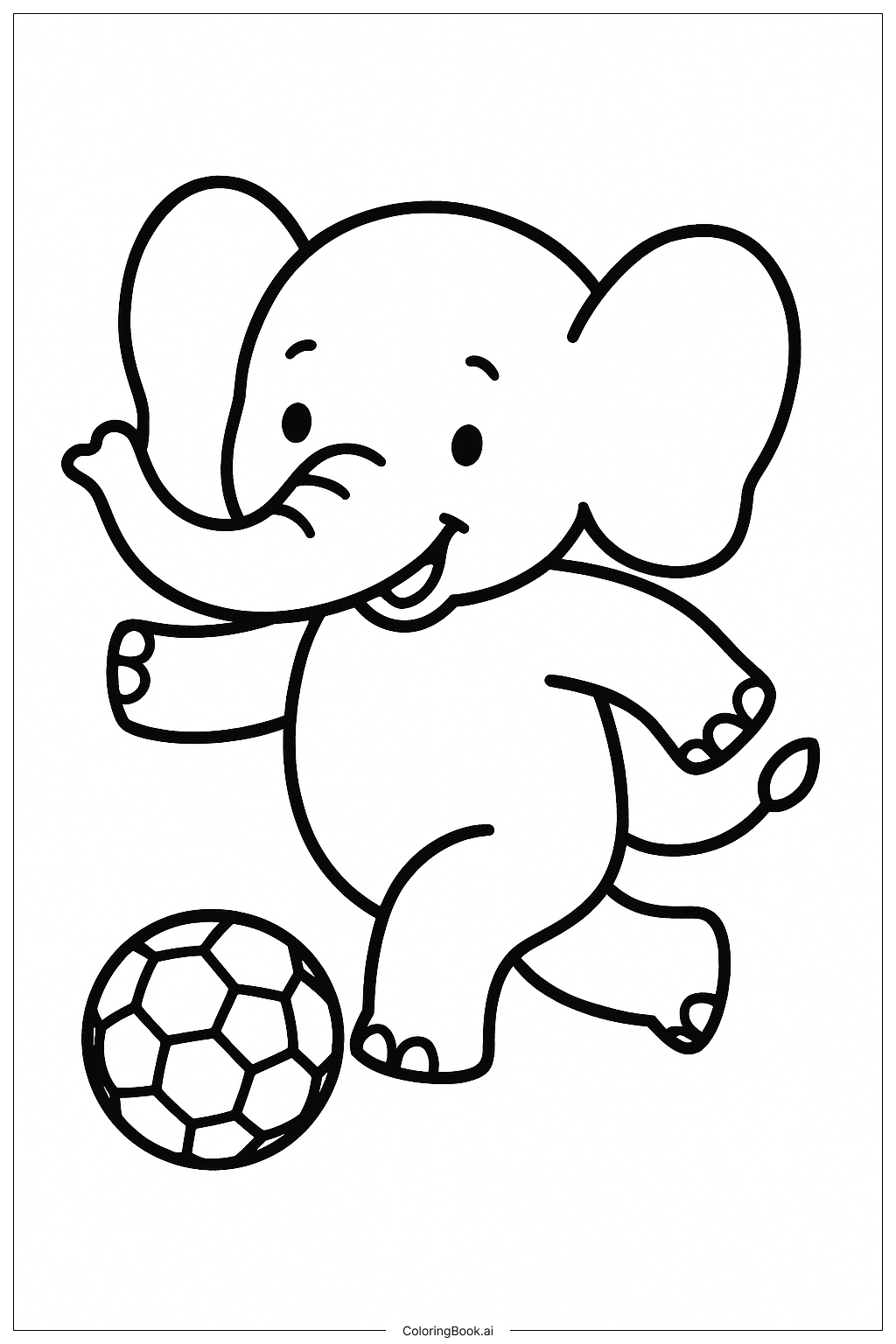
Coloring tips: How to color Elephant Playing Football coloring page well?
To bring this image to life, start by coloring the elephant with soft grays or light browns. You can add shading on the elephant’s ears and trunk to give it dimension. The football is a great spot to use classic black and white patches, or you can be creative and use vibrant colors like red or blue to make it stand out. The grassy field can be filled with different shades of green to add depth and an outdoor feel. For extra fun, try coloring the elephant’s eyes bright and cheerful colors to show its excitement. Use light blue or any sky color in the background to complete the scene.
Coloring challenges: Which parts are difficult to color and need attention for Elephant Playing Football coloring page?
• Elephant Texture Details: Capturing the elephant’s rough skin texture with colors may be challenging. Using smooth coloring might not show the elephant’s unique look clearly. • Football Patterns: The soccer ball has alternating patches that require careful coloring to keep the pattern sharp and tidy. • Motion Lines: The lines that express movement around the elephant and football may be thin, which needs delicate coloring to avoid covering them. • Proportions and Shading: Balancing the shading on the large elephant’s body parts, especially around the legs, ears, and trunk, can be difficult for younger colorists. • Background Simplicity: Adding variety to the plain grass field without making it too crowded requires creativity to keep the scene playful but not overwhelming.
Benefits of coloring books: Advantages of drawing Elephant Playing Football coloring page
Coloring this image helps children improve hand-eye coordination as they fill in different shapes and spaces. It encourages creativity by allowing them to choose colors for the elephant and football, developing their artistic decision-making. The scene invites focus and patience, especially with details like the football patterns and motion lines. Additionally, coloring an animal in an active pose can boost a child’s understanding of movement and body positioning. This engaging activity also promotes relaxation and concentration, making it an enjoyable way to practice fine motor skills.