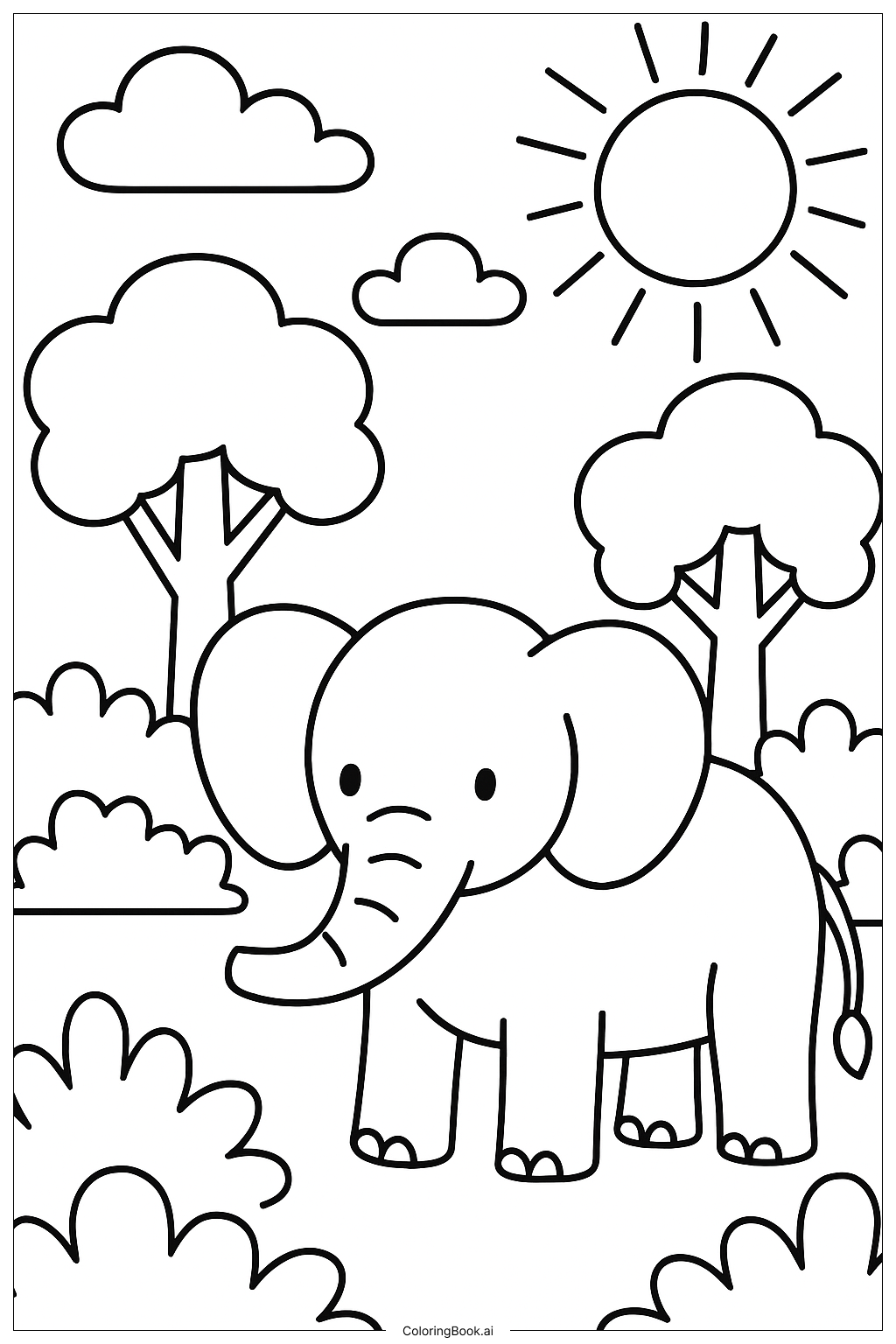
Coloring tips: How to color Elephant in Jungle Scene coloring page well?
Try using different shades of gray and brown for the elephant’s body to give it depth and texture. You can add lighter tones on the elephant’s ears and trunk to show light and shadow. For the jungle plants, use various greens like bright green, dark green, and olive to make the foliage look lively. The vines can be colored in lighter greens or even with a hint of yellow to stand out. The ground might be a mix of earthy browns and grassy greens. Feel free to add colorful flowers or insects to bring extra life to the jungle scene. Using soft colors for the background trees will help the elephant stand out more clearly.
Coloring challenges: Which parts are difficult to color and need attention for Elephant in Jungle Scene coloring page?
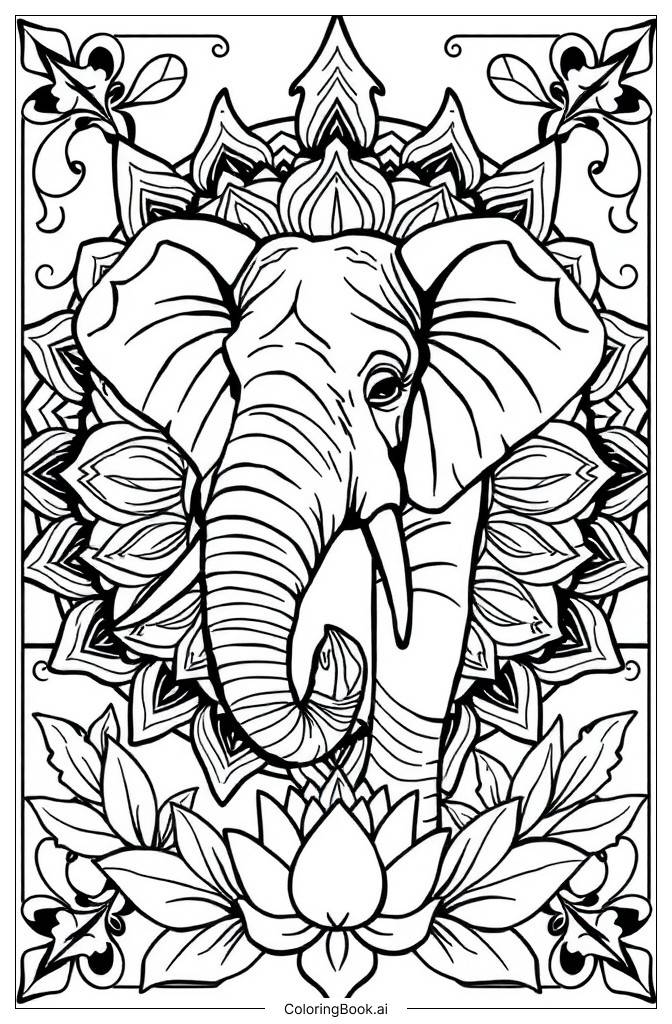
• Detail Work: The elephant skin has many wrinkles and textures, which may be tricky to color evenly and realistically. Careful shading and layering of colors are needed to show the rough surface.
• Plant Diversity: There are different types of jungle plants with varied leaf shapes and sizes. Coloring each plant differently while keeping the jungle natural can be challenging.
• Overlapping Elements: The vines, tree branches, and leaves overlap with the elephant and each other. It requires attention to avoid coloring outside the lines or mixing colors unintendedly.
• Large Spaces vs. Small Areas: The elephant’s big body has large areas to fill with color smoothly, while other parts like the leaves or vines need precision on small details.
• Depth and Perspective: Creating a sense of depth in the jungle by using colors and shading to separate foreground and background elements can be a complex task for young colorers.
Benefits of coloring books: Advantages of drawing Elephant in Jungle Scene coloring page
Coloring this elephant in jungle scene helps children practice focus and attention to detail as they work on both large and small parts of the picture. It encourages creativity by allowing them to explore different color combinations for the elephant and plants, enhancing their understanding of nature’s colors. The activity also builds fine motor skills through careful coloring of intricate areas like wrinkles and vines. Additionally, it promotes patience and perseverance since the image has many elements to finish. Finally, coloring animals in their natural habitat raises awareness and appreciation for wildlife and the environment.