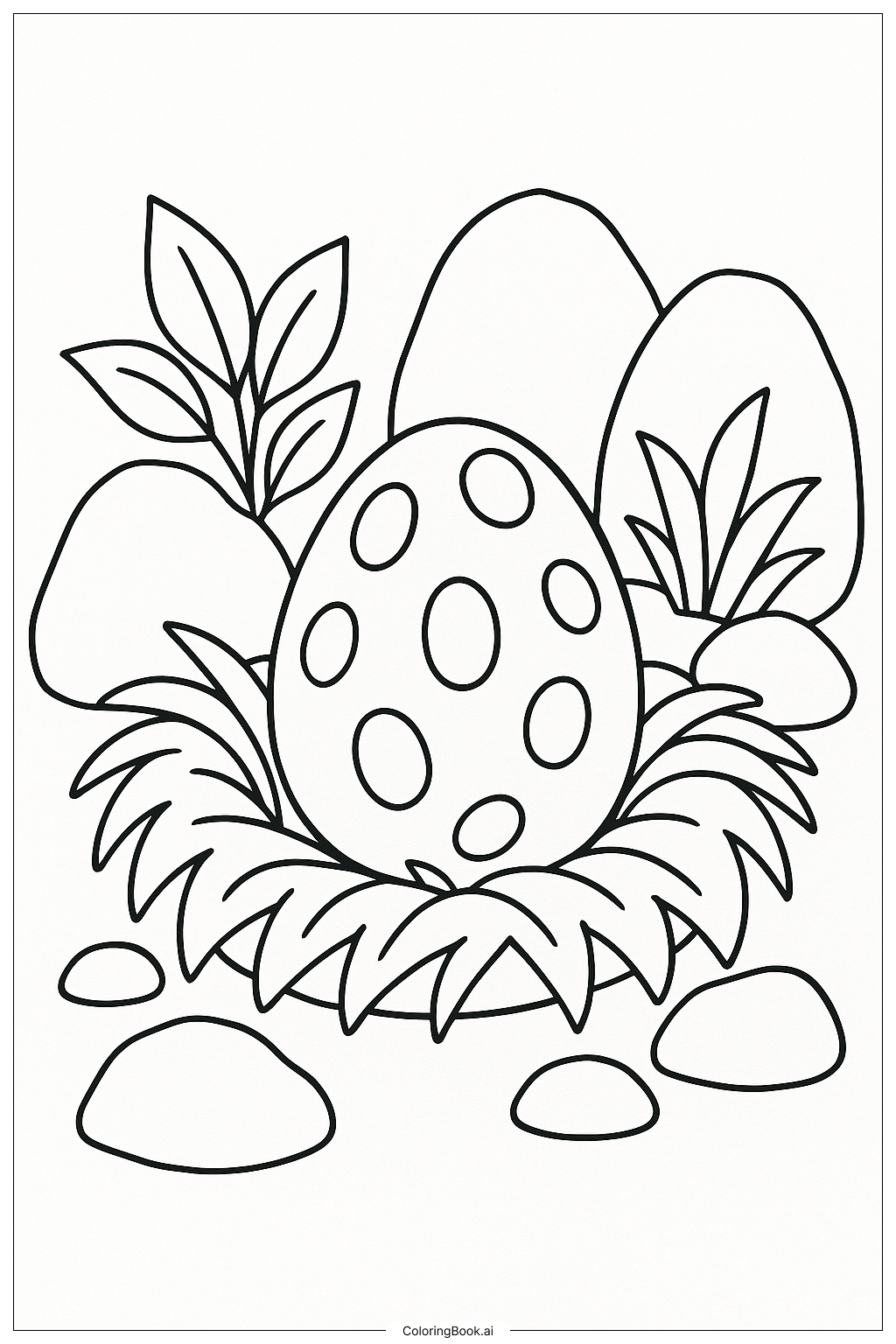
Coloring tips: How to color Dinosaur Egg In A Prehistoric Nest coloring page well?
Use green shades for the grass and leaves to show the nest's natural look. You can try different greens to make it lively. The dinosaur egg can be colored with bright colors like orange, yellow, or blue with spots in a contrasting color, such as dark brown or black, to make them stand out. Use soft colors like light gray or brown for the rocks. Feel free to add some shadows with darker colors to give depth to the picture. Keep the colors neat inside the lines for a clean, nice look.
Coloring challenges: Which parts are difficult to color and need attention for Dinosaur Egg In A Prehistoric Nest coloring page?
1. Coloring the egg's spots evenly can be tricky because they are small and spread out. Staying inside the spots requires careful work.
2. The nest has many thin grass blades, which might be hard to color without overlapping the edges.
3. Plants and leaves have detailed lines inside them, which need careful coloring to keep the shapes clear.
4. Coloring the rocks with shadows might be difficult for young children since it requires blending light and dark shades.
5. Keeping colors separated between the egg and nest needs attention as they are very close to each other, so going slowly is important to avoid mixing colors.
Benefits of coloring books: Advantages of drawing Dinosaur Egg In A Prehistoric Nest coloring page
Coloring this picture helps improve hand-eye coordination because of the different shapes and sizes. It encourages children to use their imagination when choosing colors for the prehistoric scene. Coloring the detailed grass and leaves also increases focus and patience. It teaches children about prehistoric times and dinosaurs in a fun way. Finally, finishing this image boosts confidence and gives a sense of accomplishment.