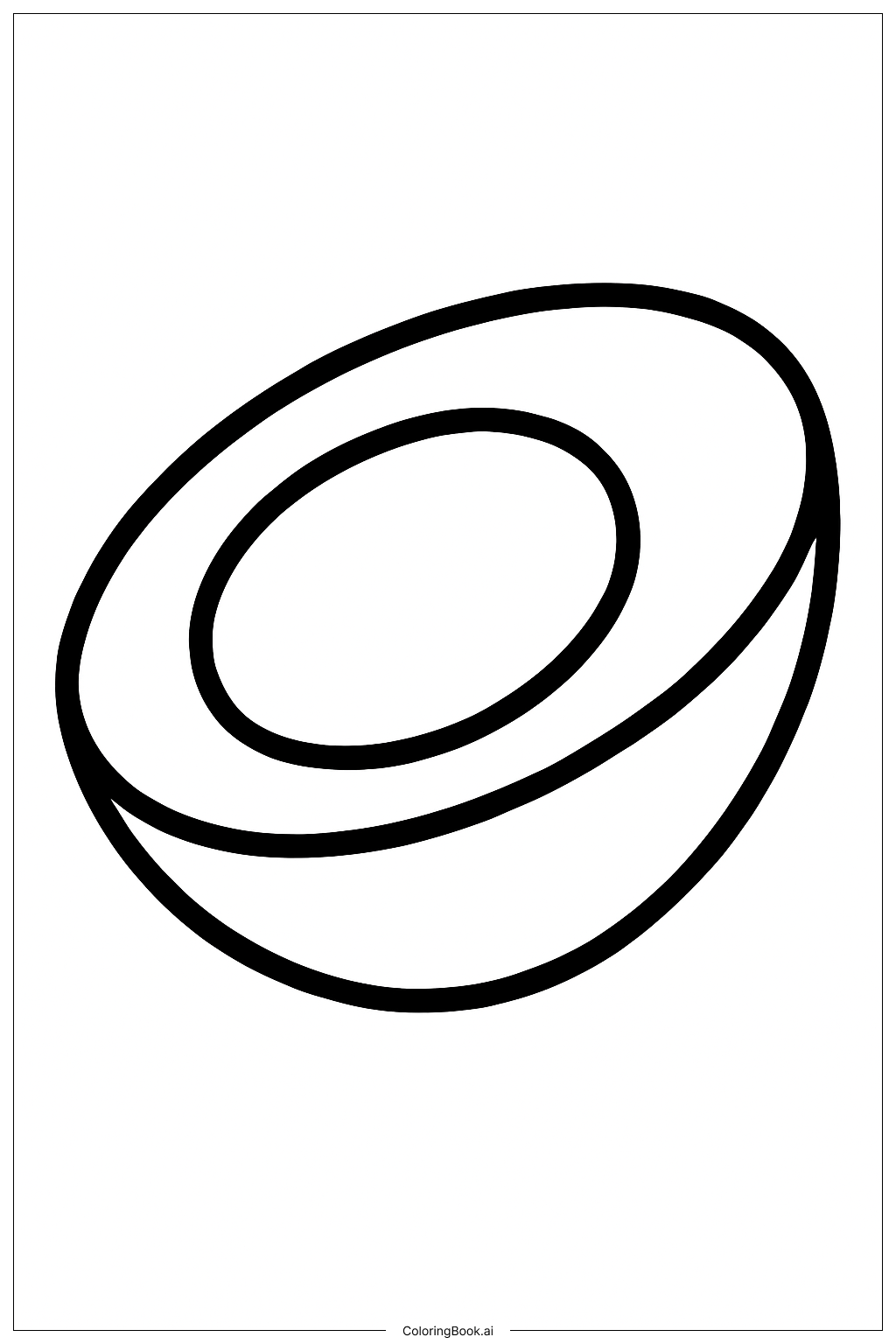
Coloring tips: How to color A Hard Boiled Egg Cut In Half coloring page well?
For coloring the hard boiled egg, you can use light cream or off-white colors for the egg white to give it a soft, natural look. The yolk can be colored in bright yellow or even a golden orange to make it vibrant and attractive. You might want to use pale brown or beige to color the outer shell to show its texture well. You can also add some shading or gentle spots on the shell to make it look more realistic. For a fun twist, try using patterns or unusual colors on the shell, like pastel shades or stripes, to create a unique and playful effect. Remember to color inside the lines carefully for neatness.
Coloring challenges: Which parts are difficult to color and need attention for A Hard Boiled Egg Cut In Half coloring page?
• Yolk Definition: Coloring the yolk evenly without making it look flat can be tricky. Using a single bright color might lose depth, so blending different yellows or oranges helps show roundness.
• Egg White Subtlety: The egg white area is mostly light in color, so it requires delicate shading to avoid it looking like it is just plain white paper. Adding soft shadows can create a three-dimensional effect.
• Shell Texture: The outer egg shell might seem simple, but showing its natural light spots and texture means careful layering of colored pencils or crayons. Too much pressure could make the colors look too harsh.
• Clean Edges: Since this image is simple and clear-cut, coloring outside the lines will be very noticeable. Children need steady hand control for neat results.
• Limited Color Variety: With only three main parts to color (shell, white, yolk), creativity is challenged to make the image lively. Experimenting with shading and blending techniques is important to keep interest.
Benefits of coloring books: Advantages of drawing A Hard Boiled Egg Cut In Half coloring page
Coloring this image helps develop fine motor skills as children practice coloring within the clear boundaries of the egg halves. It encourages careful hand-eye coordination and attention to detail because of the neat shapes and subtle color areas. This activity also supports learning about food and nature by recognizing the parts of an egg. The limited color areas provide a simple starting point for young artists to experiment with shading and blending, fostering creativity. For older children, it offers the chance to explore realism in coloring and use of color layering techniques. Overall, coloring this image builds focus, artistic skills, and knowledge in a calm, enjoyable way.